

Different sex drives are one of the most common challenges couples face in long-term relationships. This guide is for couples navigating differences in sexual desire. You’ll learn what causes mismatched sex drives, how to communicate about them, and when to seek support.
Sexual desire discrepancy (when partners have different levels of interest in sex) happens in both heterosexual couples and LGBTQ+ relationships. Desire discrepancy research shows these differences are common and can be distressing. Talking about them openly helps. Mismatched libidos don’t mean your relationship is broken—they mean you need new tools to navigate intimacy together.
Society often equates sex with love, so when one partner wants more sex and the other wants less sex, both people may feel rejected or pressured. Understanding that sex drive varies from person to person helps reduce shame and opens space for honest conversation.
Can a Relationship Work if You Have Different Sex Drives?
Yes, relationships can thrive with mismatched sex drives when couples communicate openly and develop strategies together. The key difference between couples who struggle and those who succeed isn’t the size of the desire gap—it’s how partners respond to it.
Research on desire discrepancies found that communication is one of the main ways adults try to resolve sexual desire discrepancies. The partner with higher sex drive may feel rejected, while the partner with lower sex drive may feel guilty. These hurt feelings can create emotional distance if left unaddressed.
Mismatched sex drives can negatively affect satisfaction, especially in long-term relationships. The person with the higher sex drive often feels hurt or confused when their partner’s desire decreases after the honeymoon phase. However, couples who understand that sexual desire changes over time are better able to maintain both emotional intimacy and sexual satisfaction.
Many couples believe having mismatched sex drives is a private matter that doctors cannot help with. In reality, sex therapy (professional counseling focused on sexual health and intimacy issues) and couples therapy offer evidence-based approaches. A sex therapist helps couples understand their patterns and find solutions that honor both partners’ sexual needs.
What Causes Different Sex Drives?
Sex drive (also called libido, the desire for sexual activity) varies widely and changes throughout life. There is no such thing as a normal sex drive—what matters is whether the difference creates distress in the relationship.
Types of Sexual Desire
Not everyone experiences sexual desire the same way. Understanding spontaneous and responsive desire helps explain why partners may have different patterns.
Spontaneous sexual desire occurs randomly, with or without stimulation. You might think about sex out of nowhere or feel aroused before any touch. This type is more common early in relationships and more typical in men.
Responsive sexual desire develops in response to mental or physical stimulation. You might not want to have sex until your partner initiates or creates a romantic context, and then interest builds. This is extremely common in women and long-term relationships.
Contextual sexual desire depends on circumstances—timing, stress levels, relationship quality, and setting. Many people experience a blend of responsive and contextual desire.
Many couples discover their “problem” isn’t low desire—it’s that they’ve been expecting spontaneous desire when one or both partners naturally experience responsive desire. Understanding this difference removes unnecessary guilt and opens new pathways to intimacy.
Biological Factors That Affect Sex Drive
Hormones: Testosterone and other hormones help drive sexual desire. Medical conditions affecting hormones—thyroid disorders, menopause, low testosterone—can cause changes in libido. Low libido or low sexual desire can result from hormonal imbalances. Birth control can affect some women’s libido. When one partner has low libido, the other partner may want more sex, creating tension.
Medications: Antidepressants, blood pressure medications, and other prescriptions can negatively affect sexual health and interest in sex.
Physical health: Chronic pain, fatigue, muscle tension, and conditions affecting vaginal muscles or genital function can reduce sexual interest and make sexual intercourse uncomfortable. Sexual function naturally fluctuates with aging, pregnancy, and menopause.
Psychological and Emotional Factors
Mental health significantly impacts sexual desire:
Stress: In interviews with couples about desire, conflict and the demands of raising children came up as things that dampen it. Work concerns, lack of time, and life pressure redirect energy away from intimacy. In DC’s high-pressure environment, chronic stress becomes a major barrier.
Anxiety and depression: These conditions lead to preoccupation with negative thoughts, making it difficult to relax during sexual activities. Anxiety can create a cycle where worry about performance reduces desire.
Self-esteem: Low self-esteem and poor body image affect comfort during sexual encounters. Improving self-esteem can positively impact sexual experience.
Past experiences: Trauma and negative sexual experiences significantly impact a person’s sexuality. Past sexual experience shapes current comfort levels with intimacy.
Identity factors: Sexual orientation and gender identity influence how people experience desire.
Relationship Dynamics
The quality of your emotional connection directly influences sexual desire. Unresolved arguments and poor communication reduce interest in sex. Life transitions—children, career changes, major stress—shift both partners’ sexual interest. Children particularly affect desire through exhausted schedules and reduced couple time.
Partners with lower sexual desire may feel guilty, while higher-desire partners may feel their needs aren’t valued. When one partner wants more sex, they may initiate repeatedly, while the partner with low libido may avoid intimacy. This creates a painful cycle where the rejection-pursuit pattern intensifies. Monotony also reduces excitement.
In our practice, we see couples caught in a cycle where one partner’s rejection reinforces the other’s pursuit, creating more pressure and distance. Breaking this pattern requires both partners to understand that desire differences don’t reflect love or attraction—they reflect normal human variation in sexual drive.
How to Deal with Mismatched Sex Drives
Managing mismatched sex drives requires ongoing effort and mutual respect. Here are evidence-based strategies for couples navigating different levels of sexual desire:
Talk About Sex Openly and Regularly
Communication is essential for couples with mismatched libidos. Couples who talk openly about desire discrepancies tend to fare better than those who avoid the conversation.
Set aside time when both partners feel relaxed to discuss sexual needs. The higher-desire partner should share needs without blame: “I miss physical connection” works better than “You never want sex.” The lower-desire partner should communicate limits clearly: “I’m not in the mood for sexual intercourse tonight, but I’d enjoy other intimacy.”
Try to understand the other partner’s perspective. The person who wants frequent sex isn’t demanding. The person with less interest isn’t withholding. Partners are both responding to different internal drives that affect their sex life.
Negotiate and Find Compromise
Successful couples negotiate when and how they’ll be intimate. Be explicit about what feels sustainable. Some couples schedule sex, which removes the pressure of constant initiation. Research shows couples negotiate not just whether to have sex, but what kind. One partner might say: “I’m not feeling full sexual intercourse, but I’m happy to engage in oral sex or mutual masturbation.” Alternate who initiates—sometimes meeting the higher-desire partner’s needs, sometimes honoring the lower-desire partner’s limits.
Explore Alternative Forms of Intimacy
Sex doesn’t have to mean sexual intercourse. Broadening your definition reduces pressure:
- Emotional intimacy through conversation and quality time
- Physical affection like cuddling or massage
- Non-genital touch that feels connecting
- Shared activities that build emotional connection
Reducing pressure around sexual intercourse can actually increase the lower-desire partner’s interest over time.
Address Underlying Issues
If stress, health problems, or past experiences affect desire, address them directly:
- Manage stress and develop coping strategies together
- Treat medical conditions with healthcare providers if hormones, medications, or health are factors
- Process past trauma through individual therapy
- Strengthen your relationship if conflict or emotional distance is reducing desire
Consider Professional Help
Working with a sex therapist provides tools most couples can’t develop alone. Therapy helps partners understand their desire patterns, learn communication skills specific to sexual needs, and develop a sexual relationship that works for both. Therapists also help explore how sexual orientation, identity, and self esteem affect desire and connection.
Many people avoid sex therapy because of stigma, but therapists specializing in sexual health offer practical support.
What Is Considered a High Sex Drive?
There is no objective standard for what counts as a high or low sex drive. Sexual desire exists on a spectrum, and what feels “high” or “low” depends entirely on context—your age, relationship status, health, stress levels, and comparison to your partner.
No one’s libido should be judged against arbitrary standards. Someone wanting sex daily isn’t hypersexual, and someone wanting sex monthly isn’t experiencing sexual dysfunction (difficulty with desire, arousal, or satisfaction)—unless it causes personal distress.
Sexual desire physiology involves complex interactions between hormones and neurotransmitters. What matters is whether the sex life feels satisfying to both partners. Finding an approach to sexual activities that honors both partners creates a healthier sex life.
When Different Drives Become a Concern
While differences in desire are normal, certain patterns suggest it’s time to seek support:
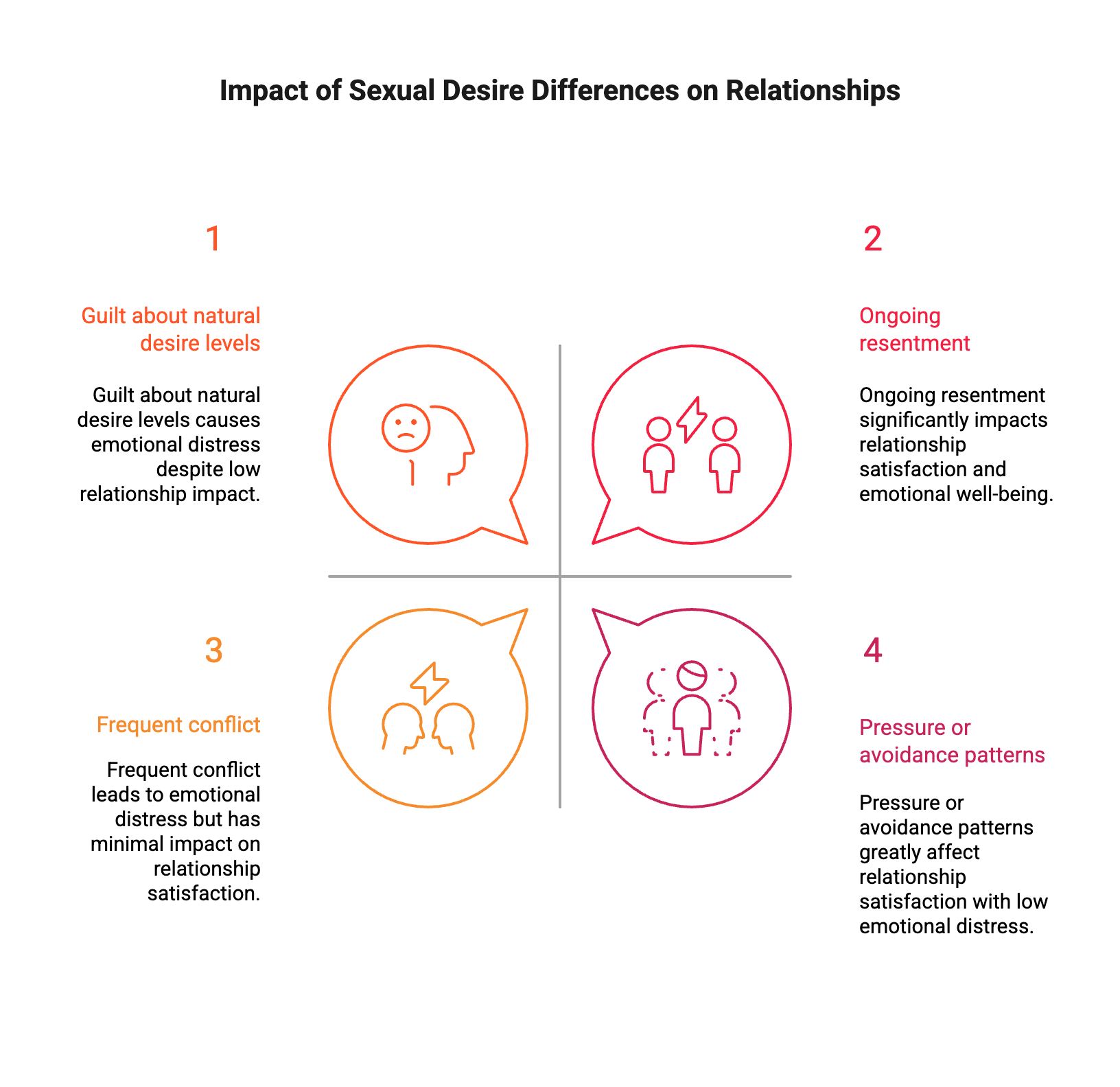
- Ongoing resentment, guilt, or shame around sexual frequency or intimacy
- Frequent conflict or emotional distance stemming from desire differences
- Pressure or avoidance patterns where one partner consistently pressures the other or refuses their partner’s advances
- Guilt about natural desire levels that either partner experiences
- Significant impact on relationship satisfaction or self worth
We often see couples wait years before seeking help, believing they should solve this alone or that the problem will resolve itself. The truth is, mismatched drives rarely improve without intentional strategies and often benefit from professional guidance. Reaching out early prevents years of accumulated hurt and distance.
If you recognize these patterns, reaching out for support shows strength. Understanding that different sex drives are common helps remove stigma. Sexual satisfaction comes from honoring these differences.
Ready to Get Started?
If mismatched libidos are creating strain in your relationship, you don’t have to navigate this alone. Our therapists help couples find solutions that honor both partners’ needs. Contact us to schedule an appointment.
This blog provides general information and discussions about mental health and related subjects. The content is not intended to be a substitute for professional medical advice, diagnosis, or treatment. Always seek the advice of your physician or other qualified health provider with any questions you may have regarding a medical condition.