Talk Therapy for Depression: What Research Shows About Effectiveness
If you’re considering talk therapy for depression, you probably have questions. Does it actually work? How long does it take? Is it better than medication, or should you do both? These are important questions, and the research gives clear answers.
Depression affects millions of people and shows up differently for everyone. Some feel persistently sad, while others lose interest in activities or struggle with sleep and energy. Major depressive disorder is one of the most common mental health conditions—officially classified in the Diagnostic and Statistical Manual of Mental Disorders—but it’s also one of the most treatable. Understanding what psychological treatments can—and can’t—do is the first step toward feeling better.
Does Talk Therapy Work for Depression?

Yes. Talk therapy is highly effective for treating depression. Research shows about half of people improve significantly with psychotherapy alone—much higher than those who receive no treatment at all.
Psychological therapy works by helping you understand your thoughts, feelings, and behaviors, then teaching you practical strategies to manage depressive symptoms. The benefits extend beyond the immediate—therapy also reduces your risk of depression returning, whether you have clinical depression, major depression, or persistent depressive disorder.
What makes talk therapy particularly valuable is that it gives you lasting tools. Unlike antidepressant medication, which works while you’re taking it, therapy teaches skills that become part of how you handle stress and manage difficult situations throughout your life.
In our practice, we’ve noticed that clients often come in skeptical about whether talking can really help with depression. What surprises them is how practical therapy actually is—we’re not just exploring feelings, we’re teaching concrete skills they use between sessions. Within a few weeks, most people start recognizing their thought patterns and applying techniques in real time, which builds confidence that change is possible.
What Is the Most Successful Type of Talk Therapy?
Here’s some good news: all main types work equally well for depression symptoms. The “best” type of therapy is the one that feels right for you and fits your preferences.
That said, certain approaches have strong research support for depressive disorders:
- Cognitive Behavioral Therapy (CBT) assists you in recognizing and modifying behaviors and thought patterns that contribute to depression
- Psychodynamic Therapy explores how past experiences and unconscious patterns shape current feelings and relationships
- Interpersonal Therapy (IPT) focuses on improving relationships and resolving conflicts that may worsen symptoms
- Behavioral Activation encourages engagement in meaningful activities to counter withdrawal
- Mindfulness-Based Cognitive Therapy combines present-moment awareness with relapse prevention strategies
- Problem-Solving Therapy teaches structured approaches to tackle life challenges
Your therapist will work with you to choose an approach based on your situation, preferences, and goals. The relationship matters as much as the technique—feeling understood and supported by your therapist is crucial for success, especially in one-on-one therapy sessions.
How Long Does It Take to Feel Better?
Most people notice improvement after several weeks of consistent therapy, though the timeline varies. Research indicates meaningful change often happens within the first few months of treatment for depression.
Factors that influence how quickly symptoms improve include:
- The severity of your depression
- How long you’ve been experiencing symptoms of depression
- Whether you have other health conditions or chronic pain
- The quality of your relationship with your therapist
- Your engagement with the process and practice between sessions
Communication with your therapist is essential. If you don’t feel better after a reasonable period—typically 6-8 weeks—the therapist helps by adjusting the approach, trying a different type of therapy, or discussing whether adding medication might help.
Keep in mind: Therapy isn’t a quick fix. It requires time, effort, and patience. But for most people with depression, the investment pays off with skills that last a lifetime.
When Should You Consider Medication Along With Therapy?
For mild or moderate depression, psychological treatments alone are often effective treatment options. However, combining therapy with medication typically works better for severe depression or major depressive disorder than either treatment alone.
Combination treatment makes sense when:
- You have severe cases with significant impact on daily life
- You’ve tried therapy alone without sufficient improvement
- You have suicidal thoughts or are at risk of self-harm
- Your depression comes with other mental disorders or mood disorders
- You need faster relief while therapy skills take effect
The decision to add medication should be collaborative with a mental health professional who understands your full situation, including your family history, any medical condition concerns, and your personal preferences. Your therapist may work with a psychiatrist or primary care doctor to create a comprehensive treatment plan.
Selective serotonin reuptake inhibitors (SSRIs) are the most commonly prescribed antidepressants and work well with talk therapy. Other options include tricyclic antidepressants and newer medications. In rare, severe cases that don’t respond to other treatments, electroconvulsive therapy may be considered.
We often tell clients that medication isn’t admitting defeat—it’s another tool in the toolbox. When someone’s depression is severe enough that they can barely get out of bed or focus in session, medication can provide enough relief to make therapy effective. We’ve seen many people start with combined treatment, build their skills, and later reduce medication under their doctor’s guidance while maintaining their progress.
What Are Practical Coping Skills Therapy Teaches?
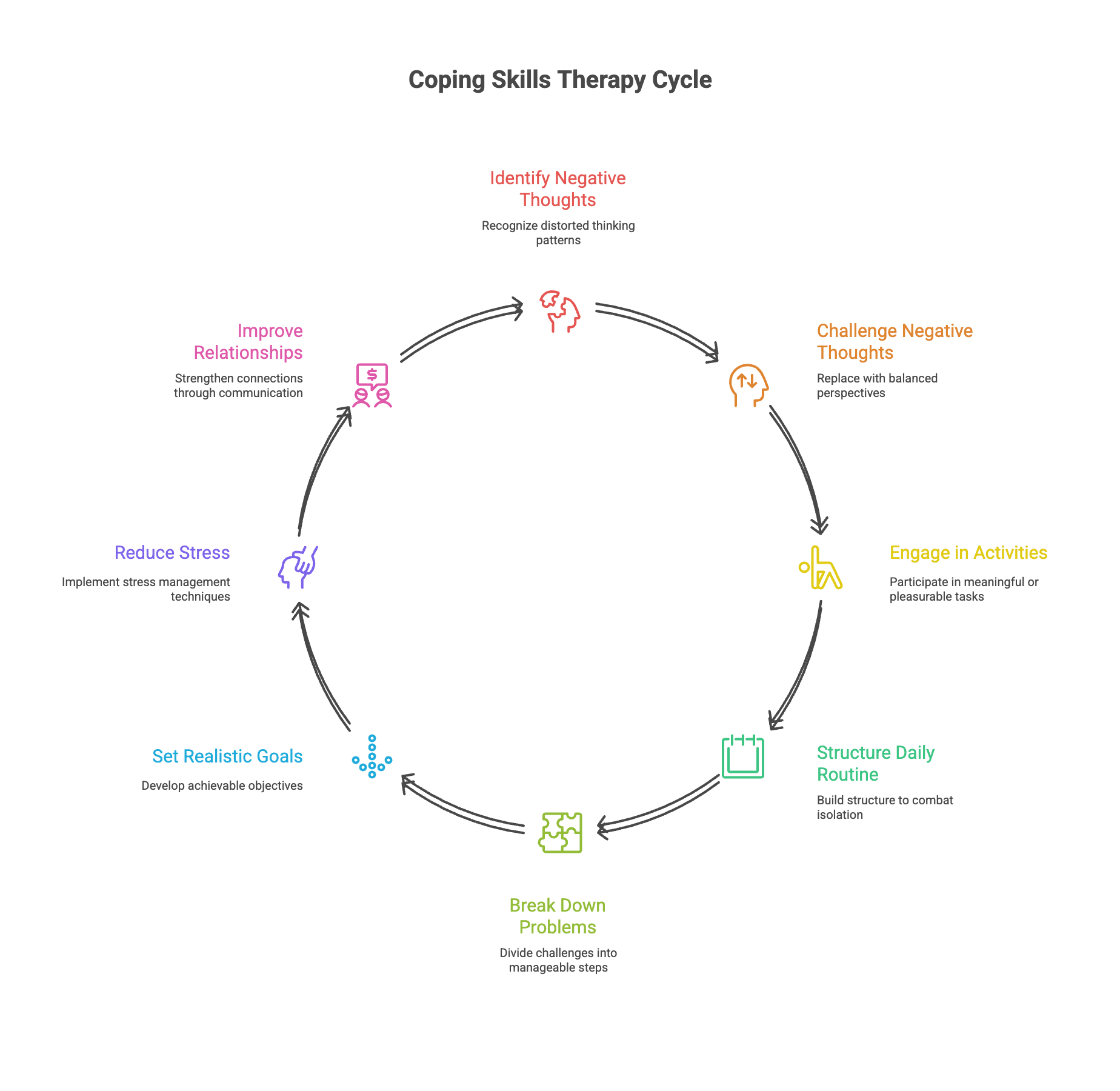
Psychotherapy sessions don’t just help you understand depression as a mental illness—they equip you with specific tools to manage it. Here are five core coping skills therapists commonly teach:
Identifying and Challenging Negative Thoughts
You learn to notice distorted thinking patterns and replace them with more balanced, realistic perspectives. This doesn’t mean forcing positivity, but rather seeing situations more clearly. Understanding your negative thoughts is especially important for people with depression who experience persistent self-criticism.
Behavioral Activation and Scheduling
When depression makes you want to withdraw, therapy teaches intentional engagement in activities that provide meaning or pleasure, even in small doses. Building structure into your day combats the isolation that worsens depressive symptoms.
Problem-Solving Strategies
Depression can make problems feel overwhelming. Your therapist breaks down challenges into manageable steps, helping you develop realistic goals and find solutions systematically.
Stress Management Techniques
Learning to identify and reduce stress helps prevent symptoms of depression from worsening. This might include relaxation exercises, time management, or setting healthy boundaries—tools that work for mild depression through more severe depression.
Improving Relationships and Communication
Depression often strains connections with family members and others. Interpersonal therapy and related approaches help you communicate your needs, resolve conflicts, and strengthen your support network.
These skills become behavior patterns you carry forward, making you more resilient even after treatment ends. Think of therapy as learning a new language for managing your mental health.
How Do You Know If Therapy Is Working?
It’s normal to wonder whether therapy is helping, especially early on. Here are signs that treatment is on the right track:
- You’re sleeping better or experiencing less trouble sleeping
- You have more energy for daily life activities
- You notice you’re feeling depressed less often or less intensely
- You’re engaging more with young people, family, or friends
- Your appetite returns to normal if you had changes in eating or increased appetite
- You’re applying coping skills outside of therapy sessions
The therapeutic relationship itself is a powerful predictor of success. If you feel heard, respected, and supported by your therapist, you’re more likely to benefit from professional treatment.
However, if several weeks pass without any improvement, speak up. Effective treatment sometimes requires adjustments. Your therapist might suggest a different approach, more frequent sessions, or consultation with other providers to ensure you get the support you need.
From a clinical perspective, we look for small wins in the first month—maybe someone who couldn’t get to work is now showing up consistently, or they’re sleeping through the night for the first time in months. These incremental changes often precede the bigger shifts in mood. We encourage clients to track these concrete improvements because they’re easy to miss when you’re still feeling low overall.
Finding Talk Therapy for Depression in DC
If you’re in the Washington, DC area and looking for support, you have several treatment options for finding qualified care. The DC Department of Behavioral Health provides resources and referrals to local mental health services. Online directories like Psychology Today or SonderMind let you filter by specialty, including depression treatment.
When searching for a therapist, look for:
- Licensed professionals with experience treating depressive disorders
- Providers who specialize in evidence-based approaches like CBT or interpersonal therapy
- Someone who accepts your insurance or offers fees you can manage
- A therapist whose style and approach feel like a good fit
According to the American Psychiatric Association and resources like the National Alliance on Mental Illness and the Bipolar Support Alliance, finding the right mental health professional may take time, and that’s okay. Many people with depression try a few therapists before finding the best match.
While there’s no single test for depression—your provider will assess your symptoms through conversation rather than blood tests—an accurate diagnosis helps ensure you get the right care. Those experiencing a major depressive episode benefit from working with providers who can offer a better understanding of their specific needs and create an individualized treatment plan.
The relationship between you and your therapist is crucial—you should feel comfortable being honest and vulnerable in sessions. A good fit matters more than credentials alone.
Get Started With Depression Therapy in Dupont Circle
If you’re looking for support with depression, the therapists at Therapy Group of DC in Dupont Circle are here to help. Our team offers evidence-based talk therapy tailored to your needs. Schedule an appointment to get started.
Frequently Asked Questions About Talk Therapy for Depression
What types of psychological treatments are effective for depression?
Several types of psychological treatments have proven effective for depression, including cognitive behavioral therapy (CBT), interpersonal therapy (IPT), behavioral activation, mindfulness-based cognitive therapy, and problem-solving therapy. These approaches help individuals recognize negative thoughts, improve relationships, and develop coping skills to manage depressive symptoms.
Can talk therapy treat severe depression?
Yes, talk therapy can help treat severe depression, especially when combined with antidepressant medication. For severe cases, combining psychological treatments with selective serotonin reuptake inhibitors (SSRIs) or other medications often leads to better outcomes than either treatment alone.
How long does it typically take for therapy sessions to improve symptoms of depression?
Most people notice improvement after several weeks of consistent therapy, often within the first few months. The timeline varies depending on the severity of depression, the quality of the therapeutic relationship, and individual circumstances.
How do I find the right mental health professional for depression treatment?
Finding a licensed mental health professional experienced in treating depressive disorders is important. You can look for therapists specializing in evidence-based approaches like CBT or interpersonal therapy and consider factors such as their credentials, treatment style, and whether they accept your insurance. It may take time to find a therapist you trust and feel comfortable with.
Are there alternatives to in-person therapy sessions?
Yes, therapy can be provided through online sessions or videos as alternatives to face-to-face office visits. These formats can be effective and offer greater flexibility, but it’s important to discuss with your therapist whether these options suit your needs.
What should I expect during the first few psychotherapy sessions?
The initial sessions often serve as trial sessions to assess the fit between you and your therapist. These sessions help establish rapport, clarify treatment goals, and determine the most appropriate therapeutic approach for your specific symptoms and situation.
Can talk therapy help prevent depression from returning?
Yes, one of the benefits of psychotherapy is that it equips you with lasting coping skills and behavior patterns that reduce the risk of relapse, helping maintain mental health stability even after treatment ends.
Disclaimer: This article is for educational purposes only and is not a substitute for professional medical advice, diagnosis, or treatment. Always seek the advice of your physician or qualified mental health provider with any questions you may have regarding a medical or mental health condition. If you are in crisis or experiencing thoughts of self-harm, please call 988 (Suicide and Crisis Lifeline) or go to your nearest emergency room.