What to Do When You’re Struggling with Loneliness: A Practical Guide
If you’re struggling with loneliness, you’re not alone. Many people feel lonely at different points in their life, even when they’re around others. Feeling lonely can affect your mental health, your physical health, and your overall sense of well being. The good news is that there are practical strategies you can use to combat loneliness and feel more connected to the people and community around you.
What Are the Symptoms of Loneliness?

Loneliness shows up differently for different people. You might feel lonely even when you’re surrounded by friends or family. Some people experience loneliness as a sense of disconnection, while others feel isolated or unsupported in their relationships.
Common signs include:
- Feeling disconnected from the people in your life
- Spending time alone more than you’d like
- Withdrawing from social situations
- Noticing that conversations feel surface-level
- Feeling isolated even in groups
You might also find yourself scrolling through social media and feeling like everyone else has close relationships while you don’t. Social media can make loneliness feel worse because people often only share highlights, not the hard moments. Young people and older people alike can experience these feelings.
Physical symptoms can accompany emotional ones. These include trouble sleeping, low energy, changes in appetite, or unexplained aches. Emotionally, loneliness can contribute to feelings of sadness, worry, stress, or emptiness. If you’ve felt lonely for weeks or months, these feelings can start to affect other areas of your life and health in ways that feel overwhelming.
Can Being Lonely Cause Depression?
Yes, loneliness and depression are closely connected. When most people feel isolated for long periods, they may develop symptoms of depression, including persistent sadness, loss of interest in activities, difficulty concentrating, and changes in sleep or appetite. The relationship works both ways—depression can make you withdraw from others, which then increases feelings of loneliness.
Research shows that loneliness impacts cardiovascular health and contributes to both mental and physical health problems. Chronic loneliness can increase stress levels, weaken your immune system, and contribute to inflammation in your body. This is why addressing feelings of loneliness isn’t just about improving your mood—it’s about taking care of your whole health.
For your mental health, ongoing social isolation creates real risks for anxiety and depression. When you feel isolated, negative thoughts can spiral. You might worry that something is wrong with you, that people don’t like you, or that you’ll never find meaningful connection. These thoughts can make it harder to reach out, creating a cycle that feels difficult to break.
The good news: Research shows that interventions targeting loneliness can be effective at reducing these negative impacts when you take consistent action over time.
How Can You Combat Loneliness in Your Daily Life?
Combating loneliness takes small, regular steps rather than one big fix. Here are practical strategies that research shows can help you feel less lonely and more connected to the people around you.
Connect with People Through Groups and Activities
Joining group activities is one of the most effective ways to reduce feelings of loneliness. When you join a group—whether it’s a book club at your local library, a fitness class, or meetup groups in your area—you’re creating regular opportunities for social interaction with people who share similar interests.
Research shows that group-based interventions work better than individual approaches for reducing loneliness. The key is active participation. Showing up isn’t enough—engage in conversations, share your thoughts, and be present with the people around you. When you get involved and contribute to group discussions, you build stronger connections.
In DC, you might find groups through:
- Your local library or community centers in Dupont Circle
- Online platforms that connect people with similar interests
- Sports leagues, volunteer organizations, or classes
- Coffee shops that host community events
Look for activities that genuinely interest you. For example, if you love reading, joining a book club gives you something to talk about with new people. If you enjoy being active, a walking group or sports league provides both exercise and social contact. The point is to find things you’ll actually want to do regularly.
Don’t limit yourself to just in person connections. People online can offer meaningful support too, especially if mobility, anxiety in social situations, or schedule constraints make in person meetings challenging. Online communities around your interests can be a helpful starting point. Just be mindful about balancing online interaction with face-to-face connection when possible.
Strengthen Your Existing Relationships
Sometimes the answer isn’t making new friends—it’s deepening the relationships you already have. Reach out to a family member, an old friend, or even co workers you’d like to know better. A simple text asking how someone is doing or suggesting coffee at a local coffee shop can open the door to more meaningful connection.
Regular contact matters more than grand gestures. Empathy-focused telephone conversations, even brief ones, reduce loneliness, depression, and anxiety. You don’t need deep conversations every time—consistency and genuine interest in the other person build connection over time. Talking to friends and family regularly, even about everyday things, helps you feel less alone.
If you’re feeling disconnected from your loved ones, consider being more intentional about spending time together. Suggest activities you can do together, whether that’s walking through your neighborhood, grabbing lunch, or just sitting together without distractions. Quality time with even one loved one can make a significant difference in how isolated you feel.
For some people, reconnecting with family can be complicated. That’s okay—focus on the relationships that feel safe and supportive. The goal isn’t to force connections that don’t work, but to nurture the ones that do.
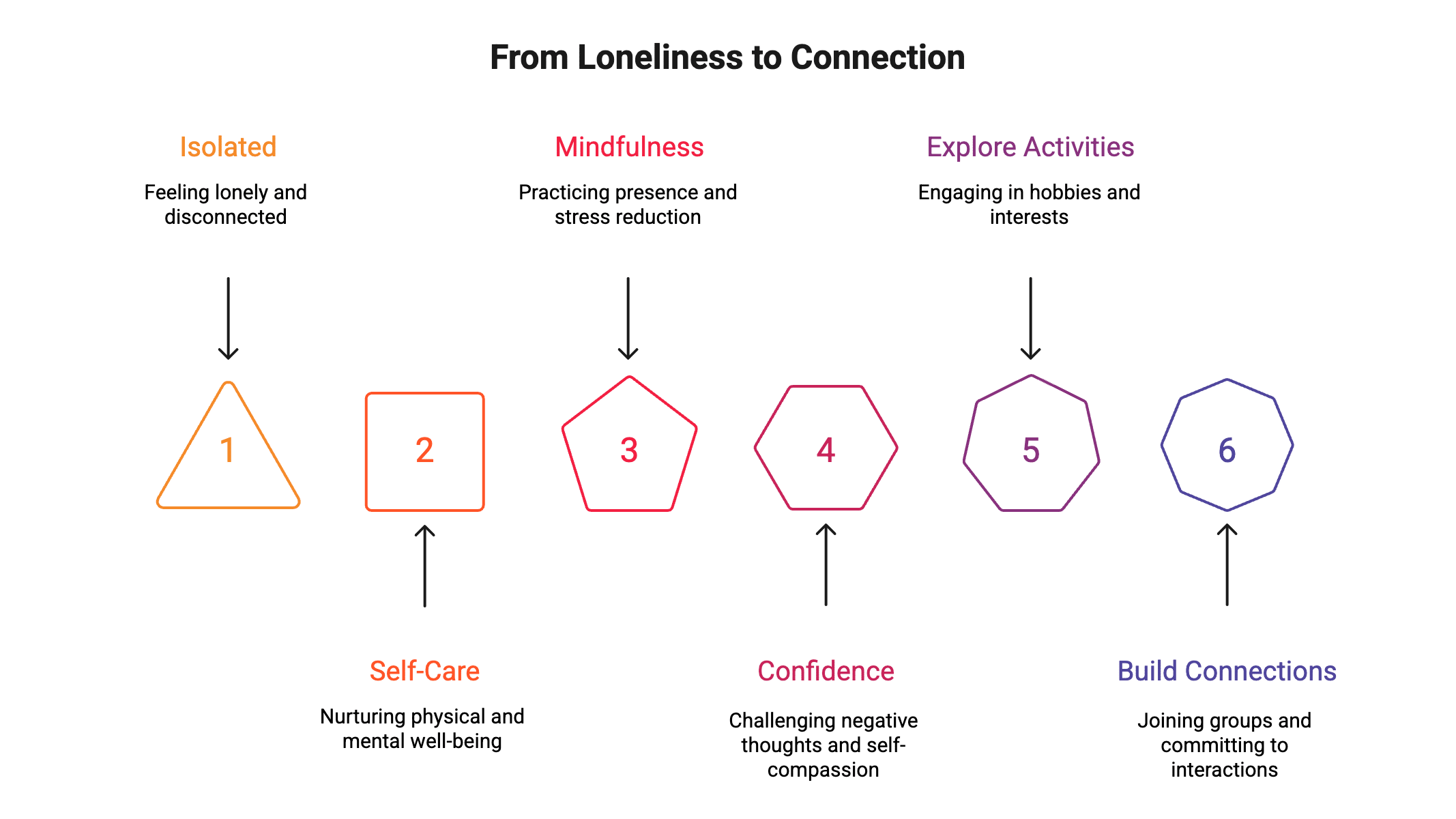
Practice Self-Care and Build Confidence
Learning to enjoy your own company is important for coping with loneliness. This doesn’t mean accepting isolation—it means building confidence and comfort with yourself, which actually makes social situations feel less stressful and overwhelming.
Self care practices can improve your well being and help you cope when loneliness feels heavy. This includes:
- Eating nutritious food that supports your energy and mood
- Getting enough sleep to manage stress
- Moving your body in ways you enjoy
- Finding things to do that give you a sense of accomplishment
When you feel better physically, you often have more energy to reach out and connect with others. Self care isn’t selfish—it’s preparing yourself to show up in relationships.
Mindfulness and meditation can help reduce feelings of loneliness by lowering stress and helping you feel more present in each moment. Even five minutes a day of quiet breathing or a short walk outside can help you deal with difficult feelings without getting overwhelmed. These practices teach you to notice thoughts without letting them control your mood.
Building confidence also means challenging negative thoughts that loneliness brings. Instead of thinking “nobody wants to talk to me,” try “I haven’t found my people yet, but I will.” Talk to yourself the way you’d talk to a friend who was struggling. This kind of self-compassion can directly reduce feelings of loneliness over time.
Explore Activities and Hobbies
Finding things you enjoy doing can serve multiple purposes. First, engaging in activities you care about helps distract from feelings of loneliness and improves your mood. Second, hobbies and interests naturally create opportunities to meet new people who share your passions.
Consider joining:
- Classes or workshops to learn new skills
- Volunteer groups for causes you believe in
- Recreation leagues or outdoor clubs
- Creative communities (art, music, writing)
For example, if you’ve always wanted to learn photography, taking a class puts you in regular contact with other learners. If you care about the environment, volunteering for park cleanups connects you with like-minded individuals. Dog walkers often form informal communities in neighborhoods—if you have a dog, this can be an easy way to start conversations.
The key is consistency. When you join something, commit to showing up regularly so people recognize you and connections have time to form. It takes multiple interactions before casual acquaintances become friends.
How to Deal with Crippling Loneliness?
When feelings of loneliness feel overwhelming or start to affect your ability to cope with daily life, it’s important to reach out for support. This is especially true if you’re also experiencing symptoms of depression, having thoughts of self-harm, or if loneliness is making it hard to work, sleep, or take care of yourself.
Professional support can provide tools and strategies specific to your situation. A therapist can help you understand patterns that might be contributing to your loneliness, work through anxiety in social situations, and develop healthier ways to connect with others. They can also help if depression and loneliness are feeding into each other in ways that feel impossible to break alone.
Therapy offers a safe space to talk about feelings without judgment. Your therapist can help you identify if social anxiety, past relationship wounds, or other factors are making it harder to connect. They can teach you practical skills for starting conversations, maintaining relationships, and managing the stress that comes with putting yourself out there.
How to Cope with Severe Depression Alone?
If you’re dealing with severe depression alone, please know you don’t have to cope entirely on your own. Crisis resources are available 24/7. Call 988 for the Suicide and Crisis Lifeline or go to your nearest emergency room if you’re in immediate crisis or having thoughts of harming yourself.
For ongoing support, talking to friends and family about how you feel can make a big difference. Many people worry about burdening others, but sharing your struggles often brings you closer to the people who care about you. Most people want to help—they just need to know what you’re going through.
If you don’t have friends or family you feel comfortable talking to, there are other ways to find support. Support groups, both online and in person, connect you with others who understand what you’re experiencing. Mental health support through therapy provides professional guidance and tools you can use to cope more effectively.
Remember that seeking help is a sign of strength, not weakness. Everyone needs support at different points in their life. Struggling with loneliness or depression doesn’t mean you’re broken—it means you’re human.
How Can You Find Support in Your Community?
Your local community offers more connection opportunities than you might realize. Start by noticing the places you already go—your coffee shop, grocery store, or dog walkers in your neighborhood. Small, friendly exchanges in these everyday moments can help reduce feelings of isolation. Even talking to strangers briefly at your local library or while out for a walk contributes to your sense of connection.
Look for community resources that match your interests and needs. Many local libraries offer free programs, from reading groups to classes on various topics. Community centers, religious organizations, and volunteer groups provide structured ways to meet new people while contributing to something meaningful.
Volunteering is particularly effective for combating loneliness because it gives you a sense of purpose while connecting you with others. Whether you’re helping at a food bank, walking dogs at a shelter, or joining neighborhood cleanup efforts, you’re building relationships around shared values. When you contribute to your community, you feel less isolated and more involved in the life around you.
Don’t overlook your existing networks. Talk to neighbors, reconnect with old classmates, or say yes to invitations even when you don’t feel like it. Building connection takes effort, especially at first, but consistent engagement leads to lasting improvements in how lonely you feel.
In DC specifically, Dupont Circle and surrounding neighborhoods have active community groups, free events, and gathering spaces. Check bulletin boards at your local library or coffee shop to find out what’s happening nearby.
Remember: Building meaningful relationships takes time. You might not find your group or your person right away, and that’s normal. Keep showing up, stay open to connection, and be patient with the process. Most people feel nervous about reaching out—you’re not alone in that.
Loneliness is a normal human experience, not a character flaw. With the right strategies and support, you can feel more connected to the people and community around you. Small steps taken consistently make a meaningful difference over time.
Reach out to us at the Therapy Group of DC
If you’re looking for support with loneliness or related mental health concerns, the therapists at Therapy Group of DC are here to help. Schedule an appointment to get started.
Disclaimer: This article is for educational purposes only and is not a substitute for professional medical advice, diagnosis, or treatment. Always seek the advice of your physician or qualified mental health provider with any questions you may have regarding a medical or mental health condition. If you are in crisis or experiencing thoughts of self-harm, please call 988 (Suicide and Crisis Lifeline) or go to your nearest emergency room.