Why Is My Anxiety Getting Worse in My 40s? Understanding Perimenopause and Anxiety
If you’ve noticed your anxiety intensifying in your 40s—racing thoughts keeping you awake, persistent worry that feels harder to shake, or physical tension you can’t quite explain—you’re not imagining things. Anxiety during perimenopause affects many women due to fluctuating hormone levels, and this biological shift often coincides with significant life stressors like aging parents, career pressures, and changing family dynamics. Research shows that 69% describe anxiety as difficult during the menopausal transition, making it one of the most common mental health challenges of midlife.
What is perimenopause, and when does it start?

Perimenopause is the transitional phase before menopause when your body gradually produces less estrogen and progesterone, causing menstrual cycles to become irregular and eventually stop. The average age for perimenopause to start is in your 40s, though some women enter early perimenopause in their late 30s. This menopausal transition typically lasts several months to several years.
During the menopausal transition, hormone levels fluctuate unpredictably rather than declining steadily. Estrogen might surge one week and drop the next, which explains why symptoms of perimenopause feel erratic. These shifting hormone levels can affect both your body and mood, producing physical symptoms like hot flashes alongside emotional symptoms including anxiety.
Common physical and emotional symptoms
Physical symptoms during perimenopause include hot flashes, sleep disturbances, night sweats, changes to your menstrual cycle, and cognitive symptoms like difficulty concentrating. About 4 in 10 women experience mood symptoms similar to premenstrual syndrome during perimenopause.
The emotional symptoms can feel particularly destabilizing. Many women report:
- Mood swings and increased irritability
- Feelings of depression and anxiety that seem disproportionate to circumstances
- Nervousness and tension (affecting up to 51% of midlife women)
- A sense of feeling “not like themselves”
In our practice, we regularly see women who feel caught off guard by the intensity of their emotional responses during perimenopause. They describe feeling more reactive, more worried, less resilient. Understanding that these changes have a biological component often provides significant relief and helps women approach support with less self-judgment.
Why is my anxiety getting worse in my 40s?
Your worsening anxiety in your 40s results from both hormonal fluctuations and compounding life stressors that peak during midlife. Hormonal changes during perimenopause are thought to affect mood regulation in the brain, though the exact mechanisms are still being researched. What’s clear is that many women experience heightened vulnerability to anxiety during this transition.
But hormones tell only part of the story. Perimenopause often coincides with significant life changes that add stress layers: children leaving home, increased career responsibilities, caring for aging parents, relationship strain, and financial pressures. These psychosocial factors compound the vulnerability created by hormonal changes, making perimenopausal women more susceptible to anxiety than at earlier life stages.
Women in early perimenopause report higher levels of stress and severe psychological complaints than postmenopausal women. This suggests that the unpredictability of the transition itself—not just the hormonal changes—contributes to anxiety. Perceived stress is a significant factor associated with anxiety during perimenopause. The uncertainty about when symptoms will occur and how long they’ll last can fuel persistent worry.
Risk factors that intensify anxiety
Women with previous anxiety or mood disorders face greater risk for heightened symptoms during the menopausal transition. Women with mental health histories are particularly susceptible to depressive and anxiety symptoms during this phase.
Vasomotor symptoms like hot flashes and night sweats can themselves trigger anxiety. The physical sensations—rapid heartbeat, sweating, feeling overheated—mimic panic attack symptoms, creating a feedback loop where physical symptoms trigger anxiety, which then worsens physical symptoms. Sleep disturbances compound the problem, as poor sleep quality lowers your resilience to stress and exacerbates anxiety symptoms.
Many women experience a decline in psychosocial quality of life during early perimenopause. The combination of physical discomfort, sleep disruption, unpredictable symptoms, and life stressors creates conditions where anxiety can thrive.
Can perimenopause bring on panic attacks?
Yes, perimenopause can trigger panic attacks, even in women who’ve never experienced them before. The sudden hormonal fluctuations, combined with physical symptoms that feel alarming, can produce panic attack symptoms including rapid heartbeat, sweating, shortness of breath, and intense fear. For many women, this is particularly frightening because panic attacks during perimenopause often appear without an obvious trigger.
Hot flashes can be misinterpreted by your brain as danger signals, potentially triggering a panic response. When you’re already experiencing physical sensations like a racing heart or feeling overheated, it’s easy for your nervous system to interpret these as signs of threat, setting off the panic response.
It’s worth noting that panic attacks are a symptom, not a diagnosis. If you’re experiencing recurrent panic attacks, it’s important to work with mental health professionals to develop coping strategies and determine whether additional support would be helpful.
We often work with women who’ve never struggled with anxiety before perimenopause but suddenly find themselves having panic attacks in situations that previously felt manageable—driving, being in crowded spaces, or even just going to sleep. These experiences respond well to anxiety-focused therapy, particularly Cognitive Behavioral Therapy.
How do you deal with perimenopause anxiety?
Managing anxiety during perimenopause requires addressing both the biological changes and the psychological impact they create. The most effective approach combines therapeutic support, lifestyle changes, and sometimes coordination with your healthcare provider for medical support.
Psychotherapy and mental health support
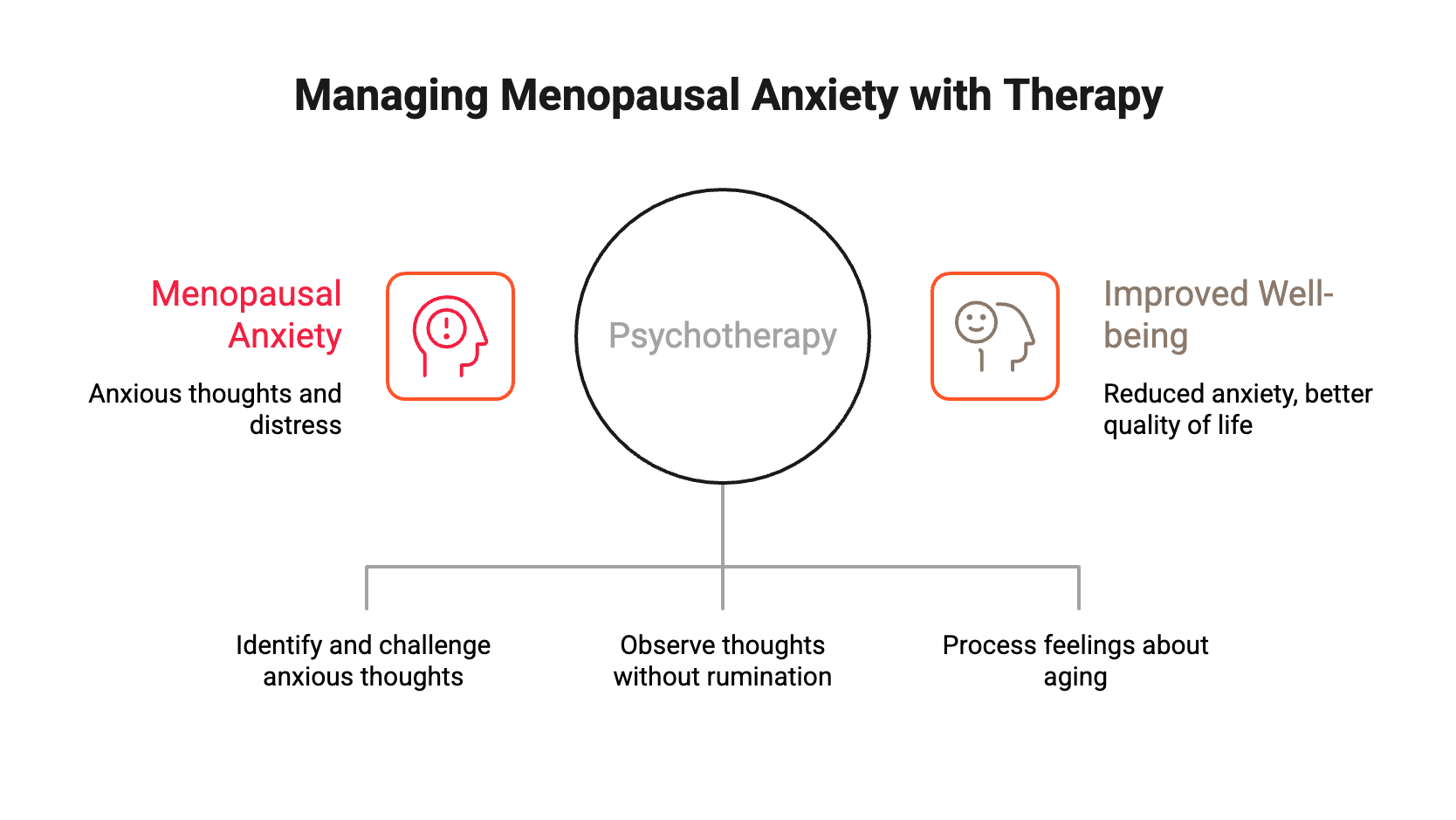
Cognitive Behavioral Therapy (CBT) has strong clinical evidence for treating anxiety during the menopausal transition. Research shows CBT reduces anxiety and improves quality of life by teaching specific coping strategies for managing anxious thoughts and breaking the cycle between physical symptoms and emotional distress.
In CBT, you learn to:
- Identify thought patterns that fuel anxiety
- Challenge catastrophic thinking about symptoms
- Develop behavioral strategies for managing panic and worry
- Build tolerance for uncomfortable physical sensations
- Create realistic expectations about the transition
Mindfulness-based approaches also help manage symptoms. Mindfulness practices like meditation teach you to observe anxious thoughts without getting pulled into rumination. Studies show psychosocial interventions including mindfulness significantly improve psychological well-being during perimenopause and postmenopause.
Working with a therapist who understands women’s health provides valuable support as you navigate both hormonal changes and life transitions. Therapy creates space to process feelings about aging, changing roles, and identity shifts that often accompany perimenopause. Many women find that exploring these themes—separate from symptom management—helps them make meaning of the transition rather than just enduring it.
Building resilience and self-efficacy
Research shows that resilience and self-efficacy are associated with lower levels of perceived stress in women during the menopausal transition. This means that strengthening your psychological resources—your belief in your ability to cope, your sense of control, your problem-solving skills—can buffer against anxiety.
Practical ways to build resilience:
- Practice self-compassion when symptoms feel overwhelming
- Set realistic expectations for this phase of life
- Identify what you can control versus what you need to accept
- Develop a support network of people who understand
- Challenge the narrative that perimenopause is just something to “get through”
Lifestyle adjustments and stress reduction
Regular exercise is one of the most effective tools for managing perimenopause anxiety. Physical activity helps regulate mood, reduces muscle tension, improves sleep quality,and provides stress reduction benefits. Aim for activities you enjoy rather than forcing yourself into punishing exercise routines.
Lifestyle changes that help:
- Limit caffeine, sugar, and alcohol (they can exacerbate both anxiety and hormonal fluctuations)
- Prioritize sleep hygiene with consistent sleep and wake times
- Create a cool sleeping environment to manage night sweats
- Eat a balanced diet rich in omega-3 fatty acids
- Maintain regular social support through trusted relationships
Regular social support and open conversations with trusted individuals can help reduce anxiety during perimenopause. Feeling isolated in your experience tends to amplify symptoms, while connection and validation provide relief.
Coordination with healthcare providers
For some women, working with their healthcare provider on hormonal support or medication can be helpful alongside therapy. This might include hormone therapy or medications that address anxiety symptoms. These medical interventions work best when combined with therapeutic support that addresses the psychological and social aspects of the transition.
If you’re considering medical support, bring it up with both your therapist and healthcare provider so everyone is coordinating your care effectively.
When to seek professional help
If anxiety or mood changes are affecting your daily life, relationships, or work, it’s time to talk to a mental health professional. Research highlights that patients and doctors don’t always align on how perimenopause affects mental health, so being clear about your symptoms helps ensure you get appropriate support.
Signs it’s time to seek help:
- Anxiety interfering with work or relationships
- Panic attacks that limit your activities
- Persistent worry you can’t control
- Sleep disruption beyond what hot flashes alone explain
- Mood changes that feel unmanageable
- Thoughts of self-harm or hopelessness
You’re not alone in this experience. Many women report that simply understanding the connection between perimenopause and anxiety reduces some of the anxiety about the anxiety itself. Getting professional support can help you develop the specific skills and strategies you need to manage symptoms effectively.
Anxiety during perimenopause is common, understandable, and treatable through therapy and lifestyle changes. While the hormonal changes creating these symptoms are biological, you have significant control over how you respond to and cope with them. The intensity of what you’re experiencing doesn’t reflect weakness; it reflects a significant biological transition compounded by real-world stressors that deserve proper support.
Get support for perimenopause anxiety in DC
If you’re struggling with anxiety in your 40s and wondering whether perimenopause might be playing a role, we can help. Our therapists in Dupont Circle understand the intersection of hormonal changes and mental health and can work with you to develop coping strategies, process life transitions, and build resilience during this phase. Schedule an appointment to start finding relief.
Disclaimer: This blog provides general information about perimenopause and anxiety and is not a substitute for professional medical or mental health advice. If you’re experiencing significant anxiety symptoms, please consult with a mental health professional for personalized evaluation and treatment recommendations. For questions about hormonal changes or medical treatment options, consult with your healthcare provider.