Adult Children of Alcoholics: Breaking Toxic Relationship Patterns
Adult children of alcoholics often struggle with relationships in ways that mirror the chaos of their childhood homes. If you grew up with an alcoholic parent—or you’re trying to understand someone who did—recognizing these patterns is essential. Growing up with an alcoholic parent can shape how adult children connect with others, trust people, and even see themselves.
This article explores the common traits of adult children of alcoholics, how childhood experiences create specific relationship challenges, and what effective support looks like. Research shows that many adult children of alcoholics experience difficulties with intimacy, emotional regulation, and partner selection—but understanding where these patterns come from is the first step toward breaking them. Whether you’re navigating your own healing journey or supporting someone who is, knowing how alcoholic family dynamics shape adult life makes meaningful change possible.
What Are the Traits of Adult Children of Alcoholics?

Adult children of alcoholics commonly share a set of recognizable characteristics, often called “The Laundry List,” that stem from growing up in unpredictable environments. These traits aren’t character flaws—they’re survival strategies that once protected children of alcoholics but may now create problems in their adult life.
While each person’s experience is unique, adult children frequently struggle with trust, self-worth, and emotional expression in ways that directly trace back to the family dysfunction they witnessed. Common characteristics include:
- Difficulty trusting others and forming intimate relationships, especially when early experiences with parents were invalidating or inconsistent
- People-pleasing behaviors and seeking constant approval from others while neglecting your own needs
- Low self-esteem and damaged self worth, often rooted in unmet emotional needs during childhood
- Extreme loyalty, even when that loyalty isn’t deserved or reciprocated
- Fear of abandonment that can lead to clinginess or, conversely, pushing people away before they can leave you
- Difficulty expressing emotions, particularly anger, sadness, or fear that had to be suppressed to avoid conflict
Research confirms that adult children of alcoholics may be at increased risk for anxiety, depression, and challenges in relationships. However, these patterns aren’t inevitable—many people who grew up with alcoholic parents show remarkable resilience and develop healthy coping strategies with proper support.
In our practice in Dupont Circle, we frequently see how the high-pressure culture of DC can amplify ACOA patterns. When your sense of worth already depends on external achievement, it’s easy to become trapped in cycles of overwork and performance that mirror childhood hypervigilance.
How Does Having an Alcoholic Parent Affect a Child?
Growing up with parental alcoholism creates an environment of chronic unpredictability and emotional neglect. Children in these homes, often referred to as children of alcoholics, take on adult responsibilities early, learning to anticipate mood swings, manage crises, and suppress their own needs to maintain stability.
The impact extends across multiple domains:
Attachment and trust: Research on attachment patterns shows that adult children of alcoholics often develop insecure attachment styles, struggling to balance their need for closeness with fear of vulnerability. Many adult children may find themselves caught between desperately wanting connection and feeling safer when emotionally distant.
Emotional development: When feelings had to be hidden to keep the peace in dysfunctional families, children may have never learned healthy emotional expression. As an adult, this can manifest as difficulty identifying what you actually feel, or experiencing emotions as overwhelming and unmanageable.
Relationship templates: Without witnessing healthy relationship dynamics in dysfunctional family dynamics, many adult children unconsciously seek partners who are emotionally unavailable or struggle with addiction themselves. This isn’t masochism—it’s familiarity. Adult children’s nervous systems recognize the patterns of dysfunction and mistakes intensity for intimacy.
The concept of para-alcoholism describes how even children who never drink can develop behaviors and emotional patterns associated with alcoholism through prolonged exposure to dysfunctional family dynamics.
What Are the 4 Types of Adult Children of Alcoholics?
Mental health professionals often identify four common roles that children adopt in alcoholic families, each representing a different survival strategy. While these aren’t rigid categories—many people show traits from multiple roles—they provide useful frameworks for understanding your patterns.
The Hero (Super Responsible)
You became the family’s success story, achieving academically or professionally to create a facade of normalcy. As an adult, you may struggle with perfectionism, workaholism, and feeling that your worth depends entirely on accomplishments. In a city like DC where identity often merges with career, this pattern can feel both validated and exhausting.
The Scapegoat
You acted out, drawing attention away from the alcoholic parent’s behavior. This role often leads to difficulties with authority figures, relationship conflicts, and potentially substance abuse as adult children internalized the family’s dysfunction.
The Lost Child
You stayed quiet, made yourself invisible, and learned to need nothing from anyone. Adult lost children often struggle with feelings of emptiness, difficulty asserting needs, and a sense of being fundamentally alone even in relationships.
The Mascot (Class Clown)
You used humor and cuteness to defuse tension and distract from family problems in dysfunctional families. As an adult, you may find it difficult to be taken seriously, struggle to express genuine emotions, or use humor compulsively to manage anxiety.
Understanding which role you played—or which combination of roles—can illuminate current patterns. The healing process for adult children often begins with recognizing these aren’t permanent identities but learned responses to impossible situations.
A pattern we observe in our Dupont Circle practice is that most people identify with multiple roles rather than just one. The Hero might also be the Lost Child at work, shifting between hyper-responsibility and invisible withdrawal depending on the situation. Understanding this fluidity helps reduce shame about “not fitting” one category.
What Happens to Adult Children of Alcoholics?
The outcomes for adult children of alcoholics vary widely, and it’s crucial to understand that negative outcomes aren’t inevitable. While research identifies increased risks for certain challenges, protective factors can significantly influence your trajectory.
Studies show that having supportive, caring relationships during childhood substantially reduces the risk of developing alcohol problems yourself. Your own coping strategies, access to therapy, and the presence of other stable adults all matter enormously.
Common struggles include:
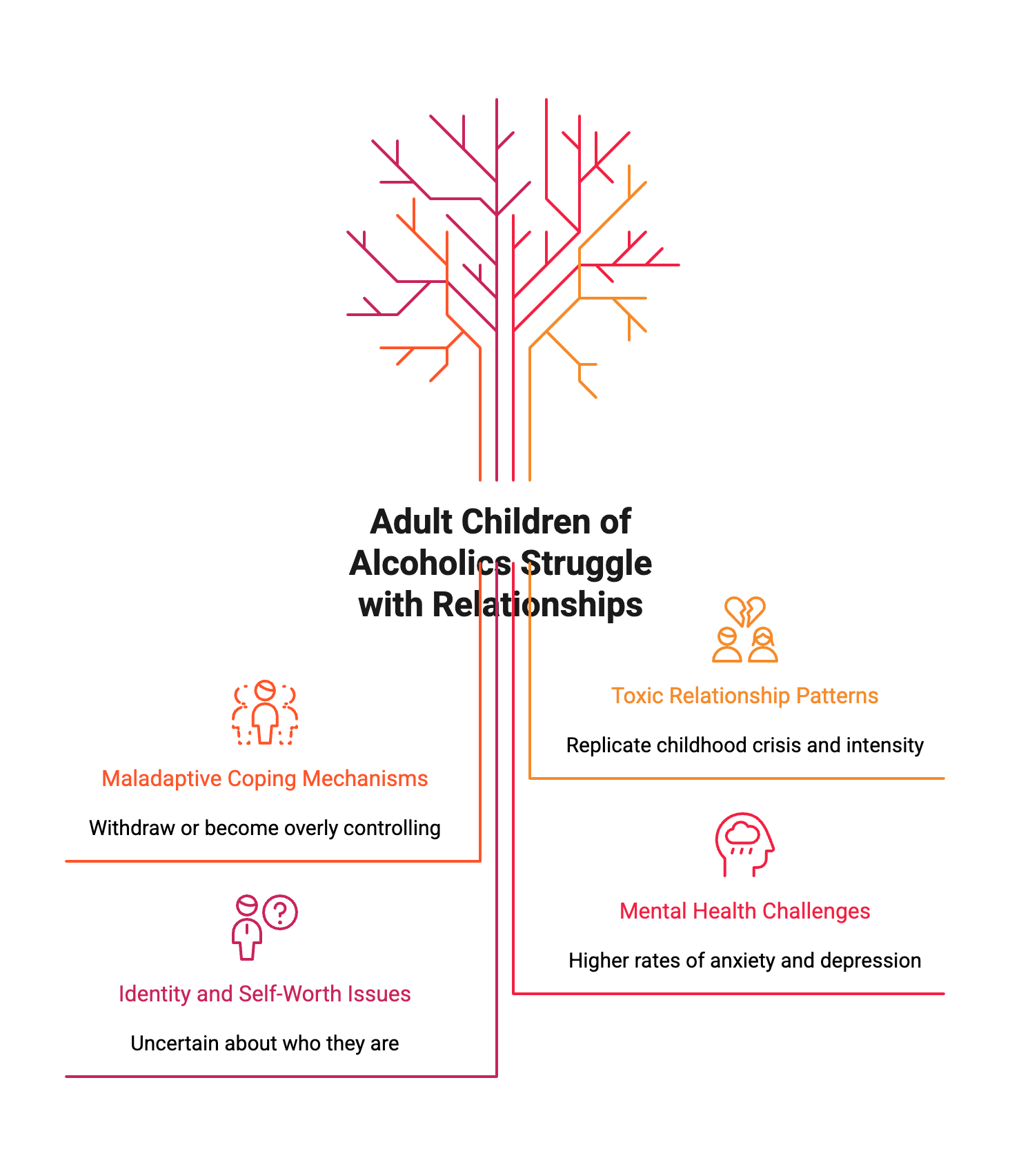
- Relationship patterns: Many adult children find themselves in toxic relationship dynamics that echo childhood experiences—relationships marked by crisis, intensity, or the need to rescue someone. You may confuse pity with love, or find “normal” relationships boring because your nervous system is calibrated for chaos.
- Coping mechanisms: Research on alcohol-specific coping styles shows that adult children of alcoholics often develop distinct strategies for managing stress, sometimes withdrawing entirely or becoming overly controlling of their environment.
- Mental health challenges: While not everyone develops clinical disorders, adult children may experience higher rates of anxiety, depression, and difficulty with emotional regulation. These aren’t personal failures but understandable responses to childhood adversity in dysfunctional families.
- Identity and self worth: Growing up in dysfunctional family dynamics often leaves adult children uncertain about who they are separate from their caretaking role. You may feel like a chameleon, becoming different versions of yourself depending on who you’re with.
The positive news: many adult children of alcoholics demonstrate remarkable resilience. With proper support—whether through therapy, support groups like Adult Children of Alcoholics (ACA), or other healing modalities—adult children can develop healthier relationship patterns, stronger sense of self, and the emotional regulation skills they didn’t learn in childhood. The healing process takes time but is entirely possible.
How Therapy Can Help Adult Children of Alcoholics
Several evidence-based therapy approaches have proven effective for addressing the specific challenges that adult children face. The key is finding an approach that resonates with your needs and builds on your existing strengths.
Evidence-Based Therapy Approaches
Psychodynamic therapy helps you understand how past relationships shape current patterns, particularly if you struggle with trust or recurring relationship problems. This approach focuses on connecting your childhood experiences to present-day challenges, often working through the therapeutic relationship itself as a model for healthier connection.
Cognitive-behavioral therapy (CBT) offers practical tools for identifying and changing negative thought patterns, especially helpful if you battle self-criticism or catastrophic thinking. CBT can help you recognize when childhood survival strategies are no longer serving you.
Trauma-focused approaches like EMDR can be valuable when childhood experiences included physical or emotional abuse alongside parental alcoholism. These therapies help process traumatic memories without requiring you to relive them in detail.
Group therapy and support groups provide community with others who understand your experiences. The Adult Children of Alcoholics fellowship specifically addresses the unique challenges of growing up in alcoholic or dysfunctional families, offering both peer support and a structured recovery program based on The Laundry List of common traits.
What helps in our experience is starting with wherever you feel most stuck. Some people need relationship skills first, while others benefit from processing childhood experiences before tackling current patterns. We tailor the approach to what creates the most relief and forward movement for you.
Support Resources Beyond Therapy
The Adult Children of Alcoholics (ACA) program uses a 12-step structure similar to Alcoholics Anonymous, adapted specifically for those who grew up in dysfunctional families. ACA meetings—available in-person, online, or by phone—provide a space to share experiences with others who genuinely understand. The ACA fellowship emphasizes emotional sobriety and personal responsibility without requiring any religious affiliation.
Al-Anon Family Groups offer support specifically for family members affected by someone else’s drinking, including adult children. These meetings can help you understand how alcoholism affected your family system and develop healthier coping strategies.
Many adult children benefit from combining individual therapy with group support, using each to address different aspects of the healing process.
If you’re ready to address how growing up with an alcoholic parent affects your adult relationships, therapy can provide the support and tools you need. Whether you’re struggling with relationship patterns, self worth issues, or difficulties with emotional intimacy, professional help can make a meaningful difference.
Get Support in Washington DC
Our therapists in Dupont Circle understand the specific challenges that adult children face. We offer individual therapy, couples counseling for those working through relationship issues, and can help you develop the skills you didn’t learn in childhood—emotional awareness, healthy boundaries, and authentic self-expression.
Connect with our DC therapists to start building healthier patterns.
This blog provides general information and discussions about mental health and related subjects. The content is not intended to be a substitute for professional medical advice, diagnosis, or treatment. Always seek the advice of your physician or other qualified health provider with any questions you may have regarding a medical condition.
Frequently Asked Questions about Adult Children of Alcoholics
What is the Adult Children of Alcoholics (ACA) organization?
The ACA organization is a fellowship designed to support adults who were raised in alcoholic or dysfunctional families. It provides a 12-step recovery program that emphasizes emotional sobriety, personal responsibility, and healing from family dysfunction. The ACA fellowship text and resources help members discover healthier ways to cope with the lasting effects of childhood trauma.
How does growing up in a dysfunctional family affect adult relationships?
Many children of alcoholics and dysfunctional families develop patterns such as low self-esteem, difficulty trusting others, and compulsive behaviors. These patterns can lead to challenges in intimacy, emotional regulation, and forming healthy relationships. Adult children often struggle with feelings of guilt, personal criticism, and fear of abandonment, which can affect their ability to create healthier connections.
What therapy options are effective for adult children of alcoholics?
Evidence-based therapies like EMDR, cognitive processing therapy, and psychodynamic therapy can help adult children process trauma and build coping skills. Licensed therapists trained in addiction and trauma treatment provide a supportive environment to address unresolved childhood pain and work toward emotional healing.
How can support groups help in the healing process?
Support groups such as ACA and Al-Anon offer a community of understanding peers who share similar experiences. They provide a safe space to express feelings, learn interpersonal skills, and gain compassion for oneself and others. Being part of these groups helps many adult children feel less alone and more empowered in their recovery journey.
What are common traits of adult children of alcoholics?
Common traits include being extremely loyal, developing poor coping mechanisms, struggling with self-worth, and sometimes becoming super responsible or super irresponsible in different areas of life. Many adult children experience hypervigilance, fear of abandonment, and difficulty expressing emotions like anger or excitement due to their upbringing.
How long has the ACA fellowship been supporting adult children?
The Adult Children of Alcoholics (ACA) fellowship—a peer-led support community—has been active for decades, founded in the late 1970s. It continues to grow worldwide, supported entirely by member donations and maintained through group conscience (shared decision-making among members) and personal experience. The fellowship remains focused on helping individuals break free from the effects of family dysfunction and find lasting healing.