Nervous System Regulation: How Therapy Rewires Your Brain for Calm

When you’re stuck in cycles of anxiety, panic, or chronic stress, it can feel like your body has forgotten how to calm down. Psychotherapy helps regulate your nervous system by creating actual changes in your brain—strengthening areas that manage emotions while quieting regions linked to fear and stress. Research shows these neurological changes help you respond to stress more effectively and regain control over how you feel.
Your nervous system controls everything from your heartbeat to your emotional reactions. This complex network operates through two main branches: the sympathetic nervous system (your “gas pedal” for stress responses) and the parasympathetic nervous system (your “brake” for rest and digest functions).
The central nervous system—your brain and spinal cord—acts as the command center for these responses. When chronic stress or trauma keeps the sympathetic nervous system activated too long, you become stuck in fight-or-flight mode. Therapy provides structured ways to help your brain and body learn new patterns, shifting from hypervigilance to genuine calm.
What causes dysregulation of the nervous system?

Nervous system dysregulation happens when your stress response stays activated long after a threat has passed, leaving you anxious, on edge, or emotionally reactive even in safe situations. The autonomic nervous system can become imbalanced when the sympathetic nervous system (fight-or-flight) dominates over the parasympathetic nervous system (rest-and-digest).
This imbalance often develops from chronic stress, trauma, or prolonged uncertainty. When your brain repeatedly interprets situations as dangerous—from past experiences, learned patterns, or ongoing stressors—the amygdala (your brain’s alarm center) sends distress signals to the hypothalamus.
The hypothalamus then communicates with the body through the autonomic nervous system, triggering stress hormones like cortisol and activating the sympathetic nervous system to prepare your body for action.
Over time, this constant activation creates wear and tear on your mental and physical health. Chronic stress can contribute to high blood pressure, cardiovascular disease, digestive issues, difficulty sleeping, or persistent anxiety.
The stress response is temporary by design, but when it becomes your default state, it affects everything from problem-solving to relationships.
Signs your nervous system needs support
Physical symptoms often appear first: racing heart, muscle tension, shallow breathing, or feeling constantly keyed up. You might notice emotional signs too—irritability, emotional numbness, or feeling overwhelmed by small stressors.
A dysregulated nervous system can manifest as chronic pain, sleep disturbances, or a general sense of unease. Many people describe feeling like they can’t slow down or like their body doesn’t know how to relax, even when they want to.
In our practice, we regularly see clients who’ve tried self-help techniques but still struggle with dysregulation. What often helps is understanding that this isn’t a personal failing—your nervous system has learned these patterns as a way to protect you. Therapy provides a structured environment to teach your brain and body new responses. Working with a professional helps you identify which specific techniques work for your nervous system rather than trying everything at random.
How do you regulate the nervous system?
Nervous system regulation techniques work by activating your parasympathetic nervous system and teaching your brain to recognize safety, which helps counteract chronic sympathetic activation.
Psychotherapy creates measurable changes in brain areas responsible for emotion regulation, strengthening your prefrontal cortex (for clear thinking and decision-making) while reducing overactivity in the amygdala (your fear center).
Different therapeutic approaches target nervous system regulation in specific ways:
- Cognitive Behavioral Therapy (CBT) helps you identify thought patterns that trigger stress responses and replace them with more balanced perspectives
- Dialectical Behavior Therapy (DBT) combines mindfulness and acceptance practices with specific emotion regulation skills, teaching you to observe your nervous system state without getting overwhelmed
- Somatic therapies focus on physical sensations and help you develop interoceptive awareness—the ability to notice internal bodily sensations like heart rate, breathing patterns, or muscle tension
- EMDR therapy targets how traumatic memories keep the nervous system activated, helping process these experiences so they no longer trigger dysregulation
The peripheral nervous system—which connects your central nervous system to the rest of your body—plays a crucial role in transmitting these stress signals and relaxation responses throughout your system.
Techniques therapists use in session
In therapy sessions, you might practice deep breathing exercises that extend your exhale (activating the parasympathetic response), progressive muscle relaxation that releases held tension, or mindfulness-based stress reduction techniques that build present-moment awareness.
Your therapist may also work with heart rate variability, teaching you how breathing patterns affect the communication between your brain and heart to manage stress.
The physiological sigh—two quick inhales through the nose followed by a long exhale through the mouth—is one evidence-backed technique that quickly shifts your nervous system toward calm. Cyclic sighing decreases respiration rate and improves well-being.
Box breathing, where you inhale for four counts, hold for four, exhale for four, and hold again for four, helps reduce physiological arousal during stressful situations.
Breath control through slow breathing techniques is associated with improved parasympathetic nervous system regulation. These breathing exercises influence the body’s response to stress by activating the vagus nerve, which helps trigger the relaxation response and promotes inner peace.
How does psychotherapy help your brain change?
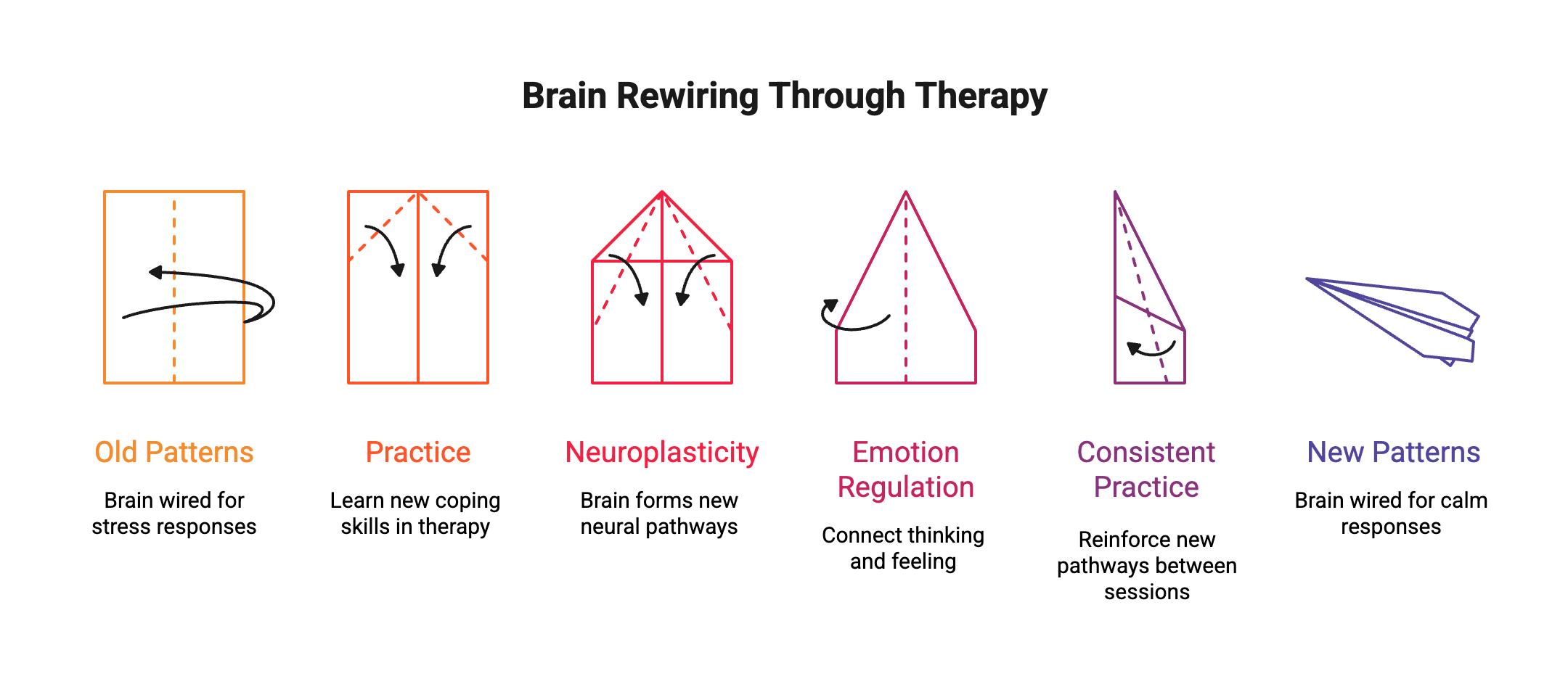
Psychotherapy creates neuroplasticity—the brain’s ability to form new neural pathways—by giving you repeated practice with healthier responses to stress.
Brain imaging studies show therapy increases activity in the prefrontal cortex (supporting rational thinking and emotional control) while decreasing activity in the amygdala (reducing fear responses). These aren’t just mental shifts; they’re measurable physiological changes in brain structure and function.
The mechanism works through emotion regulation pathways that connect thinking and feeling. When you practice new coping skills in therapy, you’re training your brain to respond differently to stress triggers.
Initially, these new responses feel effortful and awkward. But with consistent practice, they become more automatic as your brain strengthens the neural connections supporting them.
This process takes time because your brain needs repeated experiences to overwrite old patterns. Therapy works best when you practice between sessions, reinforcing the new pathways your brain is building.
Each time you successfully use a coping skill or respond differently to a trigger, you’re literally rewiring your nervous system’s default settings. Mind-body interventions that target interoceptive pathways show promise in improving symptoms related to nervous system dysregulation.
We often tell clients that therapy is like learning a new language for their nervous system. The first few months, you’re conscious of every step—noticing when you’re activated, choosing a grounding technique, talking through a difficult moment. But over time, these responses become more natural. Your nervous system starts to default to calm rather than crisis, and that’s when people really feel the difference.
How do you fix a dysregulated nervous system?
Fixing nervous system dysregulation requires both professional support and daily practices that reinforce your body’s ability to return to calm and reduce stress.
While self-regulation techniques like deep breath work and mindfulness meditation are valuable, therapy provides the structured framework and expert guidance to address the underlying patterns keeping your system stuck.
Treatment typically begins with building awareness of your current nervous system state. You learn to recognize early warning signs—maybe tension in your shoulders, a quickened heartbeat, or scattered thoughts—before reaching full dysregulation.
Recognizing bodily sensations can aid in stress management and emotional regulation. This interoceptive awareness is crucial because you can’t regulate what you don’t notice.
Next comes developing a toolkit of nervous system regulation techniques matched to your specific needs. Some people respond well to grounding exercises and breathing techniques that work through the vagus nerve. Others benefit more from movement-based approaches or cognitive strategies.
A therapist helps you identify what actually works for your system rather than relying on generic advice.
Supporting practices outside therapy
Between sessions, regular exercise helps metabolize stress hormones and releases muscle tension that accumulates during chronic stress. Physical activity helps regulate the nervous system by reducing sympathetic responses to stress.
Even a brisk walk can activate the relaxation response and shift your nervous system out of fight-or-flight mode.
Sleep quality matters tremendously too—poor sleep exacerbates nervous system dysregulation while better sleep supports your body’s natural recovery processes. Sleep affects the functioning of every system in your body, including how your nervous system works. Improving sleep can enhance mental health by influencing mood and emotional regulation.
Social support and emotional connection also play important roles in managing stress. Safe relationships help co-regulate your nervous system, essentially lending you their calm when yours feels out of reach.
Spending time in nature has a calming effect on both the mind and body. Healthy eating supports overall physical health and nervous system function. Practices like progressive muscle relaxation, using a weighted blanket, or incorporating aromatherapy with essential oils can all support the nervous system work you’re doing in therapy.
The question isn’t really whether therapy or lifestyle changes matter more—they work together. Therapy gives you the roadmap and teaches you the skills, while daily practices create the repetition your brain needs to make lasting changes. We see the best outcomes when clients treat both as essential parts of their nervous system healing. Neither alone is quite as effective as the combination.
How to reset the nervous system quickly?
While deep nervous system regulation takes time, you can shift from acute stress to relative calm within minutes using specific techniques.
The physiological sigh works quickly: take two sharp inhales through your nose (the second one tops off your lungs), then a long, slow exhale through your mouth. This breathing pattern reduces your respiration rate and signals safety to your nervous system.
Three deep breaths with extended exhales can trigger the relaxation response and help move you out of fight-or-flight activation. The key is making your exhale longer than your inhale—this activates the parasympathetic nervous system and slows your heart rate.
Alternate nostril breathing, where you close one nostril while breathing through the other, helps regulate blood pressure through controlled breath work.
Physical grounding techniques provide another fast reset. Try the 5-4-3-2-1 method: identify five things you can see, four you can touch, three you can hear, two you can smell, and one you can taste.
This sensory exercise brings you into the present moment and interrupts the cascade of stress responses. Some people find chewing on ice helps with sensory overload by engaging multiple senses simultaneously and providing a powerful tool for grounding.
Movement helps release tension held in the body. Humming, chanting, or singing activates the vagus nerve and helps move the body out of the fight-or-flight response. Different techniques work for different people—the goal is finding what helps you self-regulate when feeling stressed.
For longer-term nervous system health, therapy addresses dysregulation causes at their root. Quick resets are valuable tools, but they work best when combined with deeper therapeutic work that changes how your brain interprets and responds to stressful situations.
Understanding that therapy creates real, measurable changes in how your nervous system functions can be empowering. You’re not just learning coping strategies—you’re literally reshaping your brain’s stress response pathways.
This nervous system work takes patience and practice, but the physiological changes that happen through therapy offer genuine relief and lasting improvement in both mental health and physical well-being.
Getting professional support for nervous system regulation
If you’re experiencing chronic stress, anxiety, or feeling stuck in nervous system dysregulation, professional support can make a significant difference.
Our therapists in Dupont Circle specialize in evidence-based approaches that support nervous system regulation and help you build the skills for lasting change. Schedule an appointment with us to start the process of helping your brain and body feel calmer.
Disclaimer: This blog provides general information about nervous system regulation and psychotherapy. It is not intended as medical advice or treatment. Always consult with a qualified mental health professional for guidance specific to your situation. If you’re experiencing a mental health crisis, contact 988 (Suicide & Crisis Lifeline) or go to your nearest emergency room.