Pregnancy Loss Therapy: Evidence-Based Support for Grief and Healing

Losing a pregnancy is a heartbreaking reality faced by many people in the process of building their families. Pregnancy loss therapy provides support during the challenging time of grief, offering professional guidance to process the emotional pain, reduce symptoms of depression and anxiety, and develop healthy coping strategies. Research shows therapy significantly reduces grief, depression, anxiety, and PTSD symptoms following pregnancy or infant loss.
Pregnancy and infant loss occurs more often than many people realize, with 1 in 4 pregnancies ending in miscarriage and approximately 1% resulting in stillbirth.Despite how frequently pregnancy and infant loss occurs, many people feel alone after losing a pregnancy, especially if they don’t feel comfortable sharing their story. The experience can trigger profound grief, anxiety and depression, and trauma responses that interfere with daily life.
Does Therapy Help With Miscarriage?

Yes, therapy can be highly effective for people grieving a miscarriage or other pregnancy loss. Therapy significantly reduces grief, depression, anxiety, and PTSD symptoms following pregnancy or infant loss, with psychosocial interventions showing measurable improvements in mental health outcomes for parents experiencing perinatal loss.
Many people experience sadness, guilt, self-doubt, and shame after a miscarriage or stillbirth. These feelings are a normal response to loss, but they can become overwhelming or persist longer than expected without support. Professional therapy provides tools for the healing process, helping you process your grief, manage distressing symptoms, and regain a sense of emotional balance.
Therapy offers a non-judgmental environment to openly discuss the loss, share feelings, and receive validation that your grief is real and deserves acknowledgment. Unlike well-meaning friends or family members who may inadvertently minimize your experience, therapists specializing in pregnancy loss understand the depth of your pain and can provide appropriate emotional support.
In our Dupont Circle practice, we work with clients who’ve been told “at least you can try again” or “it wasn’t meant to be” by people who care about them but don’t know what to say. We’ve learned that these phrases, while meant to comfort, often intensify feelings of isolation and invalidation. Having a space where your loss is fully recognized—where you don’t have to explain why you’re still grieving weeks or months later—is frequently the first step toward healing.
What Types of Therapy Help With Pregnancy Loss?
Several evidence-based therapy approaches have shown effectiveness for pregnancy loss, each offering different tools and perspectives for processing grief and trauma.
Cognitive Behavioral Therapy (CBT)
Cognitive Behavioral Therapy helps manage negative thought patterns related to self-criticism, anxiety, and depression after pregnancy loss. CBT focuses on identifying unhelpful beliefs (such as “my body failed” or “I should have done something differently”) and replacing them with more balanced, realistic perspectives.
CBT programs have been shown to reduce posttraumatic stress and prolonged grief in parents after losing a child during pregnancy. The structured approach of CBT can be delivered in person or through online platforms, making it accessible even when you’re struggling with daily functioning.
Interpersonal Psychotherapy (IPT)
Interpersonal Psychotherapy focuses on relationships and how they affect emotional health after pregnancy loss. Many people struggle with how the loss has impacted their partnership, strained connections with family members, or created distance from pregnant women or friends with children.
IPT has demonstrated effectiveness for major depression following perinatal loss, helping people process grief while strengthening their support networks. This approach recognizes that healing happens within relationships, not in isolation.
Eye Movement Desensitization and Reprocessing (EMDR)
EMDR is a trauma-focused therapy that helps process and re-integrate traumatic experiences after pregnancy loss. This trauma informed therapy is particularly effective when you’re experiencing intrusive thoughts, flashbacks to the loss, or intense anxiety when reminded of the pregnancy. Therapy for anxiety related to pregnancy loss can help reduce these PTSD symptoms.
EMDR uses bilateral stimulation (typically eye movements) while you recall distressing memories, allowing your brain to reprocess the traumatic experience in a way that reduces its emotional intensity. This approach is particularly helpful when pregnancy loss has created trauma responses that feel stuck in your nervous system.
Psychodynamic Therapy
Psychodynamic therapy explores the deeper emotional meaning of pregnancy loss, including how it connects to your sense of identity, attachment experiences, and unconscious grief processes. Losing a pregnancy often disrupts fundamental beliefs about yourself, your body, and your future as a parent.
Case study research on psychodynamic therapy for pregnancy loss shows significant improvements in pregnancy-specific anxiety and perinatal grief. This approach addresses feelings of shame, inadequacy, and the ways past experiences influence how you process this loss. Psychodynamic therapy provides space to explore questions like “Who am I now?” and “How do I make meaning of this experience?” that arise after pregnancy loss.
Mindfulness-Based Therapy
Mindfulness-Based Therapy teaches relaxation and coping skills to manage stress, anxiety, and depression after pregnancy loss. These approaches focus on being present with difficult emotions without being overwhelmed by them.
Research on mindfulness-based interventions shows improved mental health outcomes for women experiencing fetal loss. Practices like mindful breathing, body scans, and meditation can help you develop greater emotional regulation and reduce anxiety about future pregnancies.
Grief and Bereavement Counseling
Grief counseling centers specifically on the mourning process, acknowledging the baby’s brief life and honoring your feelings of loss. This approach validates that pregnancy and infant loss is a significant death that deserves to be grieved, regardless of when in the pregnancy it occurred.
Bereavement counseling helps you express emotions, create meaningful rituals, and find ways to remember your pregnancy. Many people find comfort in having a dedicated space to talk about their baby and the hopes they held for the future.
How Long Does Miscarriage Grief Last?
Grief after pregnancy loss is a personal and unique process that can evoke a complex mix of emotions. There is no standard timeline for how long you should grieve—coping with pregnancy and infant loss takes time, and everyone moves through the process differently.
For some people, the most intense grief subsides within a few months. For others, particularly those who have experienced recurrent pregnancy loss or later losses like stillbirth, grief may persist for a year or longer. Many people find that grief comes in waves, with certain dates (due dates, the anniversary of the loss, Mother’s Day) triggering renewed sadness.
Research suggests that while acute grief symptoms typically decrease over the first six months, some psychological distress may continue, especially without adequate support. Anxiety and PTSD can occur after pregnancy loss, affecting a person’s ability to function in daily life. If you’re experiencing panic attacks, intrusive thoughts, feel numb, or notice that grief is interfering with daily functioning months after your loss, therapy can help.
It’s important to allow yourself to grieve and acknowledge feelings without self-criticism or blame. Healing doesn’t mean forgetting your baby or the pregnancy—it means learning to carry the loss while still being able to engage with life.
We regularly see clients in DC who worry they’re “taking too long” to feel better, especially in a city where productivity and forward momentum are highly valued. We’ve learned that grief doesn’t operate on a timeline or follow a schedule. Some people experience waves of sadness that come unexpectedly for years after their loss, triggered by dates, seasons, or even seemingly unrelated events. What matters isn’t how quickly you move through grief, but that you’re getting the support you need to process it in your own way.
Am I Still a Mom if I Miscarried?
Many people grapple with questions of identity after pregnancy loss. If you felt like a parent during your pregnancy, if you began imagining your future child, if you loved that baby—then yes, you experienced motherhood or parenthood, even if your child didn’t survive.
The loss of a pregnancy can create complicated feelings about identity. Some people find comfort in acknowledging themselves as mothers to babies who died. Others struggle with the question of whether they “count” as parents when they never brought a baby home. There’s no right answer—what matters is what feels true and meaningful to you.
Pregnancy loss often triggers feelings of shame, inadequacy, and failure. Many people experience a sense that their body failed them or that they somehow caused the loss. Therapy can help address these self-critical thoughts and rebuild a compassionate relationship with yourself.
Therapists equip individuals with practical tools like mindfulness meditation, breathing exercises, and journaling to help process grief. These skills can help you explore identity questions at your own pace, without pressure to resolve them in any particular way.
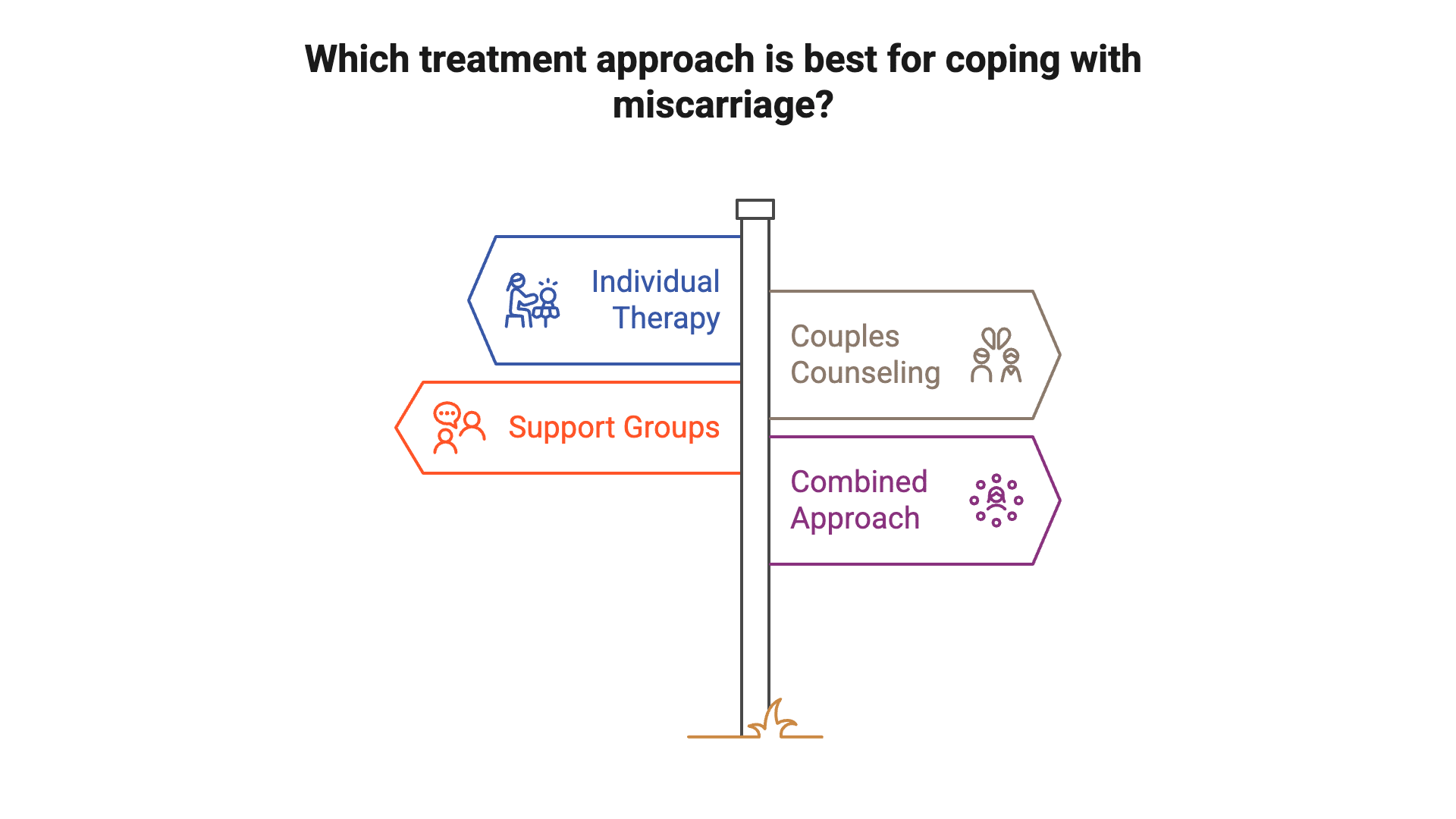
Which Treatment Is Best for Miscarriage?
The most appropriate treatment for pregnancy loss depends on your specific symptoms, preferences, and what feels most aligned with how you process emotions. Many people benefit from individual therapy, while others find couples counseling helpful if the loss has impacted their partnership.
Support groups provide community and validation while grieving, reducing the isolation many people feel after perinatal loss. Connecting with others who understand your experience through support groups can improve mental health outcomes for parents with pregnancy or infant loss. Groups offer a chance to hear how others have coped and to feel less alone in your grief.
Some people combine individual therapy with support groups, gaining both personalized treatment and peer connection. Others may start with one approach and add another as their needs evolve. An effective approach is one that addresses your specific needs and helps you feel supported during this challenging time.
Couples Counseling for Pregnancy Loss
Couples counseling addresses how the loss has impacted a partnership by helping couples understand each other’s grief styles. Partners often grieve differently—one may want to talk constantly while the other needs time alone, or one may want to try for another pregnancy immediately while the other needs more time.
These differences can create tension and misunderstanding at a time when you need each other most. Couples therapy helps partners understand their differing grief responses and strengthen their bond, while also providing space to process the loss together as a unit. This approach recognizes that pregnancy loss affects both partners, even though their experiences may differ.
Finding Pregnancy Loss Support in Washington, DC
Several resources for dealing with pregnancy loss are available in the Washington, DC area. Local support groups and specialized therapy services can provide the emotional support and professional help you need during this difficult time.
Local Support Groups
Pregnancy loss support is available through several local organizations that offer community connection and peer guidance.
The Pregnancy Loss and Infant Death Peer Support Group of Washington, D.C. (DC PLIDS) meets monthly for parents who have experienced infant loss or pregnancy loss. This peer-led group offers community connection with others who have experienced similar losses.
Postpartum Support International (PSI) offers several different support groups for those who have experienced pregnancy and infant loss. PSI has compassionate volunteers who have had personal experience with pregnancy or infant loss, providing peer support alongside professional resources.
The Pregnancy Loss Support Program provides free telephone counseling and support groups for parents who have experienced a miscarriage, stillbirth, or newborn death. The program’s support groups are facilitated by professionally trained and supervised volunteers who have suffered their own pregnancy loss.
Support groups are open to all regardless of background, religion, gender, and sexual orientation. Many find that connecting with others who truly understand reduces isolation and provides validation that their grief matters.
DC-Area Therapy Options
The DC Mother-Baby Wellness Program offers screening for perinatal mental health concerns and referrals to therapy, helping connect you with appropriate resources.
You can also search for therapists specializing in pregnancy loss via the Psychology Today website directory, filtering by location and specialty to find providers in the DC area who understand the unique aspects of perinatal grief.
Here in Dupont Circle, we approach pregnancy loss therapy by recognizing that grief exists alongside the other demands of your life. Many of our clients are navigating intense work responsibilities, social expectations, and the pressure to appear fine in professional settings. We help you create space for grief while also developing strategies to function in a high-pressure environment. This isn’t about “getting over it” quickly—it’s about honoring your loss while finding ways to move through your days.
When to Seek Professional Support for Pregnancy Loss
While grief is a normal response to pregnancy loss, professional support can ease the healing process, especially when psychological distress becomes overwhelming. Consider reaching out for therapy if you’re experiencing:
- Depression or anxiety that persists for more than a few months after your loss
- PTSD symptoms like intrusive thoughts, nightmares, or panic attacks related to the pregnancy or loss
- Difficulty functioning at work, in relationships, or in daily activities
- Intense guilt, shame, or self-blame that doesn’t ease with time
- Thoughts of self-harm or feeling that life isn’t worth living
- Complicated grief that feels “stuck” or intensifies rather than gradually easing
- Anxiety about future pregnancies that feels paralyzing
- Relationship strain with your partner or loved ones related to the loss
Perinatal loss has a significant impact on maternal mental health, and getting early support can prevent more serious mental health issues from developing. You don’t have to wait until you’re in crisis to seek help—reaching out for support soon after a loss can provide tools and coping strategies that make the grief process more manageable.
Physical recovery after a pregnancy loss also requires time for the body to rest and heal. While your body is recovering physically, therapy can support your emotional and psychological well-being during this vulnerable period.
Moving Forward After Pregnancy Loss
Healing from pregnancy loss doesn’t mean moving on or forgetting. It means learning to carry your grief while still being able to engage with life, relationships, and potentially future pregnancies when you’re ready.
Integrated behavioral health approaches that involve family members and provide multidisciplinary support can help parents work through the complex emotions after miscarriage. Professional support provides guidance on how to honor your loss while also creating space for hope and connection.
Writing about feelings can help individuals process their grief after a pregnancy loss. Engaging in physical activities and maintaining boundaries around difficult situations (like baby showers or pregnancy announcements from friends) can protect mental health during the grieving process. These self-care practices, combined with professional support, give you tools to move through grief at your own pace.
Get Started With Pregnancy Loss Therapy in Dupont Circle
If you’re struggling with grief, anxiety, or depression after pregnancy loss and ready to find support, therapy can help. Our psychologists in Dupont Circle work with clients throughout DC to address pregnancy loss and perinatal grief using evidence-based approaches tailored to your needs. Contact us to schedule an appointment.
This blog provides general information and discussions about mental health and related subjects. The content is not intended to be a substitute for professional medical advice, diagnosis, or treatment. Always seek the advice of your physician or other qualified health provider with any questions you may have regarding a medical condition.