What Is Neurodivergent-Affirming Therapy?

Neurodivergent-affirming therapy is an approach that respects different ways of thinking rather than trying to make you act more “typiaal.” This guide is for anyone exploring therapy options in Washington DC who identifies as neurodivergent or suspects they might be autistic, have ADHD, dyslexia, or other neurological differences. You’ll learn what makes this approach different, how it works, and whether it might be right for you.
Neurodiversity-affirming therapy recognizes that conditions like autism and ADHD are natural variations in how human brains work, not disorders that need to be fixed. Research shows that neurodivergent individuals who receive identity-affirming mental health treatment experience significant improvements in mental health symptoms similar to neurotypical individuals—importantly, mental health improves when neurodivergent individuals feel accepted and supported, not necessarily when neurodivergent traits in clients are reduced.
Traditional therapy often focuses on making behaviors look more “normal,” which can lead to masking—when neurodivergent individuals camouflage their innate behaviors to adapt to neurotypical expectations. Neurodiversity-affirming therapy takes a different path by viewing challenges as a mismatch between you and your environment, not as something wrong with you.
What Is the Neurodivergent Affirmative Approach?
The neurodivergent affirmative approach centers on three core principles: acceptance of neurodivergent identity, understanding problems as relational rather than individual deficits, and collaborative goal-setting based on what matters to you.

Core Principles of Affirmative Care
This therapeutic approach emerged from the neurodiversity movement, which challenges the medical model that pathologizes neurological differences. Instead of asking “how can we make this person more normal,” neurodiversity-affirming therapists ask “how can we help neurodivergent people thrive as themselves?”
In practice, this means your therapist approaches the experiences of neurodivergent clients with humility, recognizing they may not fully understand what it’s like to be neurodivergent. Treatment goals in neurodiversity-affirming therapy are developed together based on your priorities—not on making you appear less neurodivergent.
For many people in DC’s high-pressure professional environment, this is the first time they’ve encountered a therapeutic space that validates rather than corrects their differences. If many neurodivergent adults have spent years masking at work, a neurodivergent-affirming therapist won’t ask you to mask better—they’ll help neurodivergent individuals find environments and strategies that reduce the need for masking altogether.
How This Differs From Traditional Models
Traditional therapeutic approaches often employ behavioral techniques aimed at reducing symptoms or making behaviors conform to neurotypical standards. Neurodiversity-affirming practices shift away from this deficit-based model.
Where traditional therapy might focus on teaching social skills to help autistic people or those with ADHD “fit in better,” neurodiversity-affirming therapy acknowledges that the double empathy problem exists—communication difficulties arise from differences between neurotypical and neurodivergent people, not from a one-sided deficit.
The neurodiversity-affirming approach recognizes that many mental health challenges stem from years of trying to adapt to neurotypical expectations, not from neurodivergence itself. Autistic burnout (exhaustion from prolonged masking and adaptation), anxiety from constant masking, and low self-esteem from negative feedback about innate behaviors are addressed as environmental issues requiring accommodation and acceptance, not personal failures requiring correction.
In our practice, we often work with high-achieving professionals who’ve spent decades masking to succeed in DC’s competitive environment. What we’ve learned: the exhaustion isn’t from your neurodivergence—it’s from suppressing it. Affirming therapy doesn’t ask you to mask better; it helps you need it less.
What Are Examples of Neurodiversity-Affirming Practices?
Neurodiversity-affirming practices include validating stimming behaviors, adapting communication styles, creating sensory-friendly therapeutic environments, supporting self-advocacy, and focusing on strengths rather than deficits. Here’s how neurodiversity-affirming practices work in real therapeutic settings:
Client-Centered Accommodations
Your neurodivergent-affirming therapist might offer sessions with dimmer lighting if fluorescent lights are overwhelming, allow you to stim (self-regulatory repetitive movements or sounds) during sessions, provide written summaries instead of relying solely on verbal discussion, or give you extra processing time before expecting responses.
These aren’t special accommodations that mark you as “difficult”—they’re standard adjustments in neurodiversity-affirming care that recognize your brain processes information differently. The therapeutic environment itself should model the inclusive, accepting spaces you deserve in the rest of your life.
Strength-Based Focus
Rather than creating a treatment plan around “fixing” autistic traits in neurodivergent clients or ADHD symptoms, neurodiversity-affirming care identifies your unique strengths and builds on them. If you have intense interests, that’s celebrated as a valuable aspect of who you are, not pathologized as “restricted interests.”
Executive functioning challenges—the cognitive processes for organizing and completing tasks—are addressed through personalized strategies that work with your brain’s wiring, not against it. Instead of forcing neurotypical organizational systems, your neurodivergent-affirming therapist helps you identify strategies that actually make sense for how you think.
Identity Exploration and Community Connection
Many neurodivergent adults discover their identity later in life, often through self-identification after considerable personal research. Neurodiversity-affirming therapy validates this self-discovery process and may include connecting you with neurodivergent communities and culture.
Research shows that neurodivergent individuals without an affirming diagnosis report worse mental health symptoms than those whose identity is validated. Your therapist should help you understand and accept your neurodivergent identity, whether you have a formal diagnosis or not.
What Is the Best Therapy for Neurodivergent People?
The best therapy for neurodivergent people uses evidence-based approaches like Cognitive Behavioral Therapy (CBT) or Dialectical Behavior Therapy (DBT), but adapts them to match neurodivergent thinking styles rather than imposing neurotypical frameworks.
Adapted Cognitive Behavioral Therapy
Traditional CBT assumes certain “cognitive distortions” are inherently problematic, but neurodivergent people may process social information differently without it being distorted. Adapted therapeutic approaches acknowledge these differences while still addressing genuine distress.
Here’s how adapted CBT differs from traditional approaches: instead of challenging thoughts because they’re “irrational,” neurodiversity-affirming therapists help you evaluate whether thoughts are helpful for your well-being and goals. The focus shifts from conforming to neurotypical thought patterns to developing coping strategies that work for your unique brain.
Dialectical Behavior Therapy for Emotion Regulation
Dialectical Behavior Therapy (DBT), originally developed for borderline personality disorder but adapted for neurodivergent needs, teaches emotion regulation and distress tolerance skills. Many autistic adults and neurodivergent individuals experience intense emotions and benefit from DBT’s concrete, structured approach to managing them.
Trauma-Informed Approaches
Many neurodivergent individuals experience trauma from societal pressures to conform, experiences of bullying, or invalidation of their needs. Trauma-informed care recognizes this history and avoids retraumatizing you by trying to force conformity.
Your therapist should understand that what looks like “anxiety” or “depression” might actually be responses to chronic invalidation, sensory overload, or the exhausting work of masking. Treating the root cause—environmental mismatch and lack of accommodation—is often more effective than symptom management alone.
The Three-Part Treatment Framework
Effective neurodiversity-affirming interventions focus on three areas: building skills and maximizing your potential in ways that respect your natural abilities, reducing barriers that make daily life harder (including addressing co-occurring challenges like anxiety or depression), and improving the fit between you and your environment through accommodations and adjustments.
This might mean working on social interaction skills if you want to connect more easily with others—not because there’s something wrong with how you currently interact. It means addressing sensory needs that interfere with your well-being. And it means advocating for workplace accommodations or helping you find environments where you can thrive.
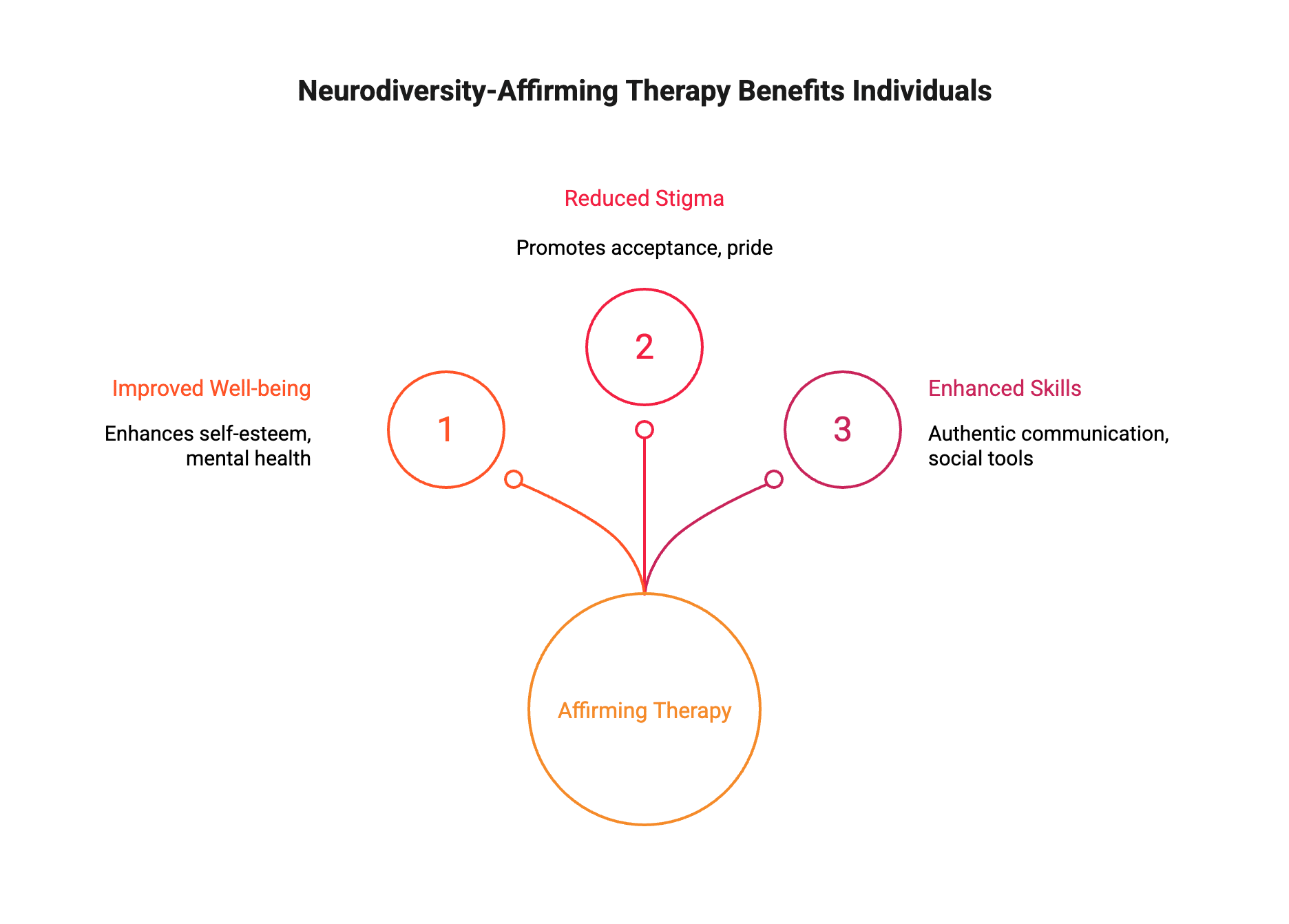
Benefits of Neurodiversity-Affirming Therapy
Understanding these therapeutic approaches raises the question: what tangible benefits do neurodivergent individuals experience? Here’s what the research shows about benefits:
Improved Well-Being and Self-Esteem
Neurodiversity-affirming therapy helps enhance self-esteem by allowing neurodivergent individuals to feel as though they belong. When therapy focuses on acceptance rather than correction, neurodivergent people report significant improvements in well-being and mental health outcomes.
Executive functioning challenges, social interaction differences, and communication styles are reframed as neutral variations rather than deficits. This shift reduces the shame and low self-esteem that often accompany years of being told you need to change.
We’ve seen improvements in our neurodivergent clients when therapy shifts from “fixing” to supporting. Anxiety decreases not because autistic traits diminish, but because the pressure to hide them does. Self-esteem builds when you’re valued for who you are, not how well you approximate neurotypical behavior. That’s what the research confirms, and what we observe clinically.
Reduced Stigma and Increased Self-Acceptance
Neurodiversity-affirming practices help to reduce the stigma surrounding neurodiversity by challenging negative stereotypes and promoting acceptance. When neurodivergent individuals experience affirming therapy, they develop stronger self-acceptance and pride in their neurodivergent identities.
Affirming practices create a more accepting society, which increases inclusivity for neurodivergent individuals. This societal shift begins in the therapeutic environment, where neurodivergent people first experience what it’s like to be fully accepted.
Enhanced Social and Communication Skills
Neurodiversity-affirming therapy improves social skills by allowing neurodivergent individuals to express their thoughts and feelings more clearly—in ways that feel authentic to them. Rather than teaching neurotypical social scripts, affirming therapy helps you develop social interaction approaches that align with your natural communication style.
This doesn’t mean ignoring social skills development. Many autistic adults and neurodivergent people want to improve their ability to connect with others. The difference is that neurodiversity-affirming therapists teach social skills as tools you can choose to use, not as mandatory masks you must wear.
Finding Neurodiversity-Affirming Therapists in DC
With these questions addressed, the next step is finding the right provider. When looking for a neurodivergent-affirming therapist, understanding the difference between these providers helps you make an informed choice.
What to Look For in a Neurodiversity-Affirming Therapist
Here’s what to look for when choosing a therapist who practices neurodiversity-affirming care:
- Training in neurodiversity-affirming approaches – Ask directly about their education and experience with neurodivergent clients
- Values your input about treatment goals – Therapy services should be collaborative, with you as an equal partner in the therapeutic process
- Understands you as the expert on your experience – Affirming therapists approach your lived experience with humility and curiosity
- Willing to make accommodations – From lighting adjustments to communication preferences, your therapist should adapt the therapeutic environment to your needs
- Respects your dignity and self-determination – You have the right to make decisions about your care, including whether to pursue formal diagnosis
In DC’s transient professional culture, where achievement often comes at the cost of accepting yourself, neurodiversity-affirming therapy offers something different: the chance to build self-understanding and acceptance rather than continuing to exhaust yourself trying to fit in.
Ready to Get Started?
Therapy Group of DC offers neurodiversity-affirming care that recognizes both your strengths and the real challenges you may face. Our neurodivergent-affirming therapists understand the unique pressures of Washington’s high-achieving culture and can help you navigate them as your authentic self.
This blog provides general information and discussions about mental health and related subjects. The content is not intended to be a substitute for professional medical advice, diagnosis, or treatment. Always seek the advice of your physician or other qualified health provider with any questions you may have regarding a medical condition.
Frequently Asked Questions About Neurodiversity-Affirming Therapy
What Is the 6 Second Rule for Autism?
The 6 second rule for autism refers to providing autistic people with approximately six seconds of processing time before expecting a response. Many autistic individuals need extra time to process verbal information, formulate thoughts, and generate responses.
In neurodiversity-affirming therapy, your therapist understands this processing difference and naturally builds in pauses. Stimming, which includes behaviors like hand-flapping or rocking that help regulate sensory input, is welcomed during these processing moments rather than discouraged. This accommodation respects how autistic people naturally think and communicate.
Can Neurodiversity-Affirming Therapy Help With Anxiety?
Yes, neurodiversity-affirming therapy addresses anxiety by recognizing that much anxiety in neurodivergent individuals stems from environmental mismatch, sensory overload, or the stress of masking. Rather than treating anxiety as a standalone disorder, affirming therapists explore its roots.
For many neurodivergent people, anxiety decreases when they can be authentic and when their environment accommodates their needs. Learn more about different types of therapy for anxiety to understand how neurodiversity-affirming approaches compare to traditional anxiety treatments.
Understanding Self-Identification and Diagnosis
Maintaining a clinical perspective is essential even when affirming self-identification, as symptoms can sometimes overlap with other neurological conditions requiring clinical evaluation. If you’ve done considerable research and believe you’re autistic or have ADHD, a neurodivergent-affirming therapist takes that seriously while also remaining clinically responsible.
Self-identification can sometimes overlap with symptoms of bipolar disorder, developmental trauma, or other neurological conditions. The goal isn’t to invalidate your self-understanding but to ensure you receive the most helpful support. A neurodiversity-affirming approach means your therapist explores your identity with an open and inquisitive mindset, understanding its significance for you while ensuring nothing important is missed clinically.