

Narrative therapy helps people rewrite problematic stories about their lives by separating themselves from their problems—a technique called externalization that can reduce anxiety, depression, and self-blame. Research shows that 74% of people with depression achieve reliable improvement with this approach, with results comparable to cognitive behavioral therapy in controlled trials.
But narrative therapy isn’t right for everyone, especially those who need immediate crisis intervention or highly structured treatment plans. Understanding when this therapeutic approach works (and when it doesn’t) helps you make informed decisions about your mental health care.
What Are the Strengths of Narrative Therapy?

Narrative therapy’s greatest strength lies in its non-pathologizing approach—it treats you as the expert in your own life rather than viewing you through a lens of dysfunction or disorder. This collaborative process empowers individuals to separate their identity from their problems while building on existing strengths.
The research backing narrative therapy’s effectiveness is strongest for depression. In a controlled clinical trial comparing narrative therapy to CBT, 74% of participants showed reliable improvement after eight sessions, and 53% achieved clinically significant improvement. These results were comparable to CBT outcomes, with both treatments proving equally effective for moderate depression.
What makes these findings particularly meaningful: improvements lasted well beyond treatment completion, with patients continuing to get better at follow-up assessments 21 and 31 months later.
The therapeutic techniques used in narrative therapy create meaningful change through several key mechanisms:
Externalization allows you to view problems as separate from yourself. Instead of “I am depressed,” narrative therapy encourages “Depression has been affecting my life.” This subtle shift creates psychological distance that makes problems feel more manageable and less defining of your identity.
Deconstruction breaks down problematic narratives into smaller components. Narrative therapists help clients identify how certain beliefs formed, which social structures or past experiences reinforced them, and where alternative perspectives might exist.
Unique outcomes help you identify times when the problem didn’t control you. These exceptions to the dominant story become evidence that change is possible and that you already possess strengths you may have overlooked.
In our practice at Dupont Circle, we’ve found narrative therapy particularly effective for clients struggling to separate their identity from their career—a common challenge in DC’s high-achieving culture. The externalization process helps people recognize they are not their job title or their anxious thoughts.
Evidence Across Multiple Conditions
Beyond depression, narrative therapy has demonstrated effectiveness for several mental health conditions:
Anxiety and stress: A randomized controlled trial found that narrative therapy significantly reduced anxiety and depression while improving psychological resilience and self-efficacy in oncology patients.
Trauma and PTSD: A pilot study with veterans found that after 11-12 sessions of narrative therapy, 3 out of 11 participants no longer met criteria for PTSD, and 7 showed clinically significant decreases in symptoms. The dropout rate was notably low at 21.4%, with participants reporting high treatment satisfaction.
Life transitions and adjustment: Narrative therapy has shown promise for helping stroke survivors adapt emotionally and socially to life after stroke.
Families participating in narrative therapy reported appreciation for the nonblaming stance, respect for parenting capacity, and collaborative approach to finding solutions, with parents reporting reductions in parent-child difficulties.
Narrative therapy works well for addressing anxiety, depression, trauma disorders, relationship issues, and identity struggles. The narrative approach encourages clients to explore different, more positive stories about themselves, making it easier to deal with their problems while developing personal growth and self awareness.
How Narrative Therapy Differs from Other Approaches
Unlike psychodynamic therapy, which explores unconscious patterns from early life, narrative therapy focuses on consciously reshaping the stories you tell about yourself right now. While both approaches value deep understanding and insight, narrative practice emphasizes your agency in re-authoring your life stories.
Compared to cognitive behavioral therapy, narrative therapy is less structured and doesn’t rely on homework assignments or skill-building exercises. However, head-to-head trials show both approaches achieve comparable outcomes for depression, giving you evidence-based options based on your preferences.
The narrative therapy approach operates on the belief that language plays a crucial role in shaping our realities and identities. This makes it particularly powerful for clients who are verbal processors and who find meaning through storytelling.
What Are the Weaknesses of Narrative Therapy?
The most significant weakness of narrative therapy is its limited research base compared to more established treatments like CBT or dialectical behavior therapy. While controlled trials demonstrate effectiveness for depression, fewer large-scale studies exist for other conditions.
Research backing narrative therapy’s effectiveness remains in early development stages, with the approach remaining somewhat unclearly defined, which limits comprehensive efficacy studies.
Slower Symptom Relief
In head-to-head comparisons with CBT for depression, narrative therapy showed slightly slower reduction in depressive symptoms during active treatment, though both treatments were ultimately equally effective by treatment completion.
This matters if you need rapid symptom relief. While narrative therapy produces lasting change, CBT may offer faster initial improvement for some people with depression.
Interpersonal Challenges May Persist
While narrative therapy effectively reduces symptoms like depression and anxiety, improvements in relationship difficulties tend to be smaller and may not last as long. Research shows that people with significant interpersonal problems may need longer treatment or additional support focused specifically on relational patterns.
If relationship issues are your primary concern, combining narrative therapy with family therapy or couples counseling might provide more comprehensive support.
Practical Limitations You Should Know
Narrative therapy relies heavily on verbal expression, which creates challenges for clients with cognitive impairments, language barriers, or developmental differences. If you struggle to articulate your thoughts or process information verbally, this approach may feel frustrating rather than helpful.
The open-ended nature of narrative therapy sessions can be uncomfortable for people who prefer clearly defined outcomes and specific techniques. Unlike CBT, which provides concrete skills and homework, the narrative therapy process feels less structured. Clients who prefer goal-oriented or shorter-term therapy may find narrative therapy too fluid for their needs.
The emotional intensity of revisiting past stories can be challenging, especially for trauma survivors. Research indicates some patients reported feeling worried, nervous, and overwhelmed during narrative practice, with some becoming extremely depressed after telling their stories, as the process reminded them of previous tough experiences.
The effectiveness of narrative therapy is highly dependent on the client-therapist relationship and the therapist’s ability to manage their own biases. Unlike more manualized treatments, narrative therapists must skillfully navigate the therapeutic process without imposing their own narratives on clients.
When Narrative Therapy Isn’t the Right Fit
Individuals with severe mental health conditions—such as active psychosis, acute suicidal ideation, or severe substance use disorders—require more structured therapies with immediate safety protocols. Narrative therapy alone doesn’t provide the crisis intervention or behavioral management needed in these situations.
Therapists identified practical challenges including difficulties with outsider-witnessing practices and staying in a decentered therapeutic position. These implementation challenges can affect treatment quality, making it crucial to work with an experienced narrative therapist.
Most research has focused on depression and anxiety, with limited studies examining effectiveness for other conditions. The effectiveness of narrative therapy for many medical and mental health conditions remains unclear.
We’ve seen narrative therapy create profound shifts for clients dealing with shame, identity questions, or feeling defined by their struggles. But we’re also honest about its limitations. Some clients need more structure, immediate coping skills, or crisis intervention that narrative approaches simply don’t provide as effectively.
What Are the Disadvantages of Narrative Theory?
The theoretical foundation of narrative therapy—social constructionism—assumes there is no single objective reality, which some clients find philosophically uncomfortable or incompatible with their worldview. This postmodern philosophy challenges traditional notions of truth and emphasizes the co-construction of meaning.
For clients who need clear answers about what is “real” or “true,” this theoretical ambiguity can feel destabilizing. The emphasis on multiple subjective realities shaped by individual experiences and cultural contexts may conflict with certain religious, cultural, or personal belief systems.
The narrative therapy approach operates on the belief that individuals construct their own realities through the stories they tell about their lives. While this can be liberating for some, others may experience it as dismissive of objective life circumstances—such as poverty, discrimination, or chronic illness—that aren’t simply “stories” but material realities requiring concrete intervention.
The Power Dynamic Problem
There exists a power imbalance between therapist and client in narrative therapy, which can influence the narrative creation process. Despite its emphasis on positioning clients as experts in their own lives, narrative therapists still guide which stories get explored, which details get emphasized, and which alternative narratives seem “healthier.”
Narrative therapists must remain highly aware of how their own cultural background, values, and assumptions shape their perception of what constitutes an “empowering narrative.” Without this awareness, therapists risk imposing their own dominant story onto clients under the guise of collaborative exploration.
What Are the Weaknesses of Narrative Inquiry?
Narrative inquiry as a research method lacks the quantitative rigor preferred by evidence-based medicine, making it difficult to generalize findings or compare outcomes across studies. The relative lack of robust research backing narrative therapy’s effectiveness remains a significant limitation compared to therapies like CBT.
Research studies on narrative therapy are characterized by small-scale exploratory designs with self-report outcome measures noted for their subjectivity and unreliability, along with lack of standardized measures for symptom severity.
Research and Training Gaps
There is insufficient standardization in how narrative therapy is practiced. Unlike manualized treatments with specific protocols, narrative therapists may use vastly different specific techniques while all describing their work as “narrative therapy.” This variability makes it harder to study what actually works.
Training in narrative therapy requires developing nuanced skills that aren’t easily taught through standardized curricula. Narrative therapists must learn to:
- Ask questions that open space for alternative stories without leading clients
- Notice when their own biases are influencing the therapeutic process
- Balance honoring the client’s story with challenging problematic patterns
- Navigate the tension between validation and change
The research on narrative therapy also shows heterogeneity in study designs, outcome reporting, and intervention protocols, limiting the ability to draw strong conclusions about effectiveness. Michael White and David Epston, who developed narrative therapy in the 1980s, emphasized practice wisdom over empirical validation—a philosophical stance that has slowed research development.
How Narrative Therapy Works in Practice
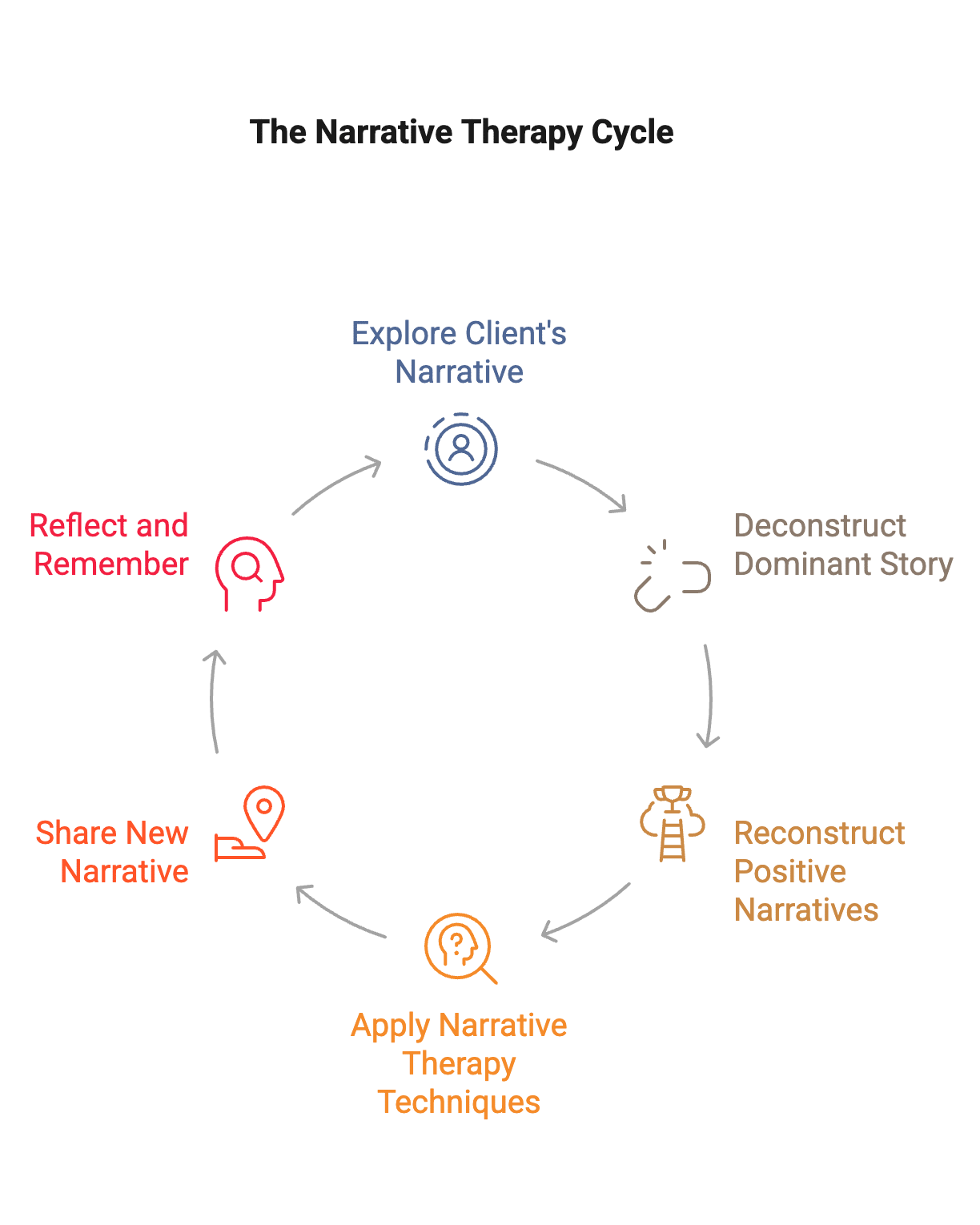
Narrative therapy sessions typically begin with the therapist asking questions about the client’s narrative rather than making interpretations. The presenting problem is explored through conversations that help clients see how problematic stories developed and where unique outcomes exist.
The collaborative approach means you and your therapist work together to deconstruct the dominant story and reconstruct positive narratives that empower you. This therapeutic process emphasizes your expertise in your own life—you know your lived experience better than any therapist.
Narrative therapy techniques include:
- Externalizing conversations that separate the problem from the person
- Mapping the influence of problems on your life and your life on the problem
- Re-authoring conversations that develop alternative stories
- Witnessing where you share your new narrative with supportive others
- Remembering practices that connect you with meaningful relationships
The narrative therapy process unfolds over time as your story gains richness through exploration of complete story details, cultural contexts, and forgotten strengths. Unlike brief, solution-focused approaches, narrative work typically involves weekly sessions over several weeks to months.
Who Benefits Most from Narrative Therapy
Narrative therapy works particularly well for:
- Identity exploration: Sexual identity, personal identity, and self-concept questions
- Life transitions: Career changes, relationship shifts, or role redefinitions
- Shame and self-blame: When you feel defined by mistakes or problems
- Depression: With 74% of participants achieving reliable improvement in clinical trials
- Trauma recovery: Especially when combined with trauma-focused techniques like Narrative Exposure Therapy
- Family conflicts: Where communication patterns need restructuring
- Cultural adjustment: Navigating between different cultural or social contexts
Narrative therapy with young people with autism showed significant improvement in psychological distress and emotional symptoms, demonstrating effectiveness across diverse populations.
The narrative approach helps clients create distance from problems while developing deep understanding of how problematic narratives formed. This distance allows for new perspectives that weren’t accessible when you were completely immersed in the problem saturated story.
Making the Right Choice for Your Mental Health
The effectiveness of narrative therapy varies based on the individual, the therapist involved, and the specific presenting problem. Finding the right therapist who can skillfully apply narrative therapy seeks to match the approach to your needs, preferences, and circumstances.
Narrative therapy may complement other therapeutic approaches. Many therapists integrate narrative techniques with CBT, systemic therapies, or other theoretical approaches to create a comprehensive treatment plan. This flexibility allows for addressing both meaning-making and skill-building.
Before choosing narrative therapy, consider:
- Do you process experiences through storytelling?
- Are you comfortable with open-ended, less structured sessions?
- Do you want to explore the meaning of your experiences, not just change symptoms?
- Can you tolerate the emotional intensity of revisiting your story?
- Are you looking for rapid symptom relief? (CBT may provide faster initial improvement)
- Do you need immediate crisis intervention or safety planning? (If yes, narrative therapy alone may not be sufficient)
The potential benefits of narrative therapy include reduced self-blame, enhanced personal agency, and the empowering experience of re-authoring your life. Research demonstrates these benefits can last well beyond treatment completion. The limitations include slower initial symptom reduction compared to CBT, less research backing for non-depression conditions, and possible incompatibility with certain client needs or preferences.
Your own stories matter. Whether narrative therapy is the right approach depends on your unique situation, but understanding its strengths and weaknesses helps you make an informed decision about your mental health care.
Finding Narrative Therapy Support in Washington DC
If you’re considering narrative therapy and want to explore whether it’s the right fit for your situation, connecting with experienced therapists who can assess your needs is an important first step.
Contact our Dupont Circle practice to discuss therapeutic options that match your goals. Our team includes clinicians trained in narrative approaches, CBT, psychodynamic therapy, and other evidence-based methods—ensuring you receive care tailored to your specific needs rather than a one-size-fits-all approach.
This blog provides general information and discussions about mental health and related subjects. The content is not intended to be a substitute for professional medical advice, diagnosis, or treatment. Always seek the advice of your physician or other qualified health provider with any questions you may have regarding a medical condition.