Existential Therapy: When Meaning-Making Matters Most

Existential therapy is a form of psychotherapy that helps people explore fundamental questions about meaning, freedom, and authenticity in their lives. Rather than focusing solely on symptoms, existential therapy addresses deeper concerns like finding purpose, dealing with loss, and making choices that align with your values. Research shows that existential therapy can reduce anxiety and depression while helping people find more meaning in everyday life, especially during major transitions or when facing difficult emotions.
What Is Existential Therapy?

Existential therapy is based on the idea that human beings naturally struggle with big questions about existence, and that many mental health challenges stem from how we respond to these universal concerns. Unlike brief therapies that target specific symptoms, existential therapy focuses on the human condition and helping you understand your own experience and make authentic choices about how you live.
The existential approach emerged from existential philosophy and humanistic psychology in the mid-20th century. Existential thinkers like Viktor Frankl and Irvin Yalom recognized that people often feel distressed not because something is “wrong” with them, but because they’re confronting the very nature of human existence—uncertainty, freedom, and the search for meaning.
In a city as transient as DC, where many people struggle to separate their identity from their job title, existential therapy as a form of talk therapy offers a way to explore who you are beyond your resume. Existential therapy emphasizes personal responsibility and self-awareness, helping you recognize that you have the freedom to create your own meaning in life, even when things feel overwhelming.
We often see clients who’ve achieved everything they thought they wanted but still feel empty or disconnected. Existential therapy helps them explore what truly matters to them, not what they’ve been told should matter.
What Are the Four Pillars of Existential Therapy?
The existential approach centers on four existential concerns that every person must face. Understanding these pillars helps explain how existential therapy works and why existential therapy can be so powerful for addressing existential challenges:
Death and Finitude
Existential therapy acknowledges that awareness of inevitable death shapes how we live. Rather than avoiding this reality, existential therapists help clients confront their mortality in ways that lead to more authentic living. Many existential therapists find that when people accept the finite nature of life, they make more meaningful choices about their time.
Freedom and Responsibility
Existential therapy emphasizes that human beings have tremendous freedom to choose how they respond to circumstances. Personal responsibility comes with this freedom—you’re the author of your own lives. The therapeutic relationship supports you in recognizing this freedom and using self-determination to make choices aligned with your values.
Isolation and Connection
Existential isolation refers to the fundamental aloneness each person experiences, even in relationships. Existential therapy helps clients confront this existential dimension while building healthier relationships with others. The goal isn’t to eliminate existential isolation but to find meaningful ways to relate despite it.
Meaninglessness and Purpose
Perhaps the most central concern in existential psychotherapy is the question of life meaning. Existential therapy assumes that life doesn’t come with built-in meaning—instead, human existence requires each person to create their own meaning through choices and values. Research shows that meaning-centered approaches can significantly reduce psychological distress, particularly for people facing serious illness or major life changes.
What we’ve learned working with people facing serious illness and loss is that confronting mortality doesn’t increase fear—it often clarifies what matters. When clients stop avoiding thoughts about death, they make bolder choices about how to spend their time and energy.
How Does Existential Therapy Work?
How existential therapy works in practice differs from other forms of therapy in important ways. Rather than following a strict protocol, the existential therapist acts more like a fellow traveler who helps you explore your experience and values.
The therapeutic encounter is built on genuine dialogue. Your therapist won’t tell you what to do or prescribe solutions. Instead, existential therapy aims to help you develop greater self-understanding and recognize the choices available to you. The therapist’s role is to create a space where you can explore existential themes like freedom, authenticity, and personal meaning without judgment.
A contemporary existential psychotherapist might use various techniques, but the core question addressed remains: “How do you want to exist in the face of life’s uncertainties?” Some existential therapy work involves examining how you’ve been living on autopilot versus making conscious, authentic choices.
Studies indicate that existential interventions can improve not just psychological well-being but also spiritual and physical health, particularly when people feel inevitably confronted by serious illness or loss.
Who Can Benefit from Existential Therapy?
Existential therapy can help anyone, but it’s particularly effective for certain situations and mental health concerns:
Life transitions and crises. When you’re facing a major change—career shift, relationship ending, moving to a new city—existential therapy helps you navigate the uncertainty and find meaning in the transition. This makes it especially relevant in DC’s transient culture.
Anxiety and depression related to meaning. If your mental health struggles stem from feeling lost, disconnected, or unsure of your purpose, existential therapy addresses these root concerns. The existential perspective recognizes that existential concerns about the human condition and anxiety come from confronting the realities of human experience, not from a disorder that needs fixing. For support with anxiety therapy, existential approaches can help with managing anxiety effectively.
Substance abuse and addiction recovery. Existential therapy can help people in substance abuse treatment explore the deeper questions of identity and purpose that often underlie addiction. Rather than focusing only on stopping the behavior, existential psychotherapy helps you build a meaningful life worth staying sober for.
Grief and loss. Existential therapy provides tools for making sense of loss and finding ways to continue living meaningfully after devastating experiences. The approach acknowledges existential guilt—the sense that you could have done something differently—while helping you take personal responsibility for how you move forward. We offer specialized grief counseling in our Dupont Circle practice.
High-functioning but unfulfilled individuals. Many people who seem successful on paper still struggle with feelings of emptiness or inauthenticity. Existential therapy helps you examine whether you’re living according to your own values or someone else’s expectations.
In our Dupont Circle practice, we work with many professionals who’ve built impressive careers but feel disconnected from their authentic selves. Existential therapy helps them distinguish between living according to their values versus chasing external validation or others’ expectations.
Research on group therapy approaches shows that existential interventions can be particularly effective for older adults experiencing psychological distress, helping them find continued purpose and connection.
Is Existential Therapy a Form of CBT?
No, existential therapy is not a form of cognitive behavioral therapy, though the two can sometimes be integrated. While both are types of talk therapy, they differ in fundamental ways:
Different philosophical foundations. CBT focuses on identifying and changing specific thought patterns and behaviors. Existential therapy, rooted in existential philosophy and humanistic psychologists’ work, emphasizes understanding your subjective experience and making authentic choices rather than correcting “distorted” thinking.
Different goals. CBT aims to reduce specific mental health disorders and symptoms through structured techniques. Existential therapy focuses on helping you live a more authentic, meaningful life and increase self-awareness about your choices and values.
Different time frames. CBT and other brief interventions typically follow a structured, short-term protocol. Existential therapy is often more open-ended, exploring deeper existential issues as they emerge in your own lives.
That said, some therapists integrate existential themes into cognitive behavioral therapy or combine both approaches. What existential therapy focuses on can complement other forms of therapy, including gestalt therapy, person-centered therapy, and narrative therapy. If you’re exploring different types of therapy for anxiety, understanding these distinctions helps you find the therapeutic process that addresses your needs.
What to Expect in Existential Therapy Sessions
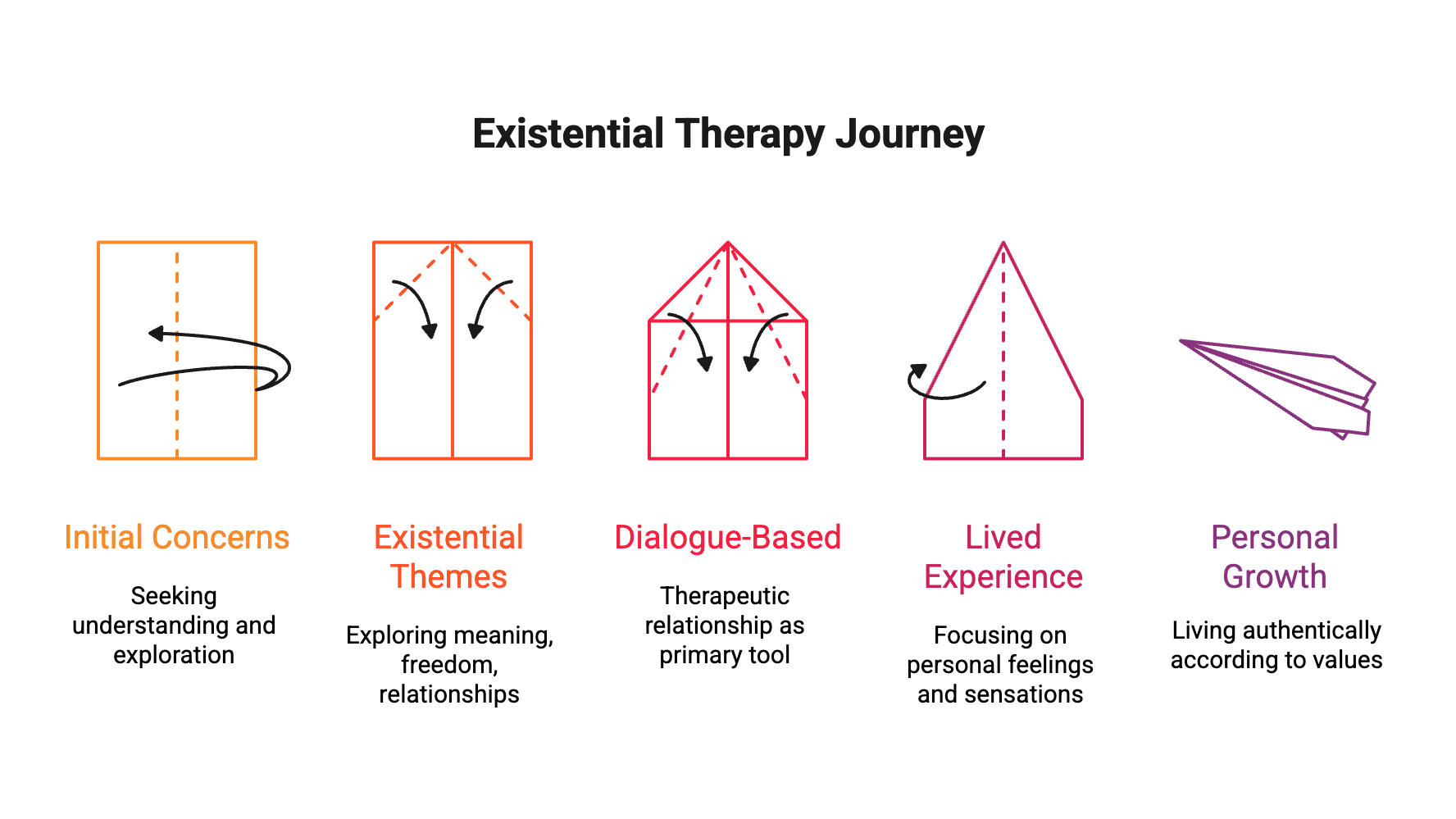
Your first therapy session will likely focus on understanding what brought you to therapy and what you’re hoping to explore. The existential therapist will listen carefully to your concerns and help you begin thinking about them in terms of existential themes—meaning, freedom, relationships, and mortality.
Sessions are dialogue-based. Unlike some brief therapies that assign homework, existential therapy emphasizes the therapeutic relationship itself. The conversations you have become the primary tool for change. Your therapist might ask questions like: “What would it mean to live more authentically?” or “How do you want to take personal responsibility for this situation?”
The therapeutic process is exploratory. Existential phenomenological therapy focuses on your lived experience—what things feel like for you, not what theory says they should feel like. You might explore how you experience anxiety in your physical world, how you relate to others, or what gives you a sense of vitality versus going through the motions.
Therapy emphasizes self-actualization and personal growth. The goal isn’t to make you “normal” or eliminate all discomfort. Instead, existential therapy helps you develop the self-awareness and courage to live according to your values, even when that’s difficult. Many existential therapists note that some anxiety and struggle are natural parts of being human—the question is how you choose to respond.
Studies on existential support programs show that combining existential conversations with creative expression can help people explore meaning and find peace, even when facing serious illness. When choosing a therapist, understanding their therapeutic approach helps ensure a good fit.
Common Questions About Existential Therapy
Can existential therapy help with anxiety?
Yes. Existential therapy can help with mental health challenges including anxiety, though it approaches anxiety differently than brief therapies. Rather than treating anxiety as a symptom to eliminate, existential therapy views anxiety as a natural response to confronting life’s uncertainties. Existential therapy helps you understand the source of your anxiety and develop more authentic ways of responding to it.
How long does existential therapy take?
Existential therapy doesn’t follow a fixed timeline like some brief interventions. The therapeutic process is typically open-ended and depends on your goals. Some people benefit from short-term existential therapy work focused on specific life transitions, while others engage in longer-term exploration of existential themes and personal meaning.
What are the limitations of existential therapy?
Existential therapy may not be the best fit for everyone. It typically isn’t focused on treating specific mental health disorders through structured techniques. The abstract nature of existential questions can be challenging for people seeking concrete solutions. Additionally, existential therapy may not be appropriate as a primary treatment for conditions like schizophrenia or dementia that require more structured approaches.
Is existential therapy right for everyone?
Existential therapy works best for people who are introspective and willing to engage in philosophical inquiry about their human experience. It’s most suitable for those confronting questions about meaning in life, authenticity, freedom, and personal values. If you’re dealing with a crisis requiring immediate symptom management, other approaches might be more appropriate initially, though existential therapy can complement other treatments.
If you’re looking for a meaningful life rather than just symptom relief, existential therapy offers a path forward. This approach honors the complexity of human nature and treats you as someone capable of creating your own meaning, making your own choices, and living authentically—even in an uncertain world.
Find Existential Therapy in Dupont Circle
If you’re ready to explore questions of meaning, authenticity, and purpose with a therapist who understands DC’s unique pressures, our team at Therapy Group of DC can help. We work with people navigating life transitions, searching for deeper fulfillment, and trying to live more authentically in a city that often values achievement over meaning.
This blog provides general information and discussions about mental health and related subjects. The content is not intended to be a substitute for professional medical advice, diagnosis, or treatment. Always seek the advice of your physician or other qualified health provider with any questions you may have regarding a medical condition.