Stress Management Therapy in DC: Finding the Right Approach for You
Stress management therapy teaches you evidence-based skills to handle stress, anxiety, and overwhelming emotions more effectively. This guide is for professionals and residents in Washington, DC who need practical strategies that fit into demanding schedules. You’ll learn what stress management therapy is, which approaches work best, and how to get started.
Stress management therapy includes structured treatment approaches that help you identify stressors, change unhelpful thought patterns, and build lasting coping skills. Different types of evidence-based therapy work in different ways, and you can choose the approach that feels right for you. Feeling stressed isn’t a personal failing—it’s a normal response to challenging circumstances that can be managed with the right support.
What Is Stress Management Therapy?

Stress management therapy is a structured treatment approach delivered by licensed mental health professionals to help you reduce stress levels and build resilience. It combines evidence-based techniques, strategies, and programs specifically designed to address both the physical and mental health impacts of chronic stress.
Stress management involves teaching you how to identify your specific stressors, understand your body’s stress response, and develop practical coping strategies you can use in daily life. Identifying stressors is the first step to relieving stress in your life—some therapists recommend keeping a stress journal to track patterns and triggers. Most sessions last 45-60 minutes and focus on giving you concrete tools to manage stress effectively, both during treatment and long after therapy ends.
What Happens in a Session
You’ll work collaboratively with your therapist to set specific goals, practice new skills between sessions, and track your progress. The focus is on actionable techniques you can apply immediately—not just talking about stress, but actively building skills to cope with it.
What Therapy Is Best for Stress?
The most effective therapies for stress management include Cognitive Behavioral Therapy (CBT), mindfulness-based approaches, and psychodynamic therapy—all with strong research evidence. The best choice depends on your personal preferences and specific symptoms. Research shows that different evidence-based therapies can be equally effective, so your comfort with the approach matters.
Here’s what each approach offers:
Cognitive Behavioral Therapy (CBT)
Cognitive Behavioral Therapy (CBT) is one of the most well-studied therapies for stress and anxiety. Research on anxiety disorders shows it helps you identify and challenge unhelpful thinking patterns that contribute to stress. You’ll learn that stress often comes from overestimating danger, struggling with uncertainty, and underestimating your ability to cope.
CBT focuses on three core strategies:
- Recognizing unhelpful thoughts and replacing them with balanced ones
- Facing stressful situations gradually to learn they’re manageable
- Practicing relaxation techniques between sessions to build new skills
Treatment typically involves 8 to 20 sessions with a trained therapist.
When CBT Works Best
CBT is particularly effective for people who want a structured, goal-oriented approach. If you prefer concrete homework assignments and measurable progress, CBT may be a good fit.
We’ve found that CBT works particularly well for DC professionals who are analytical by nature. If you’re the type who makes pro/con lists for big decisions, you’ll likely connect with CBT’s structured approach to identifying and testing your stress-related thoughts. The homework component also appeals to achievers who want measurable progress.
Mindfulness-Based Approaches
Mindfulness-Based Stress Reduction (MBSR) combines mindfulness techniques with stress management strategies to prevent and address stress. These approaches teach you to focus on the present moment and accept your thoughts and feelings without judgment, helping you become less reactive to stressors.
Mindfulness-based cognitive therapy (MBCT) combines traditional CBT with mindfulness meditation. Instead of trying to change every negative thought, you learn to observe thoughts as passing events rather than facts. Acceptance and commitment therapy (ACT) supports you in embracing difficult thoughts while committing to actions that align with your core personal values.
Who Benefits Most
Mindfulness approaches work well for people who struggle with rumination or feel constantly caught in worry cycles. If you find yourself replaying stressful situations or anxious about the future, mindfulness can help ground you in the present.
Psychodynamic Therapy
Psychodynamic therapy explores how past experiences and unconscious feelings affect your current stress and relationships. Short-term psychodynamic therapy typically lasts 10 to 20 weeks and works as well as CBT for many conditions, with benefits lasting long after therapy ends. Learn more about psychodynamic therapy approaches.
Key Benefits
This approach helps you understand deeper patterns in how you respond to stress, particularly if your stress reactions seem disproportionate or confusing. It’s especially valuable when relationship difficulties contribute to your stress.
Other Proven Approaches
Washington, DC offers various stress management therapies beyond CBT and mindfulness. Dialectical Behavior Therapy (DBT) focuses on emotional regulation and distress tolerance, providing skills to manage intense emotions and improve interpersonal relationships. Somatic Therapy addresses the connection between the mind and body to manage stress and anxiety by releasing physical tension.
Interpersonal therapy (IPT) focuses on how relationship problems contribute to stress, addressing conflicts, role changes, and social difficulties. Problem-solving therapy (PST) teaches you to break problems into manageable tasks and develop practical solutions. Applied relaxation therapy reduces physical symptoms like rapid heartbeat and muscle tension.
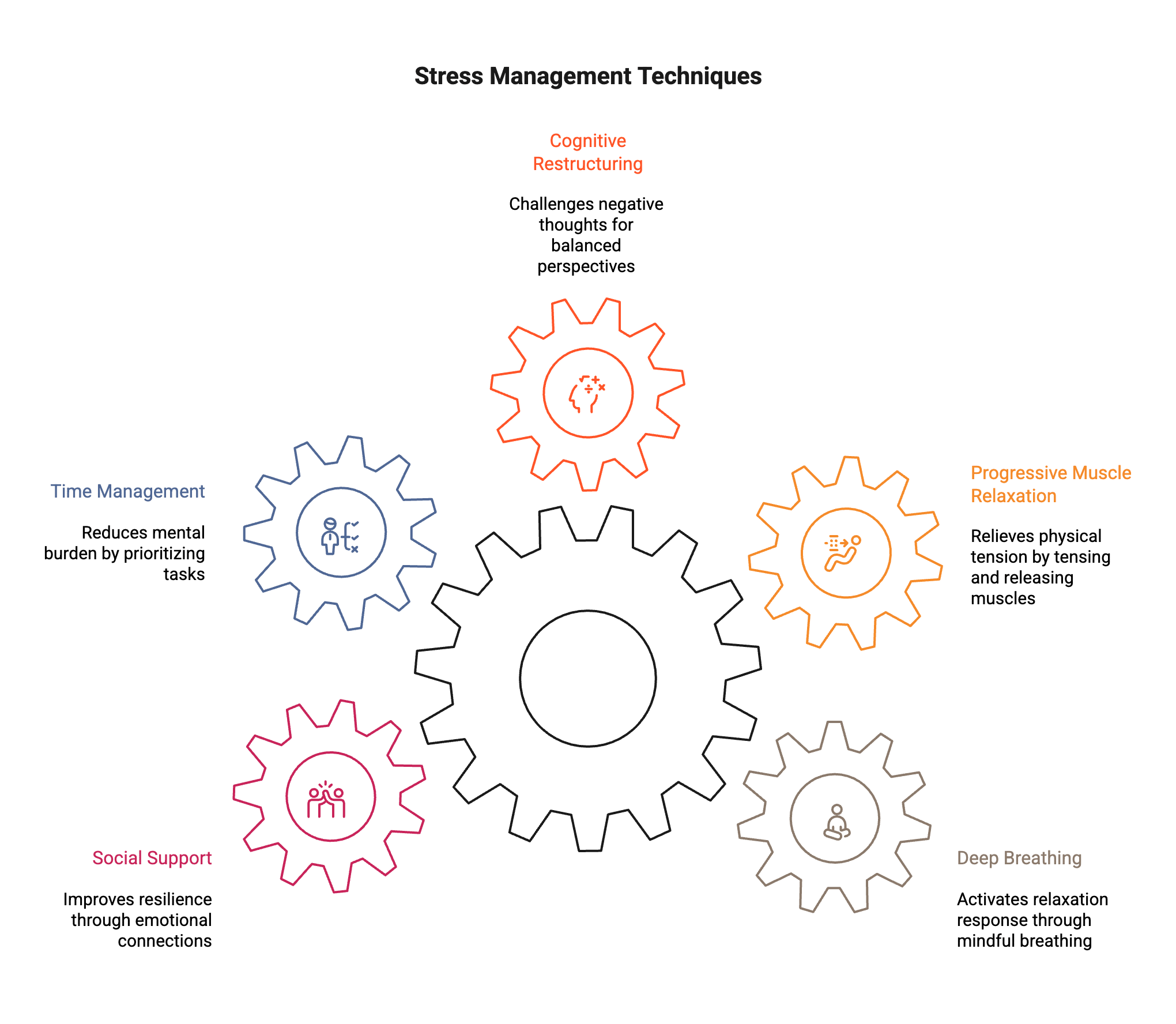
What Are 5 Stress Management Techniques?
The five most effective stress management techniques are: deep breathing exercises, progressive muscle relaxation, cognitive restructuring, time management, and building social support. These techniques address both the physical and mental aspects of stress.
Here’s how to apply these in daily life:
1. Deep Breathing and Relaxation Techniques
Deep breathing exercises activate your body’s relaxation response, countering the stress response. Mindful breathing—slow, deep breaths—triggers your body’s calming response and provides immediate stress relief. Start with three deep breaths when you notice stress building.
2. Progressive Muscle Relaxation
Progressive muscle relaxation (PMR) helps relieve physical tension by systematically tensing and releasing muscle groups. This practice teaches you to recognize and reduce physical stress in your body. Many people carry stress in their shoulders, jaw, or neck without realizing it.
3. Cognitive Restructuring
Studies on generalized anxiety disorder show that cognitive restructuring helps you challenge negative thought patterns and replace them with balanced perspectives. This technique reduces the intensity of your stress response when you feel overwhelmed. Ask yourself: “What’s the evidence for this thought? What’s a more balanced way to see this?”
4. Time Management and Prioritization
Time management skills reduce the mental burden of juggling tasks. Making a realistic to-do list, prioritizing, and setting boundaries can significantly improve your stress levels. Focus on what truly needs your attention versus what feels urgent but isn’t important.
5. Building Social Support
Social support reduces stress and improves resilience. Connecting with friends, family, or community groups provides emotional reassurance. Research shows that strong social connections contribute to both emotional well-being and overall health.
One pattern we notice: clients often try to implement all five techniques at once, then feel overwhelmed. Start with just one—usually deep breathing, since it’s portable and takes 60 seconds. Once that becomes automatic, layer in a second technique. Sustainable stress management isn’t about doing everything; it’s about doing something consistently.
Stress Management Strategies for DC’s High-Pressure Environment
In Washington, DC’s career-focused environment, managing stress requires strategies that acknowledge the unique pressures of policy, government, and competitive industries. Licensed mental health professionals in DC utilize evidence-based techniques to address these high-stress environments.
Building resilience helps you handle stress and protect against future stress without requiring career changes. Many DC professionals experience what we call “functional anxiety”—you’re high-performing and successful, but stress and anxiety are constant companions.
Therapists in DC recommend combining mindfulness practices, physical activity, proper sleep and nutrition, strong social connections, and boundary setting to manage high stress. No single technique works in isolation—sustainable stress management comes from integrating multiple approaches into your routine.
Daily Practices That Work
Effective stress management involves incorporating techniques into your daily life rather than adding more to-do items:
- Sleep: Aim for 7-9 hours, which is essential for mental and physical health
- Movement: Regular physical activity, such as 150 minutes of moderate aerobic activity per week, helps manage stress levels and improve your mood
- Nutrition: A healthy diet supports your body’s stress response systems
- Practice: Consistent relaxation practice, even 5 minutes daily, builds cumulative benefits
- Connection: Expressing your feelings to trusted friends or family can reduce stress and prevent resentment
- Joy: Making time for fun and relaxation is essential for managing stress effectively
- Gratitude: Practicing gratitude helps maintain a positive perspective and reduce stress
Research on depression and stress shows that chronic stress can lead to insomnia, depression, anxiety, and heart disease. If stress becomes overwhelming, talking to your healthcare provider is a good first step. You should call your healthcare provider immediately if you experience overwhelming stress or suicidal thoughts.
In our practice, we see many DC professionals who excel at managing external demands but struggle with internal stress. We focus on practical strategies that fit into demanding schedules—not adding more pressure, but finding sustainable approaches that reduce your daily stress burden. For those who are interested, we help them explore underlying beliefs and patterns to better understan themselves.
How to Get Started with Stress Management Therapy in DC
Finding the right therapist starts with identifying what approach feels most comfortable. Consider whether you prefer focusing on thoughts (CBT), emotions and past experiences (psychodynamic therapy), present-moment awareness (mindfulness), or relationships and problem-solving.
Finding the Right Fit
Look for licensed therapists who specialize in stress management through online directories or your insurance provider network. Mental health professionals trained in evidence-based approaches like cognitive behavioral therapy, mindfulness-based stress reduction, or other stress management techniques can provide structured support.
According to research on anxiety treatment approaches, attending sessions consistently maximizes therapy benefits. Most people see meaningful improvement within 8-12 weeks of regular attendance.
Learning coping strategies through stress management therapy improves overall well-being, helps develop resilience, and prevents unhealthy behaviors. Stress management therapy can also lead to better decision-making and improved relationships as you learn to manage emotional reactions more effectively. Explore more emotional regulation strategies to complement your stress management approach. The goal is to help you maintain a balanced life and protect your physical and emotional well-being.
Ready to Get Started?
If you’re experiencing persistent stress, feeling overwhelmed frequently, or noticing that stress affects your daily life, mental health, or relationships, stress management therapy can help. Whether dealing with work stress, life events, or stressful situations that feel unmanageable, professional support provides the tools you need.
Connect with our DC therapists who specialize in stress management and evidence-based approaches to help you build resilience and cope more effectively.
Frequently Asked Questions About Stress Management
What Are the 4 A’s of Stress Management?
The 4 A’s are: Avoid, Alter, Accept, and Adapt. Avoid unnecessary stressors when possible. Alter situations by expressing your feelings or adjusting expectations. Accept circumstances you can’t control. Adapt by reframing problems and adjusting your perspective. This framework helps you identify which coping strategies work best for different types of stress.
What Is the 3-3-3 Rule for Stress?
The 3-3-3 rule is a grounding technique: name three things you see, three sounds you hear, and move three parts of your body. This interrupts anxious thought patterns by bringing your attention to the present moment, particularly useful during stressful situations when you feel overwhelmed.
This blog provides general information and discussions about mental health and related subjects. The content is not intended to be a substitute for professional medical advice, diagnosis, or treatment. Always seek the advice of your physician or other qualified health provider with any questions you may have regarding a medical condition.