When Addiction Takes Someone You Love: Why This Grief Feels Different
Losing someone to addiction is one of the most painful experiences you may face. This guide is for anyone in Washington DC who has lost a loved one to substance use disorder. You’ll learn why this type of grief feels uniquely difficult, what emotions are normal, and how to find support.
Grief after losing someone to addiction often becomes complicated grief—a more intense, longer-lasting form of bereavement. Research shows that sudden deaths, including overdose deaths, create especially difficult grieving experiences. The feelings of guilt, shame, and stigma can make grief more intense and prolonged.
Unlike other forms of grief, losing someone to substance use disorder often involves years of watching the person you love disappear into addiction. This lengthy process creates layers of complicated emotions that complicate healing after their passing. The grief process after addiction loss is uniquely challenging, often involving trauma that affects your well-being long after the death.
Why Grief After Addiction Loss Feels Different

Grief after losing someone to addiction carries unique emotional complexity. When someone dies from a substance use disorder, survivors often experience complicated grief—a pattern where intense grief symptoms persist for many months or years without improving.
The Unique Challenges of Addiction-Related Grief
The circumstances surrounding addiction deaths create distinct challenges. You may have spent years watching your loved one struggle with drug addiction or alcohol use, experiencing repeated cycles of hope during addiction recovery attempts and despair during relapses. Research shows that survivors of overdose deaths face higher rates of stigma, guilt, and shame compared to other types of bereavement. The social support you receive may be limited because others don’t understand addiction as a disease.
You may also grieve not just the person’s death, but the relationship you lost long before they died. Addiction often damages family bonds, creating distance and conflict that leaves you grieving both who they were before addiction and who they might have become in recovery. The death itself may bring a complex mix of relief and renewed pain.
Common Emotions You May Experience
The feelings that arise after losing someone to addiction are often intense and contradictory. You may experience sadness and deep pain, guilt about things you did or didn’t do, shame related to the circumstances, anger at your loved one or yourself, relief that their suffering ended (which may cause more guilt), and fear about other family members at risk. Some people blame themselves or others, while moments of despair can feel overwhelming. These feelings are all normal.
The stigma surrounding drug use and overdose deaths can make you hesitant to talk openly about your loss. This can strain relationships with friends and family. If you have a child or children, they may be experiencing their own grief and confusion, adding another layer of complexity to your own healing. The combination of these emotions creates what mental health professionals call complicated grief. Unlike typical grief that gradually softens over time, this pattern can feel stuck, preventing you from moving forward.
Navigating Your Recovery Journey
Your recovery journey from grief and loss after addiction is personal and non-linear. There’s no single path through this pain, and healing looks different for everyone.
In our practice, we see how the shame and stigma around addiction deaths can isolate people during their most vulnerable moments. You don’t have to grieve in silence. We help clients process the full range of emotions—including the relief, anger, and guilt that others may not understand—in a judgment-free space.
Recognizing when grief becomes prolonged is important for getting the help you need.
When Grief Becomes Prolonged
Most people find that grief naturally becomes less intense over time. However, some people experience prolonged grief disorder, where intense symptoms continue for many months without improvement.
Signs that you may need additional support include:
- Intense yearning or longing that doesn’t improve after 6-12 months
- Difficulty accepting the death or believing it really happened
- Feeling that life has no meaning without the person you lost
- Avoiding reminders of the person or being unable to stop thinking about them
- Difficulty engaging in life or maintaining relationships
Prolonged grief disorder is treatable. Specialized grief therapy is highly effective for helping people process loss and address feelings of guilt and shame.
We’ve worked with many clients who lost loved ones to addiction. One of the most healing moments comes when they realize that grieving the person before addiction and the relationship that was lost is not only normal—it’s essential. You’re not being disloyal by acknowledging how addiction changed things. That’s part of healing.
If you’re experiencing suicidal ideation or thoughts of harming yourself, this is a critical sign to seek immediate help. Call 988 (the National Suicide & Crisis Lifeline) if you’re in crisis.
The Connection Between Grief and Substance Use
People grieving an addiction loss face a unique risk: turning to alcohol or drugs to cope with pain. Research shows that unresolved grief can trigger substance misuse. If you find yourself drinking more, using drugs to numb emotions, or relying on substances to get through each day, reach out for help immediately.
How to Cope With Complicated Grief
While grief is painful, specific strategies can help you process the loss and move forward.
Finding Support and Connection
Connect with others who understand. Reach out to supportive family members or friends and share your feelings honestly. Consider joining a bereavement group where you can connect with others who understand loss.
Grief Recovery After a Substance Passing (GRASP) provides support specifically for those grieving addiction deaths. Families Anonymous and GriefShare also offer resources. These support groups allow you to talk openly about your loss without fear of judgment.
Healthy Coping Strategies
Allow yourself to oscillate. Healing happens when you naturally move back and forth between facing the painful reality of your loss and setting it aside to focus on daily life. Don’t force yourself to grieve constantly.
Practice self care. Focus on basics: getting enough sleep, eating regular meals, and engaging in gentle physical activity. These provide a foundation for emotional healing.
Face reminders gradually. When you’re ready, gently try activities you’ve been avoiding. Start with something challenging but doable.
While these strategies can help many people, professional support is sometimes necessary.
When to Seek Professional Help
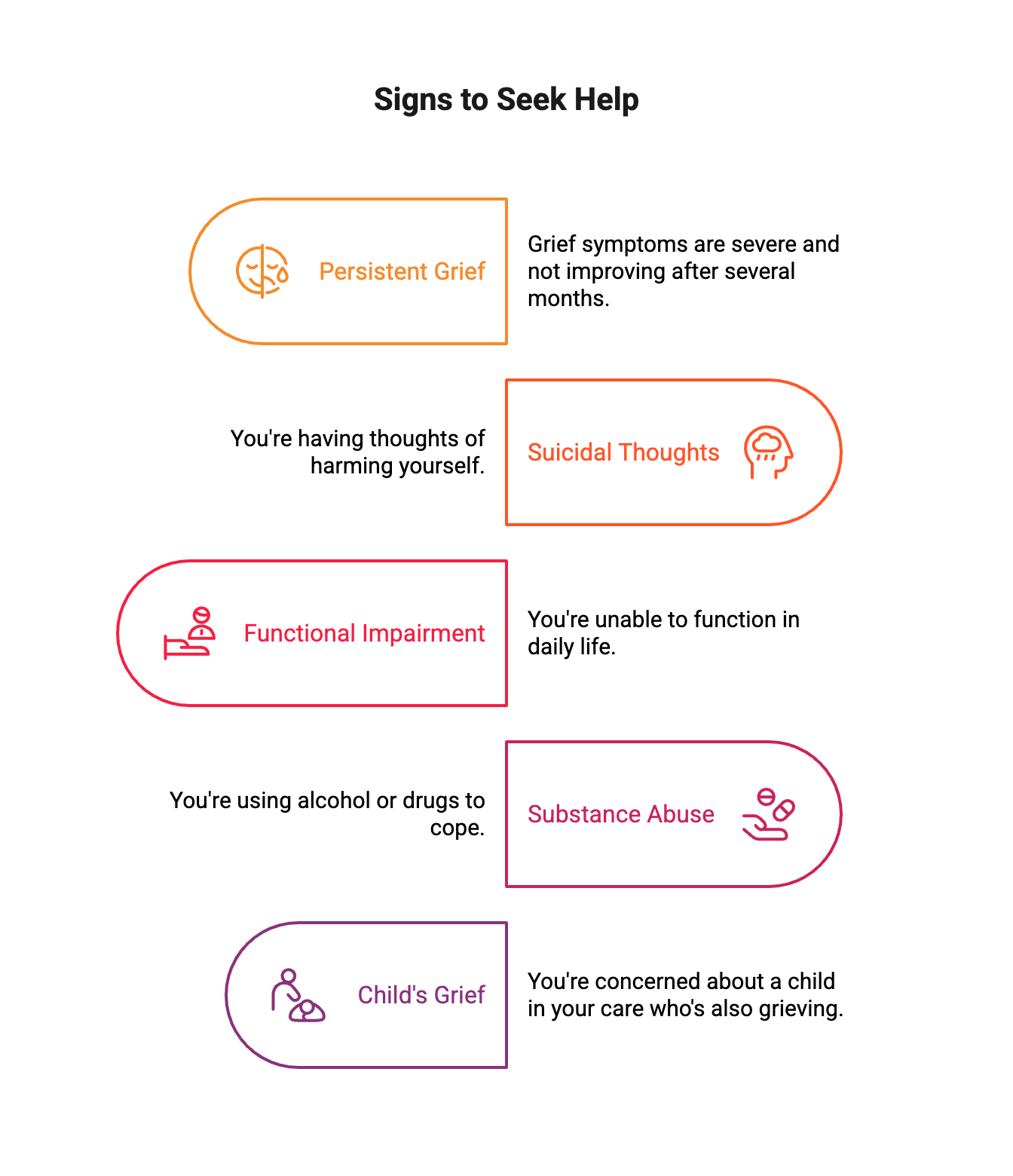
Consider talking to a mental health professional if:
- Your grief symptoms are severe and not improving after several months
- You’re having thoughts of harming yourself
- You’re unable to function in daily life
- You’re using alcohol or drugs to cope
- You’re concerned about a child in your care who’s also grieving
Treatment Options for Grief and Trauma
Specialized grief therapy is highly effective for complicated grief. Treatment options include individual therapy, group therapy with others who have experienced addiction loss, and prolonged grief therapy—a specific treatment for prolonged grief disorder.
These therapies address both the grief and any underlying trauma, helping restore your well-being over time.
In DC, the Wendt Center for Loss and Healing, Capital Caring Health, and Therapy Group of DC offer grief support.
Moving Forward While Honoring Their Memory
Healing from grief doesn’t mean forgetting your loved one. It means learning to live with the loss and discovering ways to keep their memory alive while gradually re-engaging with life.
You may always miss the person you lost. The goal isn’t to “get over” their death. Many people find that they can eventually remember their loved one with more love than pain.
Healing doesn’t mean forgetting or “moving on.” In our work with bereaved families, we help people build what we call a “continuing bond”—finding ways to honor the person’s memory while also re-engaging with life. This isn’t about closure. It’s about integration.
Understanding the Stages of Grief
The stages of grief—denial, anger, bargaining, depression, and acceptance—aren’t linear. You may move through them multiple times or experience several at once. Moving from denial toward acceptance is a gradual process, not a sudden shift. Be patient with yourself.
With time, support, and possibly professional treatment for any co-occurring disorder, the intense pain of grief can soften. You can build a meaningful life while still honoring the person you lost.
Ready to Get Support?
If you’re in the DC area and need support after losing someone to addiction, our grief counselors understand the unique challenges of this type of loss. We offer compassionate, evidence-based therapy to help you process complicated grief, address guilt and shame, and find a path forward.
This blog provides general information and discussions about mental health and related subjects. The content is not intended to be a substitute for professional medical advice, diagnosis, or treatment. Always seek the advice of your physician or other qualified health provider with any questions you may have regarding a medical condition.