Who Am I Without My Job Title? Understanding Professional Identity Crisis in DC
If you’ve ever felt lost when someone asks “what do you do,” you’re not alone. This guide is for professionals in Washington, DC who feel their sense of self has become tangled up with their work. You’ll learn what a professional identity crisis is, why it’s particularly intense in DC’s career-focused culture, and how therapy can help you rediscover who you are beyond your resume.
A professional identity crisis occurs when you experience confusion, distress, or conflict about who you are in your professional role. Research on identity problems shows this can involve feeling disconnected from your work, questioning your career path, or struggling to integrate different aspects of your professional self. Understanding professional identity crisis can help you recognize what’s happening and find a path forward that honors both your career and your authentic self.
For many DC professionals, work isn’t just what you do—it’s who you are. In a city where the first question at any social gathering is often “what do you do,” and where job titles carry significant social currency, separating your identity from your career can feel nearly impossible. When career transitions, burnout, or life changes shake that foundation, the resulting identity crisis can be profound.
What Is a Professional Identity Crisis?

A professional identity crisis is when you feel a loss in your sense of self and in your professional identity. This goes beyond typical job dissatisfaction or career uncertainty. It’s a deeper questioning of who you are when your professional role no longer feels like it fits.
During a professional identity crisis, individuals may experience confusion about values, feel disconnected from work that once energized them, or struggle to recognize themselves in their current role. This type of crisis represents a fundamental disruption in how you understand yourself professionally. You may feel emotional distress, question your sense of self worth, or experience a loss of the sense of purpose that once drove your career.
Professional identity formation is an ongoing process shaped by your experiences, relationships, and the meaning you make of your work. This socialization process involves adopting the norms, values, and expectations of your professional community. When this process gets disrupted—through job loss, burnout, organizational changes, or simply outgrowing your role—sense of professional self can become fragmented or unstable. The fear of losing one’s professional identity can create significant psychological distress during these transitions.
We see this frequently in our DC practice: accomplished professionals who’ve built their entire identity around their career suddenly feeling lost when that identity no longer serves them. The transition from “I am my job” to “I have a job, and I am many things” is challenging but essential work.
How Professional Identity Crisis Differs From General Identity Crisis
While understanding identity crisis in general helps provide context, a professional identity crisis has distinct features. It specifically centers on your work identity rather than questioning all aspects of who you are.
A professional identity crisis often involves:
- Career-specific confusion rather than existential questions about all life domains
- Role-based triggers like promotions, layoffs, or career transitions
- Workplace relationships that shape how you see yourself professionally
- Professional values that may conflict with personal values
However, because work is such a central part of life—especially in DC—a professional identity crisis can quickly expand to affect overall sense of self.
Why Professional Identity Crisis Hits Hard in Washington, DC
DC’s unique culture of achievement and status makes professional identity crises particularly intense. Several factors specific to Washington amplify these struggles.
The “Resume Date” Culture
In DC, first dates and social gatherings often feel like networking events. The question “what do you do?” comes before “what do you enjoy?” This constant reinforcement that you are what you do makes it harder to maintain a sense of self separate from your career.
When your professional identity feels shaky, every social interaction can trigger anxiety. If you can’t confidently answer “what do you do,” you may feel like you don’t know who you are.
Career as Identity Currency
In many DC circles, your job title carries significant social weight. Working for a prestigious organization, having an impressive title, or being connected to important work often feels like proof of worth as a person.
This makes career setbacks or transitions feel like personal failures rather than normal professional experiences. Losing a high-status job doesn’t just mean finding new work—it can feel like losing yourself.
The Transient Professional Community
DC’s transient nature means many professionals are here specifically for career advancement. When career is the primary reason you moved to the city, and your social connections formed through work, a professional identity crisis can feel especially isolating.
You may lack the deeper community ties that exist outside of professional contexts. This makes it harder to maintain perspective when work identity becomes unstable.
High-Stakes Work Environments
Many DC professionals work in federal government, politics, advocacy, or related fields where the stakes feel enormous. The intensity of this work and the perfectionism it demands can make professional identity consume everything else.
Research on professional identity formation shows that when workplace expectations become all-consuming, individuals struggle to maintain personal identities separate from professional roles.
Common Triggers of Professional Identity Crisis
Understanding what triggers a professional identity crisis can help you recognize what you’re experiencing. Several situations commonly precipitate these crises.
Career Transitions and Changes
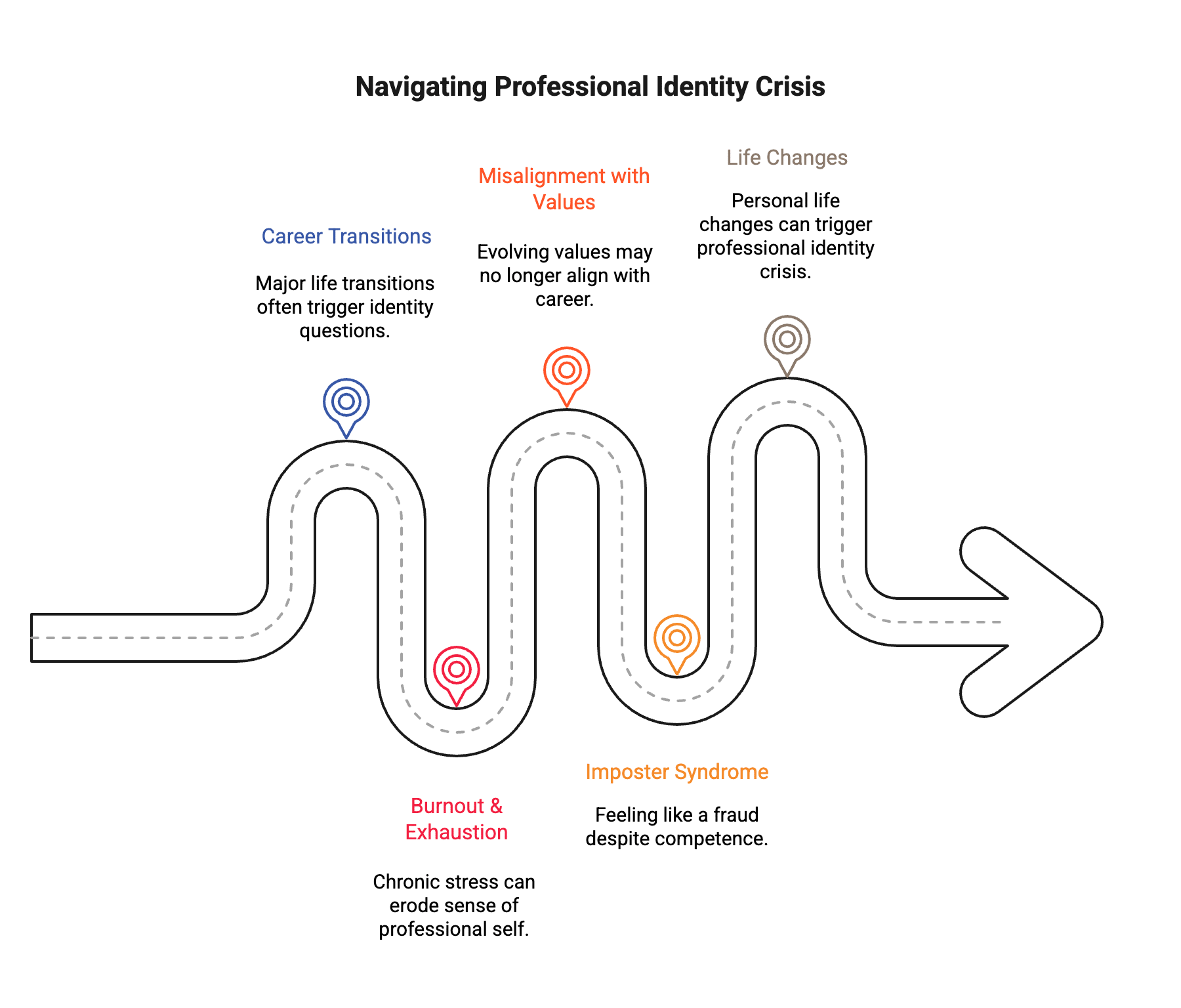
Major life transitions frequently trigger identity questions. Research shows that about 20% of individuals undergoing career transitions report experiencing some kind of personal crisis as they change their career goals. Changes in professional roles can lead to feelings of obsolescence or loss of expertise.
Major professional transitions that commonly trigger professional identity crisis include:
- Job loss or layoffs – Suddenly losing the role that defined you
- Promotions – Moving into leadership that doesn’t align with your values
- Career pivots – Leaving one field for another and losing expertise identity
- Retirement – Facing life without the structure work provided
- Organizational changes – Your role changing in ways you didn’t choose
Interestingly, the majority of professionals transitioning from one career to another are ultimately positive about their move, even when the transition involves a period of identity crisis.
Burnout and Exhaustion
Chronic workplace stress can erode sense of professional self. When you’re burned out, work that once felt meaningful becomes depleting. This disconnect between how you used to feel about your career and how you feel now creates identity confusion. Burnout often triggers a professional identity crisis when individuals can no longer sustain the professional role they’ve built.
You might question whether you ever really wanted this career, or whether you’ve just been performing a role that was never truly you. Many people describe feeling like they’ve lost their sense of agency and responsibility in their current role, leading to decreased motivation and detachment.
Misalignment With Values
As you mature and your values evolve, you may realize your career no longer reflects what matters to you. The work that seemed important at 25 might feel hollow at 35 or 45.
This misalignment creates cognitive dissonance: you’re successful by external measures but feel internally disconnected. Professional identity crisis often emerges when you can no longer ignore this gap.
Imposter Syndrome and Self-Worth Issues
Feeling like a fraud in your professional role—despite evidence of competence—can destabilize your professional identity. When you don’t believe you deserve your success, you can’t fully inhabit your professional identity. Triggers of a professional identity crisis often include equating self worth with external measures like job titles, salary, or recognition from others.
This creates a persistent sense of waiting for the other shoe to drop, never feeling securely rooted in your professional self. The emotional distress of imposter syndrome combined with low self-esteem can significantly contribute to professional identity crisis.
Life Changes Outside Work
Major personal life changes can also trigger professional identity crisis:
- Becoming a parent – Questioning how work fits with family responsibilities and priorities
- Health challenges – Physical or mental health limitations changing what’s possible professionally
- Relationship changes – Divorce, partnership, or loss affecting career focus and priorities
- Caretaking responsibilities – Needing to reprioritize away from work to care for aging parents or family
Individuals may experience an overwhelming sense of duty and attachment to their current roles, which can complicate transitions when life circumstances demand change. The fear of losing professional identity can create significant psychological distress, even when change is necessary for personal wellbeing.
Signs You’re Experiencing Professional Identity Crisis
Recognizing the signs helps you address what’s happening. Professional identity crisis manifests in emotional, cognitive, and behavioral ways.
Emotional Signs
People experiencing professional identity crisis often report emotional changes that include:
- Increased anxiety about work and career decisions, especially regarding the future
- Feelings of emptiness or disconnection at work, even during previously engaging tasks
- Sadness or grief about career path and opportunities not pursued
- Anger or resentment toward job, field, or organizational systems
- Fear about who you are without your current role or professional status
- Feelings of confusion about your values and what truly matters
- Dissatisfaction with achievements that once brought pride
- Reduced motivation to engage with work or pursue professional development
Emotional changes associated with a professional identity crisis may also include feelings of detachment from colleagues and the work community you once valued.
Cognitive Signs
Mental patterns that suggest professional identity crisis include:
- Persistent questioning of career choices and past decisions
- Difficulty making decisions about professional future, experiencing decision paralysis
- Rumination about whether you’re in the right field or role
- Confusion about professional values and long-term goals
- Negative self-talk about competence, worth, or deserving success
- Overthinking every career move and second-guessing choices
- Comparing yourself unfavorably to peers and their apparent success
- Questioning your expertise despite years of experience in your field
A professional identity crisis involves feeling lost or directionless in your career, marked by these cognitive patterns alongside low motivation and dissatisfaction.
Behavioral Signs
Observable changes in behavior may include:
- Withdrawing from professional activities or networking
- Avoiding career-related decisions
- Excessive comparison to peers and their career trajectories
- Overworking to prove worth
- Difficulty setting boundaries between work and personal life
What Are the Four Types of Identity Crisis?
Professional identity crisis can manifest in patterns similar to the four identity statuses identified in developmental psychology. These statuses—originally developed by James Marcia—apply to professional identity as well. For a comprehensive overview, see our guide on the four stages of identity crisis.
Professional Identity Diffusion
A person hasn’t explored professional options and hasn’t committed to a particular career path. This might look like:
- Feeling lost about what you want professionally
- Taking jobs without considering fit
- Lacking clear professional goals or values
- Feeling paralyzed by career options
Professional Identity Foreclosure
Someone has committed to a career path without really exploring whether it fits them. Often, this means following:
- Family expectations about career
- Societal ideas of prestigious or successful work
- The path of least resistance rather than genuine interest
- External definitions of success rather than internal values
Professional Identity Moratorium
Individuals are actively exploring professional identity without clear commitment. This involves:
- Questioning current career path
- Trying different roles or approaches
- Feeling uncertain but engaged in exploration
- Experiencing discomfort but also growth
Professional Identity Achievement
People have explored options and made commitments that feel authentic. This includes:
- Clear understanding of professional values
- Alignment between work and authentic self
- Confidence in career choices
- Flexibility when circumstances change
It’s important to recognize that professional identity achievement isn’t permanent. Career transitions, organizational changes, or life circumstances can prompt renewed exploration.
How Therapy Can Help With Professional Identity Crisis
Professional support provides structure and perspective as you work through professional identity questions. Therapy for professionals in DC offers several evidence-based approaches.
Short-Term Psychodynamic Psychotherapy
This approach helps you understand unconscious patterns affecting your professional life. Research on psychodynamic approaches shows it’s effective for addressing psychological distress related to identity.
Your therapist helps you:
- Recognize recurring patterns in professional relationships
- Understand how past experiences shape current struggles
- Explore unconscious conflicts about success and identity
- Develop insight into what’s driving career confusion
Interpersonal Therapy (IPT)
IPT focuses on the connection between feelings and current difficulties in professional relationships. This approach addresses:
- Role transitions – Adapting to career changes
- Role conflict – Managing competing professional demands
- Interpersonal loss – Grieving aspects of professional identity
- Relationship skills – Improving workplace interactions
Cognitive-Behavioral Approaches
Cognitive-behavioral therapy (CBT) helps identify and change unhelpful thought patterns about professional identity. Studies on identity and CBT show this approach helps when people experience themselves as defective or contradictory. CBT can help address underlying negative thoughts during a professional identity crisis.
You’ll work on:
- Challenging negative beliefs about professional worth and competence
- Recognizing thought patterns that maintain distress and confusion
- Developing more balanced self-perceptions rooted in reality
- Building confidence through behavioral experiments and skill development
Practicing self-care alongside therapy—including maintaining healthy boundaries, engaging in activities outside of work, and prioritizing your mental health—can significantly aid in managing a professional identity crisis.
Acceptance and Commitment Therapy (ACT)
ACT helps clarify professional values and commit to aligned actions, even while experiencing uncertainty. Rather than eliminating difficult feelings about career, you learn to:
- Accept what you’re experiencing without fighting it
- Clarify what truly matters in professional life
- Take committed action toward values
- Develop psychological flexibility with career uncertainty
Mindfulness-Based Approaches
Mindfulness-based cognitive therapy helps observe thoughts and feelings about professional identity without getting overwhelmed. This is particularly helpful when sense of self fluctuates dramatically.
You learn to:
- Notice thoughts about professional identity as mental events
- Create distance from harsh self-judgment
- Stay present rather than catastrophizing about career
- Respond thoughtfully rather than reactively
Problem-Solving Therapy
When professional identity crisis involves specific workplace challenges, problem-solving therapy provides a structured approach. You work with your therapist to:
- Identify key problem areas that need attention
- Break challenges into manageable tasks
- Develop practical coping strategies
- Build confidence through small successes
The therapeutic relationship itself is a powerful part of healing. We work collaboratively with you to understand your unique experience and adapt treatment to your needs and preferences. Many clients find that making identity a focus of treatment places their struggles within a larger, more meaningful context.
Practical Strategies for Working Through Professional Identity Crisis
In addition to therapy, specific strategies can help navigate professional identity questions. Research on resolving identity dilemmas suggests several approaches.
Look for the Overarching Goal
Step back from day-to-day work frustrations to see the bigger picture. This process of making sense of your professional experience can reveal patterns and priorities you hadn’t recognized. Ask yourself:
- What am I ultimately trying to achieve professionally?
- What impact do I want to have on my community or field?
- What would make this work feel meaningful and aligned with my values?
- How do I define success for myself, independent of external expectations?
Self-reflection and exploring your core values are essential strategies to navigate a professional identity crisis effectively.
Differentiate Facts From Interpretations
Separate what actually happened from your interpretation. For example:
- Fact: “I didn’t get the promotion”
- Interpretation: “I’m not good enough for leadership”
Recognizing this distinction helps challenge unhelpful narratives about professional identity.
Discover Dialogue Between Inner Voices
Notice conflicting thoughts about professional self:
- The voice that says you should stay vs. the voice that wants change
- The part that values security vs. the part that craves meaning
- The identity you’ve built vs. who you’re becoming
Acknowledging these internal conflicts is the first step toward integration.
Consider Having, Doing, and Being
Reflect on three aspects of professional life:
- Having: Resources, skills, credentials you possess
- Doing: Actions you take, work you produce, daily responsibilities
- Being: Who you are, core values and identity beyond accomplishments
Professional identity crisis often stems from overemphasizing “doing” while neglecting “being.” Redefining success to include personal fulfillment, work-life balance, and alignment with your authentic self—rather than just external markers like titles or salary—is a key strategy to navigate professional identity crisis. This process takes time and often requires challenging deeply held beliefs about what makes a career “successful.”
Write About Your Experience
Research shows writing about emotional experiences can lessen distress associated with professional identity changes. The process of putting your thoughts and feelings into words helps you make sense of complex emotions and gain perspective on your situation. Regular journaling about professional identity questions can help you:
- Process complex feelings without judgment
- Recognize patterns over time
- Gain clarity about what matters most
- Track growth and insights as you progress
Seek Support From Others
Talking to others who are experiencing similar identity changes can help reduce feelings of isolation and distress. Talk with friends, mentors, or others experiencing similar transitions. Sharing your experience:
- Reduces isolation and shame around career struggles
- Provides perspective and validation from trusted sources
- Offers practical insights from others’ experiences and advice
- Reminds you that professional identity crisis is a normal part of career development
Building a support system outside of work is particularly important, as it helps you maintain a sense of self that exists independently of your professional role.
When to Seek Professional Help
Knowing when to reach out for support is important. Seeking mental health support is crucial if feelings of hopelessness or excessive worry arise during professional transitions. Consider professional help if you’re experiencing:
- Persistent distress about career that interferes with daily life and relationships
- Symptoms of depression like hopelessness, loss of interest, changes in sleep or appetite
- Anxiety that makes career decisions feel overwhelming or paralyzing
- Relationship problems stemming from work identity issues or career stress
- Difficulty functioning at work or in personal life due to identity confusion
- Feelings of being stuck despite attempts to work through questions on your own
- Thoughts of self-harm or that life isn’t worth living
- Increased substance use to cope with career-related stress
Mental health professionals can provide the support and guidance needed to navigate these challenging transitions effectively.
If professional identity crisis is also triggering symptoms of anxiety or depression, anxiety therapy in DC or depression therapy in Washington DC may also be helpful.
Moving Forward: Rebuilding Professional Identity
Recovery from professional identity crisis involves developing a more integrated sense of who you are professionally. Evidence-based practice guidelines show this process takes time but leads to meaningful growth.
You may notice:
- Greater clarity about professional values
- Ability to set boundaries between work and personal identity
- More flexibility in how you define professional success
- Reduced anxiety about career decisions
- Stronger sense of self that exists beyond job title
Our Dupont Circle therapists understand the unique pressures DC professionals face. We help you develop a professional identity that honors your authentic self while navigating the realities of ambitious career environments.
Many clients find that working through professional identity crisis ultimately leads to more satisfying careers and richer personal lives. The work of separating who you are from what you do is challenging, but it’s also liberating.
Ready to Get Started?
If you’re experiencing a professional identity crisis and want support working through it, we’re here to help. We specialize in helping DC professionals navigate career transitions, burnout, and identity questions.
This blog provides general information and discussions about mental health and related subjects. The content is not intended to be a substitute for professional medical advice, diagnosis, or treatment. Always seek the advice of your physician or other qualified health provider with any questions you may have regarding a medical condition.