Why One Type of Therapy Doesn’t Fit All: The Science Behind Treatment Choice
If you’re searching for a therapist, you’ve likely encountered different approaches: cognitive behavioral therapy (CBT), psychodynamic therapy, interpersonal therapy, and more. Psychotherapy (also called “talk therapy”) is a treatment where you work with a trained therapist to manage mental health conditions.
It’s natural to wonder which type works best. But research involving tens of thousands of patients reveals something reassuring: the specific type of therapy may matter less than you think. Understanding this can reduce the pressure of finding the “perfect” approach and help you focus on what truly drives successful outcomes.
What the Research Actually Shows

For decades, psychotherapy researchers debated which therapeutic approach works best. The answer, backed by extensive research, challenges what many people assume about mental health treatment.
Psychotherapy Works—Really Well
First, the good news: psychotherapy is highly effective for treating depression and anxiety. A comprehensive 2023 meta-analysis including over 52,700 patients found that cognitive behavioral therapy significantly reduces depression symptoms compared to control conditions, other psychotherapies, and even when combined with medication. The benefits often last for months after treatment ends.
For anxiety disorders, a 2024 study published in JAMA Psychiatry analyzing treatments for generalized anxiety disorder found that multiple psychotherapy approaches showed substantial effectiveness.
These aren’t small studies—we’re talking about analyses of hundreds of trials involving tens of thousands of real patients.
But Which Type Works Best?
Here’s where it gets interesting. According to a comprehensive 2023 umbrella review published in World Psychiatry, psychodynamic therapy showed equivalent effectiveness to other evidence-based therapies like CBT across depression, anxiety, personality disorders, and somatic symptom disorders. This isn’t an isolated finding—it reflects a broader pattern called the “dodo bird verdict” (a term describing when different approaches produce similar outcomes).
The Dodo Bird Verdict: What It Means
The term comes from Alice in Wonderland, where the dodo bird declares after a race: “Everybody has won, and all must have prizes.” In psychotherapy research, it describes a consistent finding: when comparing established therapeutic approaches, most show roughly equivalent outcomes.
A 2021 network meta-analysis examining depression treatments across 34,000 patients found that major therapy types—including cognitive behavioral therapy, interpersonal therapy, psychodynamic therapy, behavioral activation, and problem-solving therapy—all produced meaningful benefits. While some small differences appeared in direct comparisons, these often disappeared when researchers examined the data more carefully.
One notable exception: supportive counseling may be somewhat less effective than other structured therapies, though it still helps many people.
Research by Bruce Wampold and colleagues, leaders in psychotherapy effectiveness research, found that specific therapeutic techniques account for only small differences in outcomes—roughly 1% of the variance. Meanwhile, common factors shared across approaches account for much larger effects.
So if specific techniques matter less than expected, what actually drives successful therapy outcomes?
What Actually Makes Therapy Work?
If the specific type of therapy isn’t the main driver of success, what is? Research points to several “common factors” that transcend therapeutic approach.
In our practice, we’ve seen this research play out countless times. Clients often worry they need to find the “perfect” type of therapy, but we regularly see people thrive in different approaches—what matters most is the therapeutic relationship and their engagement in the process.
The Therapeutic Relationship
Meta-analyses involving over 30,000 patients found that the therapeutic alliance—the bond between therapist and client—predicts outcomes with an effect size equivalent to Cohen’s d of 0.57. This surpasses many specific technique effects.
The alliance includes:
- The personal bond between you and your therapist
- Agreement on goals for your therapy
- Shared understanding of how therapy will help
According to Wampold’s research synthesis published in World Psychiatry, successful therapists share two key characteristics: they establish warm involvement with their patients, and they build strong rapport, communication, and trust.
Your Own Readiness and Engagement
Research shows you’re more likely to benefit from therapy when you:
- Are willing to be self-disclosing and open about your experiences
- Have a strong desire to improve your situation
- Believe that psychotherapy can help address your concerns
These factors aren’t about finding the “perfect” therapy type—they’re about your engagement in the process itself.
Therapist Effectiveness
Recent research using multilevel modeling found that therapist effects matter more than many realize. More effective therapists form strong alliances across a range of patients, while less effective therapists struggle regardless of which specific techniques they use.
Interestingly, the research showed it’s the therapist’s contribution to the alliance that predicts outcomes—not the patient’s baseline ability to form relationships.
These common factors help explain why different therapy approaches can work equally well—but understanding this research has practical implications for your treatment decisions.
Why This Matters for You
Understanding that “no one method is better or more effective than any other” (as summarized in The Great Psychotherapy Debate, 2015) should actually be reassuring. Here’s what this means for your treatment journey:
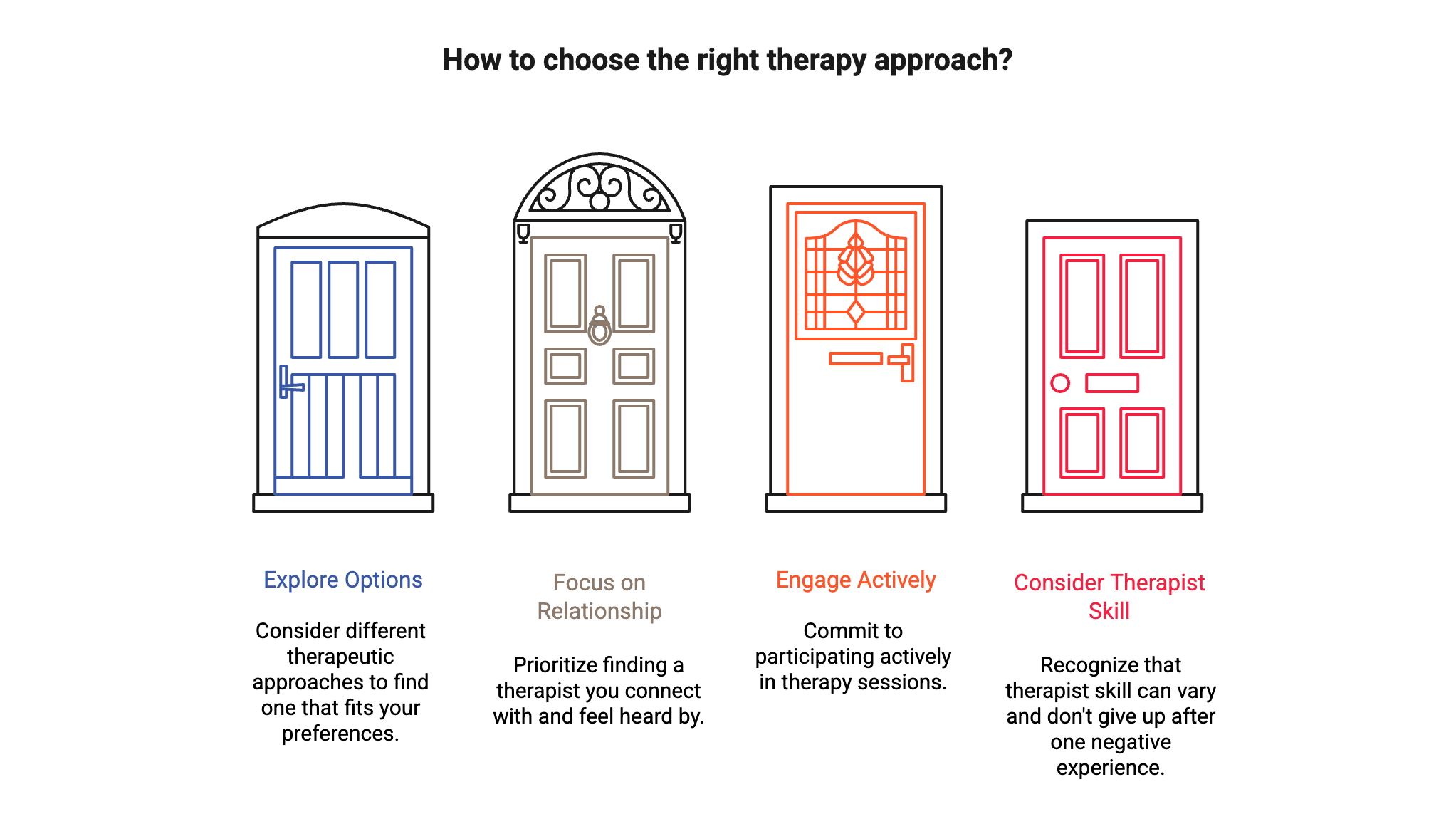
You have options. If one therapeutic approach doesn’t feel right, another evidence-based approach might work better for you—not because it’s objectively “better,” but because it fits your preferences and the relationship you build. Whether you’re considering therapy for depression, anxiety treatment, or relationship issues, multiple pathways exist.
The relationship matters most. Focus on finding a therapist you connect with, who demonstrates warmth and genuine concern, and who makes you feel heard. This matters more than their theoretical orientation.
Your engagement counts. Your willingness to participate actively in therapy—regardless of the specific approach—significantly influences your outcomes.
Therapist skill varies. The same therapeutic approach delivered by different therapists can yield different results. Don’t give up on therapy entirely if one experience doesn’t work out.
Understanding these factors can help you make informed decisions about your mental health care.
What About “Evidence-Based” Treatments?
The 2023 umbrella review evaluated psychodynamic therapy using updated criteria for empirically supported treatments. The researchers found high-quality evidence for effectiveness in depression and somatic symptom disorders, and moderate-quality evidence for anxiety and personality disorders.
Importantly, psychodynamic therapy showed:
- Medium to large effect sizes compared to control conditions
- No meaningful differences in effectiveness compared to other active therapies
- Stable benefits at follow-up assessments
- Low risk of adverse events
This pattern—strong effects compared to no treatment, equivalent effects compared to other therapies—repeats across therapeutic approaches. A 2024 analysis examining researcher allegiance found that most treatment comparison studies yield roughly equivalent outcomes when accounting for bias.
The key takeaway: multiple therapy approaches meet rigorous evidence-based standards, which means you have legitimate options to choose from.
How Different Therapies Work Differently
While outcomes may be similar, the process differs significantly between approaches. Research from 2012 examining short-term dynamic psychotherapy versus cognitive therapy found they achieved similar symptom reduction through different mechanisms:
In psychodynamic therapy: A focus on emotional experiencing and insight drove positive outcomes. When therapists avoided emotions, outcomes suffered.
In cognitive therapy: Staying focused on thoughts and behaviors (rather than deep emotional processing) predicted better outcomes.
Both worked—but through different pathways suited to different people’s needs and preferences.
We often tell clients that choosing between therapy approaches is like choosing between running and swimming for fitness—both get you healthier, but one might feel more natural to you. Some people connect deeply with insight-oriented work, while others thrive with structured skill-building.
Evidence from Real-World Practice
This pattern holds even outside research settings. Large-scale studies in UK primary care settings—examining thousands of patients receiving routine treatment—found that cognitive behavioral therapy, person-centered therapy, and psychodynamic therapy all showed similar effectiveness. These weren’t carefully controlled research trials; this was regular clinical practice, which makes the findings even more reassuring for people seeking treatment.
Additional research from the UK National Audit of Psychological Therapies corroborated these findings, showing that different evidence-based approaches produce comparable results in everyday clinical settings.
This real-world evidence matters because it demonstrates these findings aren’t just theoretical—they apply to actual treatment you might receive.
Finding What Works for You
Given this research, how should you choose a therapy approach? Here are evidence-based considerations to guide your decision.
Consider Your Preferences
Research on treatment matching shows that when clients receive their preferred type of therapy, they show greater outcomes and stronger therapeutic alliance.
If you’re drawn to:
- Exploring your past and relationship patterns → psychodynamic therapy might appeal to you
- Structured, present-focused skill-building → cognitive behavioral therapy might feel more comfortable
- Mindfulness and acceptance-based approaches → newer modalities like ACT or DBT might resonate
Prioritize the Relationship
Can you imagine being vulnerable with this therapist? Do they demonstrate genuine empathy and understanding? A 2024 study examining therapeutic relationships found that the ability to build reciprocal trust, show genuine empathic concern, and respond directly to clients’ concerns mattered across all therapy types.
Give It Time—But Not Forever
Research on alliance development shows that early establishment of a good therapeutic relationship predicts outcomes. If you don’t feel a positive connection after 3-4 sessions, it’s reasonable to consider whether this therapist is the right fit.
Look for Qualified, Experienced Therapists
The 2023 umbrella review found that most effective therapy studies included experienced or well-qualified therapists who received supervision. Therapist training and ongoing development matter.
Now that you understand what drives therapy effectiveness, it’s helpful to know what realistic expectations look like.
What “Success” Looks Like
It’s important to have realistic expectations. Research shows that about half of people who complete therapy show significant improvement. This doesn’t mean therapy only works half the time—many factors influence outcomes.
We frequently see clients make meaningful progress even when they initially struggled with engagement or had severe symptoms. The key factors that predict better outcomes—completing treatment, building a strong alliance, and finding the right therapist fit—are all things you have some control over.
Factors That Influence Outcomes
Several elements affect how well therapy works for any individual:
- Completing treatment: People who finish the full course of therapy tend to do better than those who stop early
- Severity when starting: Those with more severe symptoms may need longer treatment or additional support
- The therapeutic relationship: Having a good connection with your therapist matters significantly
- Personal fit: Comfort with the therapy approach affects engagement and outcomes
Long-Term Benefits
One of psychotherapy’s strengths is that benefits often continue after treatment ends. Research shows many people maintain their improvement 6-12 months after finishing therapy. Some studies even suggest psychotherapy may have longer-lasting benefits than medication alone, possibly because you learn skills and insights that continue serving you.
Different Formats, Similar Results
Psychotherapy doesn’t only happen in traditional weekly office visits. Research shows that various formats can be effective.
Available Therapy Formats
Different delivery methods work for different people:
- Individual therapy: Traditional one-on-one sessions with a therapist
- Group therapy: Meeting with a therapist and others facing similar challenges
- Internet-based therapy: Structured programs completed online, sometimes with therapist support
- Guided self-help: Working through materials independently with periodic therapist check-ins
Evidence for Alternative Formats
Studies show that internet-based CBT and guided self-help can be effective alternatives, particularly when they include some therapist contact. This matters because it means if traditional weekly therapy doesn’t fit your schedule or budget, evidence-based alternatives exist.
The 2023 Cuijpers meta-analysis found that whether therapy happens in person, online, or through structured self-help, the key predictors of success remain consistent: engagement with the material, completion of the program, and connection with supportive guidance.
The Bottom Line
Research involving tens of thousands of patients strongly supports that psychotherapy is an effective treatment for depression, anxiety, and other mental health conditions. Meta-analyses of hundreds of studies show that most established types of therapy work well, so finding an approach and therapist that feels right for you is often more important than the specific type of therapy.
About half of people who complete therapy show significant improvement, with benefits often lasting 6-12 months or longer after treatment ends. If one approach doesn’t help, trying a different therapy or therapist is a reasonable option—the evidence shows multiple pathways to feeling better.
Ready to Find the Right Therapeutic Fit?
We understand that choosing a therapist can feel overwhelming. Our team includes experienced therapists trained in multiple evidence-based approaches, including cognitive behavioral therapy, psychodynamic therapy, and other modalities. We prioritize building strong therapeutic relationships and matching you with an approach that fits your needs and preferences.
Contact us to schedule a consultation where we can discuss which approach might work best for you, or call us directly at (202) 455-8748.