Strengths and Weaknesses of Somatic Therapy

Somatic therapy is a body-centered approach to mental health treatment that helps people process trauma, anxiety, and chronic stress by focusing on physical sensations and the mind body connection. Like other therapy modalities, somatic therapy has both strengths and limitations worth understanding. Research shows somatic therapy can reduce symptoms of post-traumatic stress disorder, anxiety, and depression.
What Is Somatic Therapy Good For?

Somatic therapy helps treat conditions where trauma and stress show up as physical symptoms in the body. Studies indicate somatic therapy, including body psychotherapy and Somatic Experiencing, can effectively lower stress, anxiety, depression, and chronic pain for many people dealing with persistent physical symptoms or past trauma.
The benefits of somatic therapy extend to several mental health conditions. Post-traumatic stress disorder responds particularly well because trauma often gets stored in the body’s nervous system, not just in thoughts and memories. Somatic therapy aims to help release these stored emotions through body awareness and gentle movement.
Beyond trauma therapy, somatic practices can help with anxiety symptoms, emotional pain, and chronic stress. The mind body connection—the way our thoughts, emotions, and physical sensations influence each other—is central to how somatic therapy works. Unlike traditional talk therapy, which focuses primarily on thoughts and feelings, somatic therapy recognizes that the body’s sensations and physical health are deeply connected to mental health. Different types of therapy approach anxiety in different ways, and somatic therapy’s body-centered focus on the mind body connection fills a unique role.
In our DC practice, we often work with professionals experiencing what we call “functional anxiety”—high achievers whose stress lives in their bodies even when they’re logically aware they should relax. Somatic therapy helps them access and release physical tension that talk therapy alone sometimes misses.
What Are the Skills of Somatic Therapy?
Somatic therapy techniques focus on building enhanced body awareness and learning to regulate the nervous system through physical sensations and movements. A somatic therapist teaches specific skills that help clients tune into their body’s role in emotional experiences and healing. These body awareness practices form the foundation of how somatic therapy helps people reconnect with their physical sensations.
Key somatic therapy techniques include:
- Body scanning to increase awareness of bodily sensations and where physical tension collects in the body
- Breathwork and deep breathing exercises to calm the nervous system and promote relaxation
- Grounding exercises that help people feel present and safe when traumatic memories surface
- Gentle physical movements designed to release physical tension and complete the body’s natural stress responses
- Titration, which means introducing small, manageable amounts of difficult bodily sensations or memories during therapy sessions
- Pendulation, a Somatic Experiencing technique where the trained somatic therapist guides clients between states of distress and calm to build emotional regulation
These somatic therapy techniques help address what’s called the fight, flight, or freeze response. When people experience traumatic experiences, their body may get stuck in one of these survival states. Somatic Experiencing uses interoception (sensing internal body states) and proprioception (sensing body position and movement) as core elements of trauma therapy to help the nervous system complete these interrupted responses.
Sensorimotor psychotherapy and other forms of body psychotherapy also work with internal and external resources—things that help a person feel safe and grounded. This might include noticing feelings of strength in certain body parts, connecting with supportive memories, or using mindfulness to stay present in the moment. The goal is to build self-awareness and give people tools to support healing outside of therapy sessions.
Do Somatic Exercises Really Release Trauma?
Research suggests that somatic therapy can help reduce trauma symptoms, though the concept of “releasing” trauma is more complex than it sounds. A randomized controlled study found that Somatic Experiencing led to significant reductions in post-traumatic stress symptoms, supporting the effectiveness of body-oriented trauma therapy.
The idea behind somatic therapy is that traumatic stress gets stored in the body as incomplete physiological responses. Stored trauma manifests as patterns in the nervous system that keep people stuck in survival mode. When something threatening happens, the body responds with physical reactions—increased heart rate, muscle tension, shallow breathing—preparing to fight, flee, or freeze. In healthy processing, these responses complete and the nervous system returns to baseline. But with trauma, the body may stay activated, holding onto these physical responses as stored trauma. Trauma-informed approaches recognize how these patterns persist.
Somatic therapy helps by working with bodily sensations to gently complete these stuck responses. This doesn’t mean stored trauma magically disappears, but that the nervous system learns it’s safe to move out of chronic stress states. Somatic therapy helps people recognize physical symptoms connected to past trauma and gradually build tolerance for uncomfortable physical sensations. The healing process involves understanding how the mind body connection maintains stored trauma patterns.
A systematic review and meta-analysis of body psychotherapy effectiveness found that these approaches can improve mental health conditions, though results vary between individuals. Some people experience better emotional regulation and decreased anxiety symptoms fairly quickly, while others need more time. The therapy’s effectiveness often depends on factors like the severity of trauma, how chronic the stress has been, and the person’s willingness to engage with body-focused work.
We’ve seen clients make meaningful progress with somatic approaches, particularly when combined with other therapeutic methods. The therapy works best when people are ready to approach their healing with curiosity about their body’s sensations rather than trying to force or rush the process.
What Does a Somatic Release Feel Like?
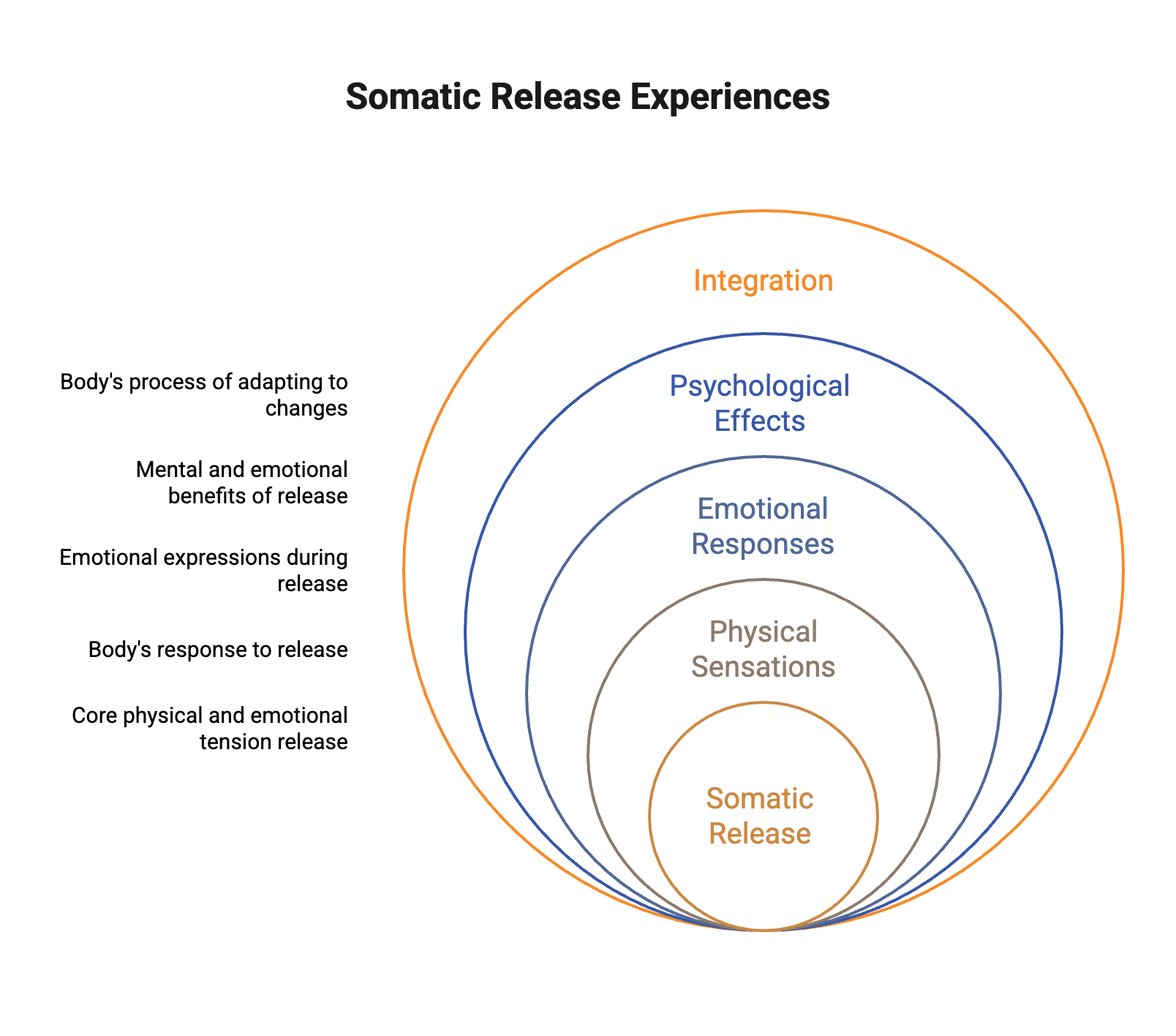
A somatic release can feel different for everyone, but common experiences include physical sensations like warmth, tingling, trembling, or a sudden sense of relief in the body. Some people describe somatic therapy’s effects as tension melting away, while others notice emotional responses like crying or unexpected laughter. Someone might feel sudden emotional pain surfacing or, conversely, a sense of lightness and calm they haven’t felt in years. Patients report somatic therapy helps them understand how their thoughts and feelings affect their bodies, leading to greater self-acceptance, improved coping, and better emotional regulation. After a session where stored trauma begins to move, people often report feeling tired. Releasing physical and emotional tension can be exhausting, and the body needs time to integrate the changes.
Strengths of Somatic Therapy
Somatic therapy offers several key advantages, especially for people whose mental health challenges show up as physical symptoms or who haven’t responded well to traditional talk therapy alone.
Addresses the mind body connection directly. Rather than treating psychological and physical symptoms separately, somatic therapy recognizes that mental health and physical health influence each other constantly through the mind body connection.
Doesn’t require detailed verbal processing of trauma. For some people, especially those dealing with severe post-traumatic stress, talking about traumatic memories in detail can be retraumatizing. Somatic therapy allows people to work with trauma through bodily sensations and physical responses without recounting every detail of what happened. This can feel safer than traditional talk therapy, particularly in high-pressure environments where people stay “in their heads.” Some people find somatic therapy more accessible than talk therapy when words feel inadequate for describing their experiences.
Complements other therapeutic approaches well. Somatic therapy may work effectively alongside other treatments, such as cognitive-behavioral therapy or medication, to provide more comprehensive care. Many mental health conditions benefit from addressing both the thought patterns emphasized in traditional talk therapy and the physical manifestations of distress that somatic therapy targets.
Builds practical, usable skills. The somatic therapy techniques learned in sessions—deep breathing, body scanning, grounding—become tools people can use daily outside of therapy. This increased self-awareness helps with managing workplace stress, improving sleep, and handling difficult emotional experiences.
Evidence-based for specific conditions. Research demonstrates body psychotherapy can be effective for treating various mental health conditions, with particular strength in addressing trauma-related disorders, anxiety, and persistent somatic symptoms.
We often integrate somatic therapy with other approaches in our practice. For clients who feel “stuck” despite progress in traditional talk therapy, adding body-based work frequently unlocks new pathways for healing. The combination addresses both the cognitive and physiological aspects of mental health challenges.
Weaknesses of Somatic Therapy
Like any therapeutic approach, somatic therapy has limitations that are important to understand before starting treatment.
Research is still developing. While studies show promise, more large, high-quality research is still needed to fully understand how well somatic therapy works for different conditions.
Results vary significantly between individuals. Not everyone responds the same to somatic approaches—some people see substantial improvements while others notice only modest changes.
May not address all symptoms on its own. Somatic therapy can help with physical and emotional symptoms, but might not be sufficient for severe or long-lasting problems without additional treatment.
Requires comfort with body-focused work. Somatic therapy asks you to pay close attention to physical sensations, which can feel uncomfortable or unfamiliar for people who are used to processing emotions through talking and thinking. Success depends on willingness to try body-based techniques and develop a strong therapeutic relationship. Some people find it harder to access or describe bodily sensations than to put feelings into words.
Not all practitioners are equally trained. The terms “somatic therapy” and “body psychotherapy” can mean different things depending on the provider’s training. Find a somatic therapist with proper credentials and specific training in evidence-based approaches like Somatic Experiencing or sensorimotor psychotherapy.
Somatic therapy offers a valuable pathway to healing for many people dealing with trauma, anxiety, and stress that manifests physically. Understanding both the strengths and limitations of somatic therapy helps you make an informed decision about whether body-based approaches fit your needs.
Getting Started with Somatic Therapy in DC
If you’re considering somatic therapy, talking with a mental health provider about your specific situation is the best first step. They can help you determine whether body-oriented trauma therapy might work well for you, either alone or combined with other approaches. Working with a somatic therapist who understands body awareness and nervous system regulation can enhance your healing process.
Ready to explore somatic therapy? Connect with our trauma specialists at Therapy Group of DC.
This blog provides general information and discussions about mental health and related subjects. The content is not intended to be a substitute for professional medical advice, diagnosis, or treatment. Always seek the advice of your physician or other qualified health provider with any questions you may have regarding a medical condition.