Therapy for Imposter Syndrome: Evidence-Based Treatments That Work

Imposter syndrome therapy helps high-achieving professionals recognize their own abilities and break free from persistent self-doubt. This guide is for anyone in Washington, DC who feels like a fraud despite their accomplishments. You’ll learn which therapeutic approaches work and practical steps for overcoming imposter syndrome.
Imposter syndrome (also called the impostor phenomenon or imposter feelings) is a psychological phenomenon where people with imposter syndrome feel like a fraud despite clear evidence of success. Studies show it affects anywhere from 9% to 82% of people, with particularly high rates among high-achieving individuals. Those experiencing imposter syndrome often attribute successes to external factors like luck rather than their own abilities. Research shows that specific therapeutic interventions can reduce imposter feelings and self-doubt over time—including self-compassion programs, psychodynamic therapy, and cognitive behavioral approaches.
What Is the Best Therapy for Imposter Syndrome?

The most effective therapies for imposter syndrome self-compassion interventions, cognitive behavioral therapy (CBT), and psychodynamic therapy—with the best choice depending on specific patterns of self-doubt.
Here’s how each approach works:
Self-Compassion Interventions
Practice self-compassion interventions teach treating yourself with kindness when facing setbacks—particularly effective for those who struggle with perfectionism and low self-esteem. Brief self-compassion programs as short as four weeks have reduced both imposter syndrome and perfectionism, improving mental health and self-esteem.
Cognitive Behavioral Therapy (CBT)
Cognitive behavioral therapy (a structured approach to identifying and changing thought patterns) helps identify and change unhelpful negative thoughts and negative self-talk fueling imposter feelings and self-doubt. CBT typically involves 8-20 sessions with practical exercises to challenge negative beliefs and reduce fear of failure.
Psychodynamic Therapy
Psychodynamic therapy explores how past experiences drive current feelings of being an imposter, helping understand unconscious patterns and build self-awareness. It’s particularly helpful for those with difficulty accepting praise or a history of personal relationships where feelings weren’t validated, impacting self-esteem and mental health.
Group Therapy and Support Groups
Group therapy and workshops provide the powerful benefit of realizing you’re not alone with imposter syndrome. Hearing high-achieving peers admit to the same self-doubt and imposter feelings directly challenges the belief that “everyone else has it figured out except me.” Support groups normalize the impostor syndrome experience and reduce feelings of isolation while providing guidance for seeking support.
We see this pattern often in DC—brilliant professionals who’ve built impressive careers but still feel like they’re moments away from being exposed. The pressure cooker environment here, where everyone’s resume feels intimidating, can amplify these feelings. But therapy helps separate the persistent fear from the facts.
How to Overcome Imposter Syndrome
Understanding treatment options is just the first step. Here’s how to actually overcome imposter syndrome:
Overcoming imposter syndrome requires recognizing the gap between achievements and how people feel about them, then systematically building self-compassion and challenging distorted beliefs through therapeutic support.
Therapy for imposter syndrome addresses several key areas: reframing negative self-talk and self-doubt, identifying root causes (often tracing back to early experiences), practicing self-compassion, and developing concrete coping strategies like keeping a success journal. One powerful approach for overcoming imposter syndrome is maintaining a record of accomplishments and positive feedback—creating an external reference point when internal experience suggests inadequacy and self-doubt.
In our practice, we encourage clients to save specific examples—emails praising their work, successful project outcomes, positive performance reviews. When imposter feelings surface during a challenging week, having this tangible evidence helps ground them in reality rather than staying trapped in self-doubt. It’s not about ego; it’s about accuracy.
Practical Strategies You Can Start Today
Here are evidence-based strategies for managing imposter syndrome:
- Practice self-compassion daily: When noticing harsh self-criticism and self-doubt, pause and ask, “What would I say to a friend in this situation?” Then offer that same kindness. Self-compassion supports mental health and self-esteem without lowering standards—it’s essential for overcoming imposter syndrome.
- Reframe successes: Challenge the habit of attributing positive outcomes to external factors. Instead of “I just got lucky,” practice thoughts like “I prepared thoroughly and that contributed to this outcome.” This builds self-awareness of your own abilities and reduces self-doubt.
- Seeking support and mentorship: Engaging with peers or mentors who understand your field provides perspective on imposter feelings. Professional organizations and support groups connect people facing similar challenges with imposter syndrome.
- Celebrate achievements: Acknowledge accomplishments regardless of size. Even brief moments of appreciation help build self-confidence and self-esteem over time, supporting personal and professional growth and mental health.
What Are the 4 P’s of Imposter Syndrome?
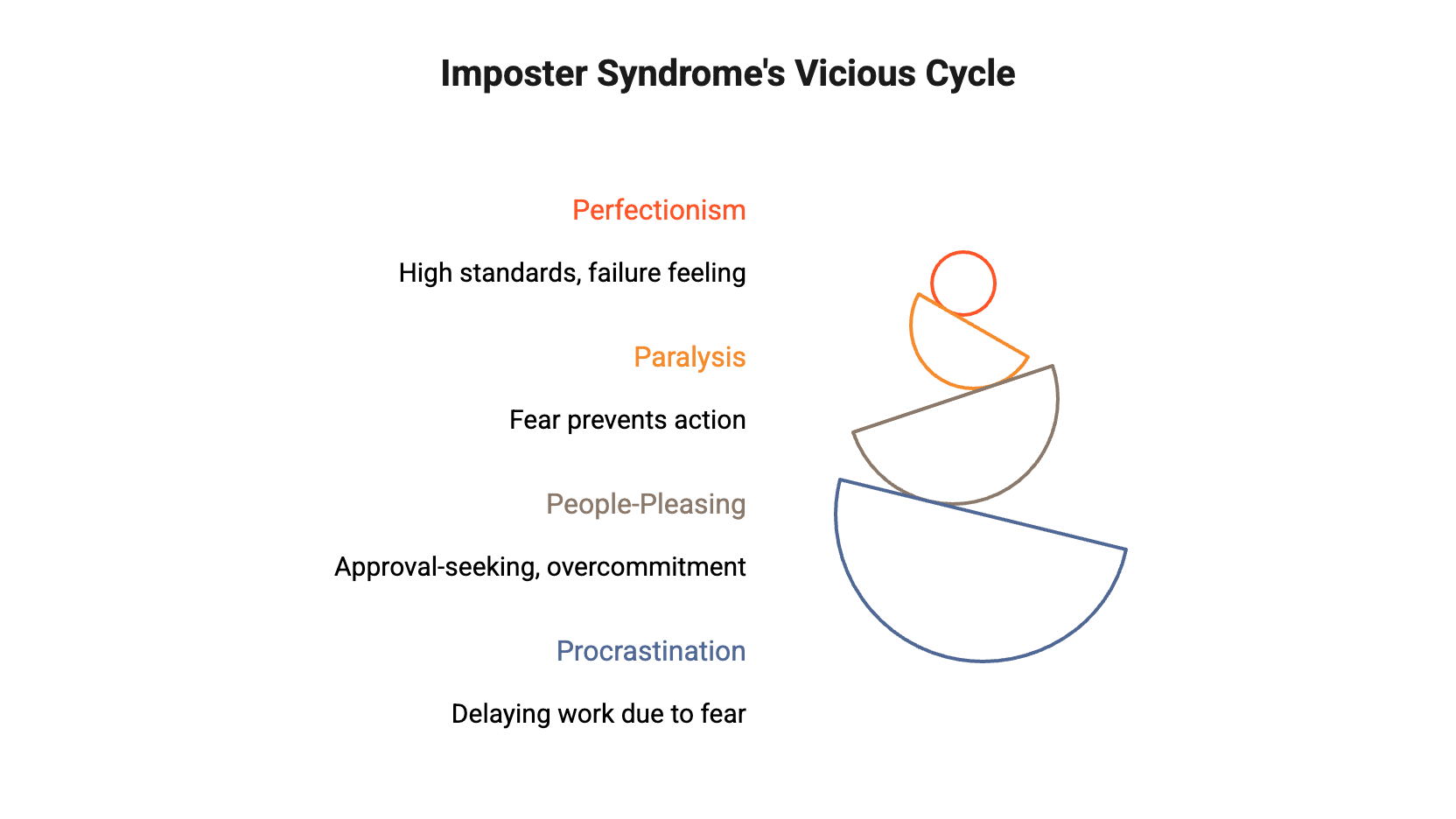
The 4 P’s of imposter syndrome are Perfectionism, Paralysis, People-Pleasing, and Procrastination—four behavioral patterns that both result from and reinforce imposter syndrome, imposter feelings, and fear of failure through self-doubt.
1. Perfectionism
Perfectionism drives setting impossibly high standards, then feeling like a failure when falling short. If frequently thinking “anything less than perfect isn’t good enough,” perfectionism may be fueling imposter syndrome and self-doubt. The constant fear of failure becomes exhausting and reinforces beliefs about inadequacy, affecting mental health.
2. Paralysis
Paralysis happens when persistent fear of being exposed as inadequate prevents action—avoiding promotions or staying silent in meetings despite having valuable insights. This avoidance limits career progression over time and reinforces imposter feelings.
3. People-Pleasing
People-pleasing emerges from believing self-worth depends on others’ approval and seeking external validation, leading to overcommitment and emotional exhaustion. While being helpful is positive, people-pleasing that stems from imposter syndrome creates low self-esteem and uncertainty about own abilities.
4. Procrastination
Procrastination can paradoxically result from imposter feelings and fear of failure—delaying work because of persistent fear that best efforts won’t be good enough. This creates a cycle affecting mental well-being and reinforcing self-doubt.
One pattern we notice frequently: high achievers who procrastinate on important projects not because they’re lazy, but because they’re terrified. If you never finish, you can’t fail. But that also means you never succeed. Breaking this cycle often starts with permission to produce “good enough” work rather than perfect work—and discovering that your “good enough” is actually excellent.
What Are the Three C’s of Imposter Syndrome?
The three C’s of imposter syndrome are Context, Characteristics, and Coping—a framework for understanding how impostor feelings and self-doubt develop and how to manage them.
Context
Context refers to environments that trigger imposter syndrome and imposter feelings. In DC, when surrounded by accomplished lawyers, policy experts, and researchers, it’s easy to assume being the only one who doesn’t belong. Research shows imposter feelings and self-doubt are extremely common among high-achieving individuals in demanding fields—comparing oneself to others intensifies self-doubt and affects mental health.
Characteristics
Characteristics of imposter syndrome include perfectionism, difficulty accepting praise and positive feedback, and attributing personal success to external factors rather than own abilities. The imposter phenomenon creates contradictory thinking—intellectually knowing qualifications while emotionally feeling fraudulent. This affects self-perception, self-esteem, and overall well-being.
Coping Strategies
Coping encompasses both unhealthy approaches (overworking to prove oneself, avoiding challenges) and healthy strategies for overcoming imposter syndrome (seeking support, practicing self-compassion, reframing negative thoughts and negative self-talk). Therapy helps shift from ineffective coping patterns to approaches that actually reduce imposter feelings and self-doubt while supporting mental health.
How Do I Get Rid of Imposter Syndrome?
Significantly reducing imposter syndrome happens through therapy, practice self-compassion approaches, and concrete strategies—though the goal isn’t to eliminate self-doubt entirely but to prevent imposter feelings from controlling choices.
Therapists who specialize in CBT, self-compassion interventions, or working with high-achieving individuals provide structured support for overcoming imposter syndrome and addressing self-doubt. If imposter syndrome is causing chronic stress, anxiety, or burnout, affecting career decisions, or significantly impacting mental health and self-esteem, professional support can be life-changing for overcoming imposter syndrome.
Treatment timelines vary by approach:
- Self-compassion programs: Results in as little as 4 weeks
- CBT: Generally 8-20 sessions
- Long-term therapy: Several months for lasting change
Many people notice improvement relatively quickly in their self-confidence and mental health, though lasting change in overcoming imposter syndrome and persistent patterns of self-doubt takes time—typically developing over months with consistent support and practice self-compassion work.
How to Support Someone with Impostor Syndrome
Supporting someone with imposter syndrome means offering specific, concrete feedback rather than generic reassurance.
Effective support strategies include:
- Provide specific feedback: Instead of “You’re great at your job,” try “The way you handled that complicated situation showed real skill—especially how you addressed their concerns.” Specific examples are harder to dismiss.
- Normalize the experience: Share that 9% to 82% of people experience imposter syndrome. If you’ve experienced it yourself, discussing that can help reduce their sense of isolation.
- Avoid toxic positivity: Statements like “Just be confident!” aren’t helpful because they imply the person can simply decide to feel differently. Instead, acknowledge that feelings are real even when fears aren’t accurate reflections of their abilities.
- Encourage professional support: Gently suggest therapy as a sign of strength and offer to help find therapists specializing in high-achieving professionals.
Finding Help in Washington, DC
Ready to get professional support? Here’s how to find the right therapist:
Many therapists in DC specialize in working with high-achieving professionals who experience imposter syndrome. (Not sure whether to see a therapist or psychologist? Learn the key differences.) When reaching out, ask about their experience treating imposter syndrome, imposter feelings, and which approaches they use for overcoming imposter syndrome.
Remember: Seeking support for imposter syndrome is a sign of self-awareness and strength. Overcoming stigma about therapy is often the first step toward getting help. With the right therapeutic support, people can learn to recognize their true abilities, accept praise gracefully, and feel more confident in achievements. The gap between what’s been accomplished and how it feels doesn’t have to be permanent with proper treatment for imposter syndrome.
Ready to Get Started?
If you’re struggling with imposter syndrome in Washington, DC, our team specializes in helping high-achieving professionals build genuine confidence and overcome self-doubt.
This blog provides general information and discussions about mental health and related subjects. The content is not intended to be a substitute for professional medical advice, diagnosis, or treatment. Always seek the advice of your physician or other qualified health provider with any questions you may have regarding a medical condition.